
Aloe ampefyana – 5 Seed Pack
R175,00
INTERNATIONAL CUSTOMERS: Please read our shipping terms and conditions here before placing your order: Shipping Terms and Conditions
26 in stock
Aloe is one of the most captivating succulent genera on Earth, celebrated for its bold architectural rosettes, resilient nature, and spectacular seasonal flower displays. From neat, miniature species that tuck themselves into rocky crevices to dramatic, stem-forming giants that dominate dry hillsides, aloes bring an unmistakable sense of place—sunlit, water-wise, and wonderfully wild—wherever they are grown.
What truly sets Aloe apart is the combination of sculptural foliage and nectar-rich blooms. The leaves range from smooth and glaucous to spotted, toothed, and richly textured, often changing colour with sun, drought, or cool weather. When they flower, aloes send up striking spikes or branched candelabras topped with tubular blooms in fiery reds and oranges, soft corals and pinks, or even yellows and greens—magnets for pollinators and a highlight in any garden or collection.
With origins spanning Africa, Madagascar, the Arabian Peninsula and surrounding regions, Aloe has evolved to thrive in demanding environments—making many species naturally suited to xeriscaping, rock gardens, containers, and drought-tolerant landscapes. Whether you’re a first-time grower or a seasoned collector, raising aloes from seed is especially rewarding: every plant tells a slightly different story, and each one matures into a unique, living sculpture that becomes more impressive with every season.
Aloe ampefyana
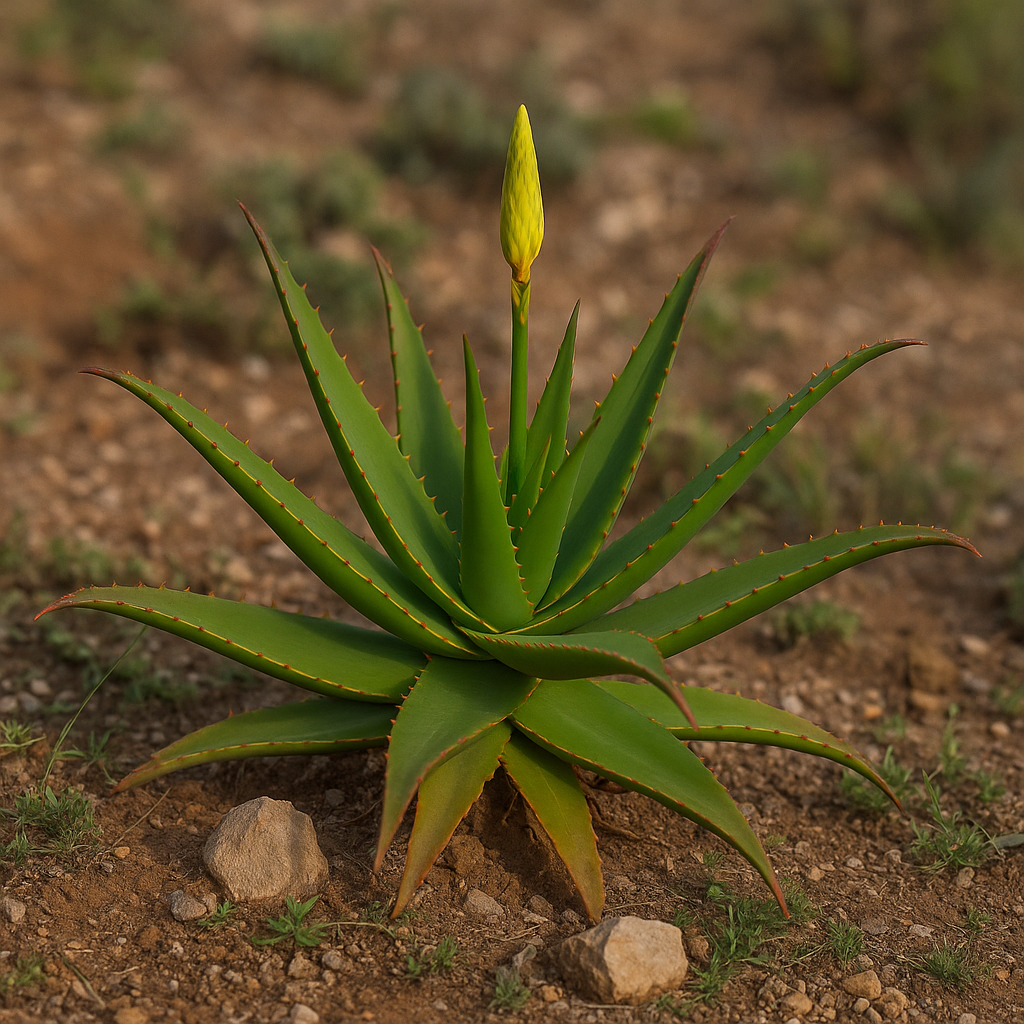
Aloe ampefyana is a striking Madagascan cliff aloe that brings wild, mountainous character straight into the garden or greenhouse. This species forms elegant, fountain-shaped rosettes that perch on short, slender stems, often creating small clumps of up to six heads over time. Originating from steep granitic hillsides near Ampefy in the highlands of central Madagascar, it is naturally adapted to intense sun, fast-draining rubble and periods of drought, making it an excellent candidate for rock gardens, raised beds and containers in both South African and international collections.
Plants are stem-forming and branching, with stems to about 30 cm long topped by tight rosettes of 25–30 cm leaves. The leaves are lanceolate, held outwards and slightly recurved at the tips, mid- to deep green and often decorated with small, scattered green pustules that give the leaf surface a pleasantly textured look. Along the margins runs a neat row of pale, slightly translucent teeth about 4 mm long, spaced 10–15 mm apart, adding just enough armour to remind you it is a true wild aloe without making it excessively spiny. In the ground or a large pot the rosettes sit proudly above the surrounding stones, exactly as they do in nature on their granite ledges.
The flowering display is both refined and eye-catching. One or two slender inflorescences rise to around 70 cm, each carrying a dense, cylindrical raceme of small, bell-shaped flowers about 17 mm long. In bud the flowers are a rich red, shifting to pale yellow as they open, with the stamens and style protruding slightly to invite visiting pollinators. Under garden conditions Aloe ampefyana typically flowers in the warmer growing season, rewarding good light and careful watering with a flush of colour above the clean green rosettes.
In cultivation this species prefers conditions that echo its natural home: very well-drained, mineral-rich soil, plenty of sun and modest, infrequent watering. A gritty succulent mix with added pumice or coarse sand is ideal, and containers should always have generous drainage holes. In frost-free coastal and summer-rainfall regions it can be planted directly into rockeries or slope plantings; elsewhere it thrives in pots that can be moved under cover during cold or very wet spells. From seed, Aloe ampefyana grows steadily into graceful, architectural plants that look superb as single specimens or in small groups, offering growers around the world a genuine piece of Madagascar’s granitic highlands.


