
Aloe belitsakensis – 5 Seed Pack
R275,00
INTERNATIONAL CUSTOMERS: Please read our shipping terms and conditions here before placing your order: Shipping Terms and Conditions
11 in stock
Aloe is one of the most captivating succulent genera on Earth, celebrated for its bold architectural rosettes, resilient nature, and spectacular seasonal flower displays. From neat, miniature species that tuck themselves into rocky crevices to dramatic, stem-forming giants that dominate dry hillsides, aloes bring an unmistakable sense of place—sunlit, water-wise, and wonderfully wild—wherever they are grown.
What truly sets Aloe apart is the combination of sculptural foliage and nectar-rich blooms. The leaves range from smooth and glaucous to spotted, toothed, and richly textured, often changing colour with sun, drought, or cool weather. When they flower, aloes send up striking spikes or branched candelabras topped with tubular blooms in fiery reds and oranges, soft corals and pinks, or even yellows and greens—magnets for pollinators and a highlight in any garden or collection.
With origins spanning Africa, Madagascar, the Arabian Peninsula and surrounding regions, Aloe has evolved to thrive in demanding environments—making many species naturally suited to xeriscaping, rock gardens, containers, and drought-tolerant landscapes. Whether you’re a first-time grower or a seasoned collector, raising aloes from seed is especially rewarding: every plant tells a slightly different story, and each one matures into a unique, living sculpture that becomes more impressive with every season.
Aloe belitsakensis
Aloe belitsakensis is a striking, recently described Madagascan aloe for collectors who love both bold foliage and showy flowers. Endemic to the Belitsaka area of north-western Madagascar, it grows in seasonally dry shrubland on dazzling white sand, where the rosettes sit among low, open scrub and scattered grasses.
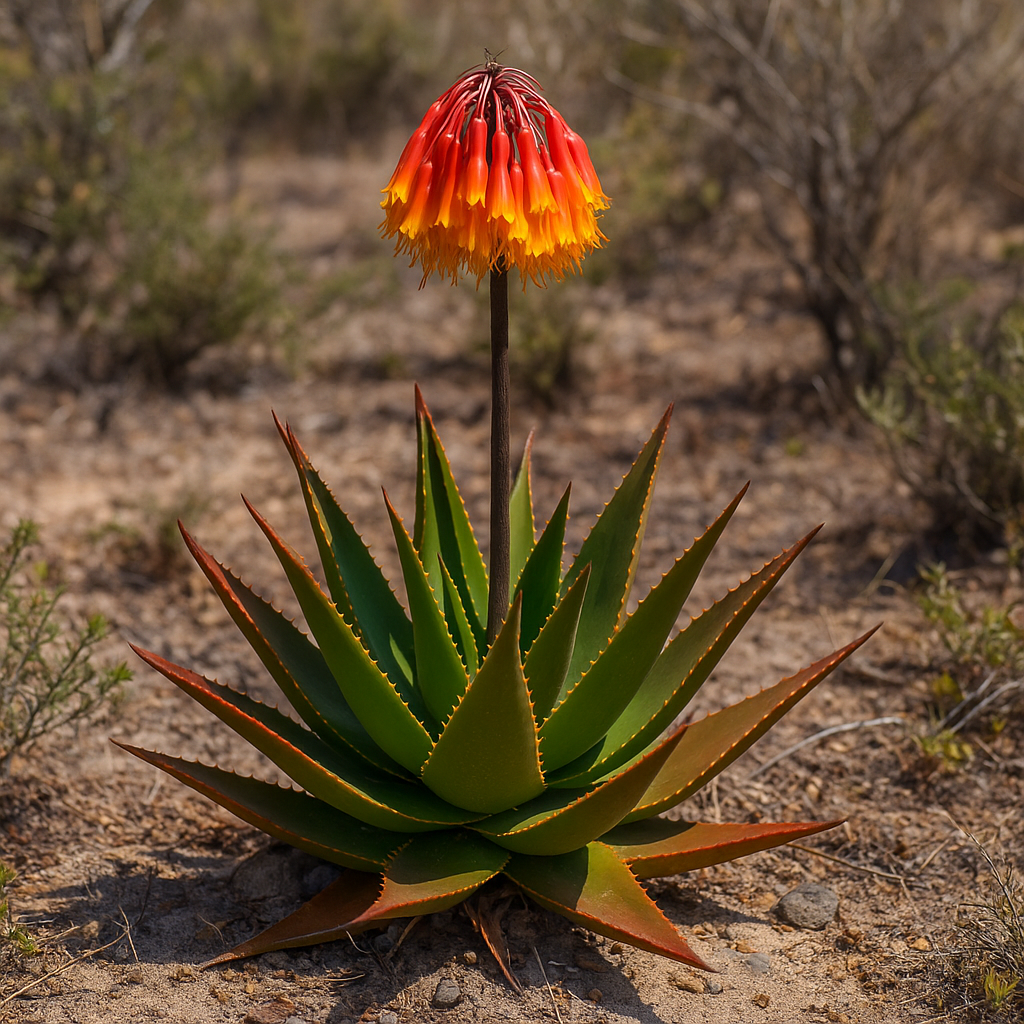
In habitat the plants are usually stemless (acaulescent), starting as solitary rosettes but gradually forming impressive clumps over time – just like the colonies shown in the field photographs. The leaves are uniformly coloured, clean green to bronze-tinged in strong light, with a neat line of small red teeth along the margins that glow when back-lit by the sun.
Mature rosettes are medium-sized but very architectural, with firm, triangular leaves that are held upright to gently spreading, creating an elegant starburst against the pale sand. In cultivation under bright light the outer leaves often take on warm reddish tones towards the tips and along the edges, echoing the natural look of sun-exposed plants in Madagascar’s dry bush. The habit shown in our images – a well-proportioned, symmetrical rosette rooted directly in sandy, stony soil, surrounded by soft, low shrubs – faithfully reflects how this species appears in the wild. It is perfectly suited to a sunny rockery or gravel garden in frost-free climates, or as a feature specimen in a large pot under glass for growers in cooler regions.
The inflorescence of Aloe belitsakensis is one of its finest features. From the centre of the rosette rises a tall, straight peduncle that can reach around 1–2 metres, topped by a densely capitate head of pendulous tubular flowers.
Each bloom is vividly bicoloured: rich coral-red to orange on the upper half, shading through to luminous golden yellow at the tips, forming a glowing “lantern” above the foliage exactly as captured in the reference images. Flowering has been recorded in October in cultivation in Antananarivo, suggesting a late spring to early summer peak, though this will shift slightly with climate and hemisphere.
The species is already assessed as globally Endangered due to its very limited range and ongoing habitat pressures, making ex-situ collections and seed-grown plants especially valuable from a conservation point of view.
For South African growers, it thrives in a warm, sunny position with excellent drainage – think deep, gritty, sandy soil and infrequent but thorough watering, with a dry rest in the coolest months. International enthusiasts can grow it in a bright greenhouse, conservatory or sunny windowsill, again with a very free-draining mix and protection from frost. Given time, Aloe belitsakensis will reward you with compact clumps of gleaming green rosettes and tall wands of fiery red-and-gold flowers that bring a genuine piece of Madagascar’s white-sand shrublands into your collection.


