


Aloe buhrii – Elias Buhr’s Aloe – 5 Seed Pack
R58,50
INTERNATIONAL CUSTOMERS: Please read our shipping terms and conditions here before placing your order: Shipping Terms and Conditions
13 in stock
Aloes are very popular and some of the most rewarding plants to cultivate. They make excellent accent plants owing to their often strange and inspiring architectures, as well as the bright flowers that offset the grey-green leaves. They are also very suitable as container plants and small aloes can be used very effectively as border plants at the edge of a bed. Although aloes are most often included in rockeries, their application in horticulture is not limited to this feature and they can be used in almost any setting and in conjunction with most common garden plants. Their natural adaptation to harsh and often arid climates makes aloes outstanding subjects for the water-wise garden. Aloe is a genus in the Asphodeloideae family containing about 600 species of flowering succulent plants. Aloes are sometimes confused with Agaves. Contrarily to Agaves, Aloe leaves contain a gel like sap. Another difference is that Aloes don’t die after blooming as most Agaves do.
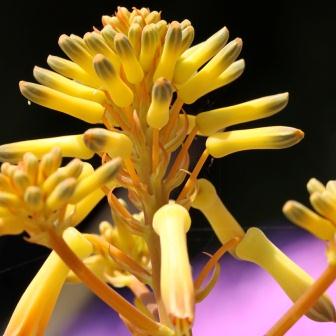
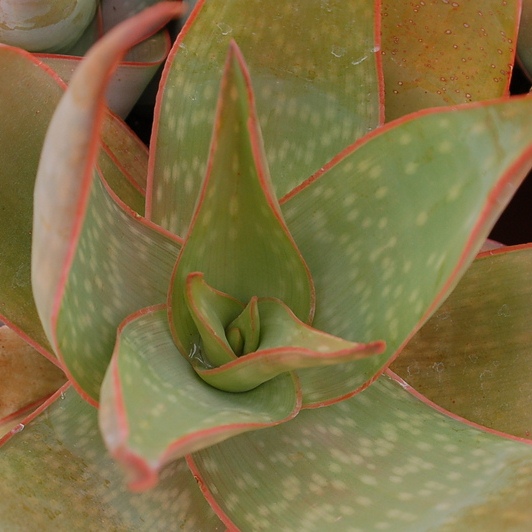
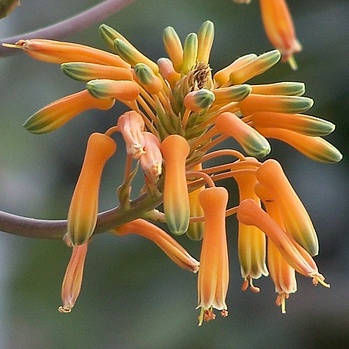
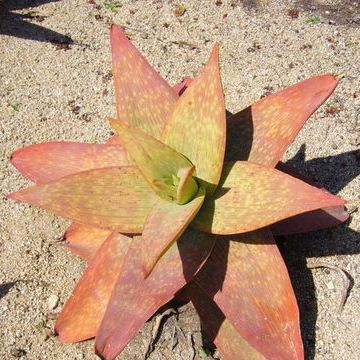
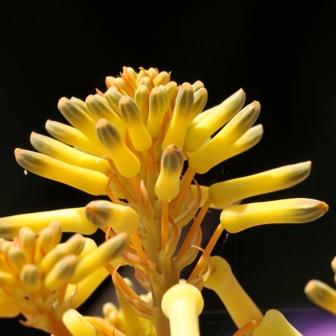
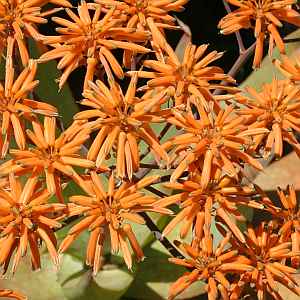
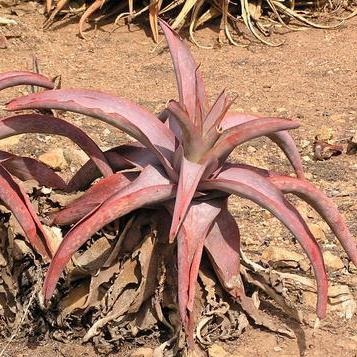
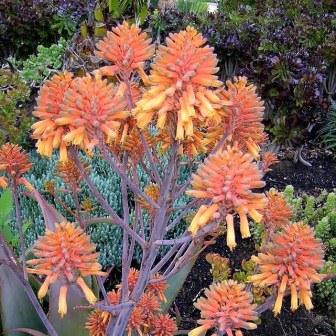
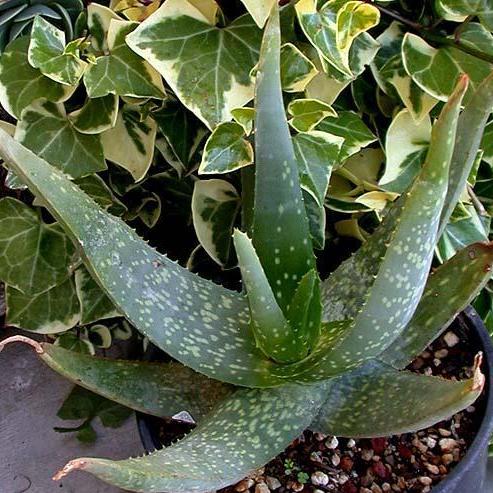
Aloe buhrii, commonly known as Elias Buhr’s Aloe is a beautiful stemless aloe with 40cm long, red-margined smooth to minutely toothed leaves that have pale longitudinal striations and mature with a purplish hue that is dotted with white “H” shaped spots. This plant is usually a solitary rosette, but older plants have multiple heads. In spring appear the multi-branched inflorescences with terminal capitated clusters of flowers that vary in colour from yellow to orange. Aloe buhrii prefers full sun to light shade. This plant prefers winter moisture and overwatering in summer can cause leaf spots or even rotting. It has proven hardy to short duration temperatures to -4°C. Aloe buhrii comes from a restricted range on hilltops from 1000 to 1500 meter in elevation in the Calvinia district of the dry western Karoo in Northern Cape Province of South Africa. It was first described by John Lavranos in 1971, who named it after Elias Buhr, the South African farmer who first collected it. It resembles the closely related Aloe striata but has narrower more upright and thicker leaves that usually are white spotted. It is listed as Endangered in South Africa because of its restricted distribution. The big, fleshy leaves have a lovely symmetry and they are blushed orange. This aloe grows well in a rockery and will do beautifully in a pot. Like most aloes, it will tolerate all sorts of ill treatment. This aloe is perfect for the gardener who travels a lot or forgets to water.


