
Aloe camperi Bi-colour Flower form – Popcorn Aloe, Nubian Aloe – 5 Seed Pack
R195,00
INTERNATIONAL CUSTOMERS: Please read our shipping terms and conditions here before placing your order: Shipping Terms and Conditions
Out of stock
Email when stock available
Aloe is one of the most captivating succulent genera on Earth, celebrated for its bold architectural rosettes, resilient nature, and spectacular seasonal flower displays. From neat, miniature species that tuck themselves into rocky crevices to dramatic, stem-forming giants that dominate dry hillsides, aloes bring an unmistakable sense of place—sunlit, water-wise, and wonderfully wild—wherever they are grown.
What truly sets Aloe apart is the combination of sculptural foliage and nectar-rich blooms. The leaves range from smooth and glaucous to spotted, toothed, and richly textured, often changing colour with sun, drought, or cool weather. When they flower, aloes send up striking spikes or branched candelabras topped with tubular blooms in fiery reds and oranges, soft corals and pinks, or even yellows and greens—magnets for pollinators and a highlight in any garden or collection.
With origins spanning Africa, Madagascar, the Arabian Peninsula and surrounding regions, Aloe has evolved to thrive in demanding environments—making many species naturally suited to xeriscaping, rock gardens, containers, and drought-tolerant landscapes. Whether you’re a first-time grower or a seasoned collector, raising aloes from seed is especially rewarding: every plant tells a slightly different story, and each one matures into a unique, living sculpture that becomes more impressive with every season.
Aloe camperi Bi-colour Flower form – Popcorn Aloe, Nubian Aloe
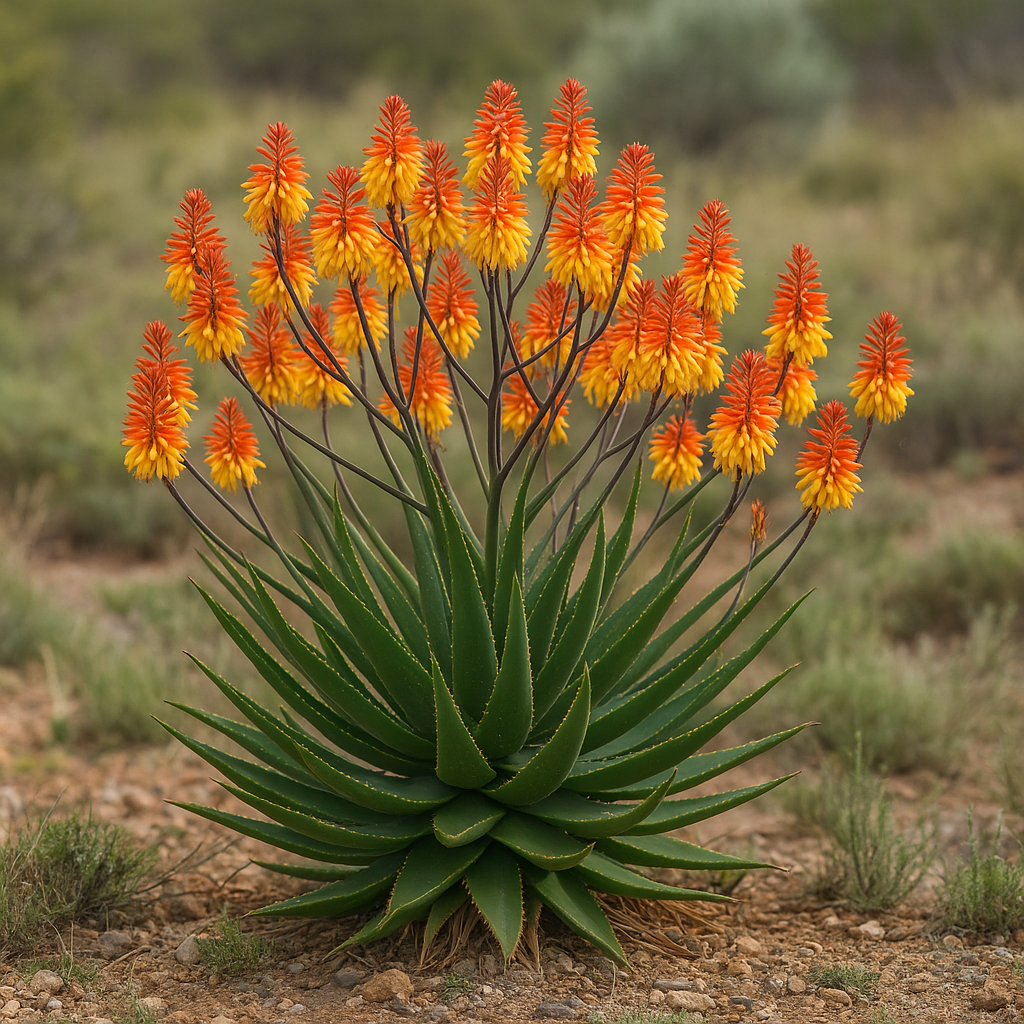
Aloe camperi Bi-colour Flower is a striking, clump-forming aloe from the highlands of Eritrea and northern Ethiopia, where it grows on rocky slopes and open grassland in full sun. Over time it forms a dense colony of upright rosettes, each with numerous narrow, glossy green leaves that arch gracefully outwards before curving down. The leaves are lined with neat, evenly spaced teeth along the margins, giving the clump a bold, architectural look even when not in flower. Mature plants in the ground can reach around 60–80 cm tall, with the flower spikes rising well above the foliage for maximum impact in the landscape.
The real show begins in late winter to early spring, when a forest of dark, purplish flower stems rises from the centre of the clump and branches into many heads. Each rounded head is packed with tubular blooms that open in a vivid bi-colour display: rich orange to coral on the outer parts of the flowers, glowing golden-yellow towards the mouths. The effect is a cloud of warm colour that reads from a distance as fiery orange, but rewards close inspection with subtle two-tone shading on every floret. The long flowering season and masses of nectar-rich blooms make this aloe a magnet for bees, butterflies and sunbirds in South Africa, and hummingbirds in suitable overseas climates.
Easy to grow and strongly drought tolerant, Aloe camperi Bi-colour Flower thrives in full sun, well-drained, gritty soil and low to moderate water. It is well suited to rockeries, dry borders, slopes and water-wise landscapes, and can also be grown in large containers on sunny patios in cooler or wetter climates. In regions with frost, plants can be grown in pots that are moved under cover in winter, or given a very well-drained, sheltered spot outdoors where they experience only light, brief freezes. With time the clump slowly enlarges from offsets, creating an impressive, fountain-like mass of green leaves and glowing bi-colour inflorescences that light up the garden at a time of year when many other plants are resting.
Seed from Aloe camperi Bi-colour Flower offers enthusiasts, collectors and landscape designers the opportunity to raise a generous number of plants from this prolific, high-altitude East African species. Each seedling will echo the parent’s strong clumping habit, glossy green leaves and characteristic orange-and-gold flower heads, while still showing natural variation that keeps a planting visually interesting. Whether you are creating a pollinator-friendly fynbos-style garden in South Africa, a Mediterranean gravel bed in Europe, or a colourful xeric border in the Americas, this bi-colour form of Aloe camperi will quickly become a standout feature and a reliable performer year after year.


