
Aloe florenceae – 5 Seed Pack
R280,00
INTERNATIONAL CUSTOMERS: Please read our shipping terms and conditions here before placing your order: Shipping Terms and Conditions
9 in stock
Aloe is one of the most captivating succulent genera on Earth, celebrated for its bold architectural rosettes, resilient nature, and spectacular seasonal flower displays. From neat, miniature species that tuck themselves into rocky crevices to dramatic, stem-forming giants that dominate dry hillsides, aloes bring an unmistakable sense of place—sunlit, water-wise, and wonderfully wild—wherever they are grown.
What truly sets Aloe apart is the combination of sculptural foliage and nectar-rich blooms. The leaves range from smooth and glaucous to spotted, toothed, and richly textured, often changing colour with sun, drought, or cool weather. When they flower, aloes send up striking spikes or branched candelabras topped with tubular blooms in fiery reds and oranges, soft corals and pinks, or even yellows and greens—magnets for pollinators and a highlight in any garden or collection.
With origins spanning Africa, Madagascar, the Arabian Peninsula and surrounding regions, Aloe has evolved to thrive in demanding environments—making many species naturally suited to xeriscaping, rock gardens, containers, and drought-tolerant landscapes. Whether you’re a first-time grower or a seasoned collector, raising aloes from seed is especially rewarding: every plant tells a slightly different story, and each one matures into a unique, living sculpture that becomes more impressive with every season.
Aloe florenceae
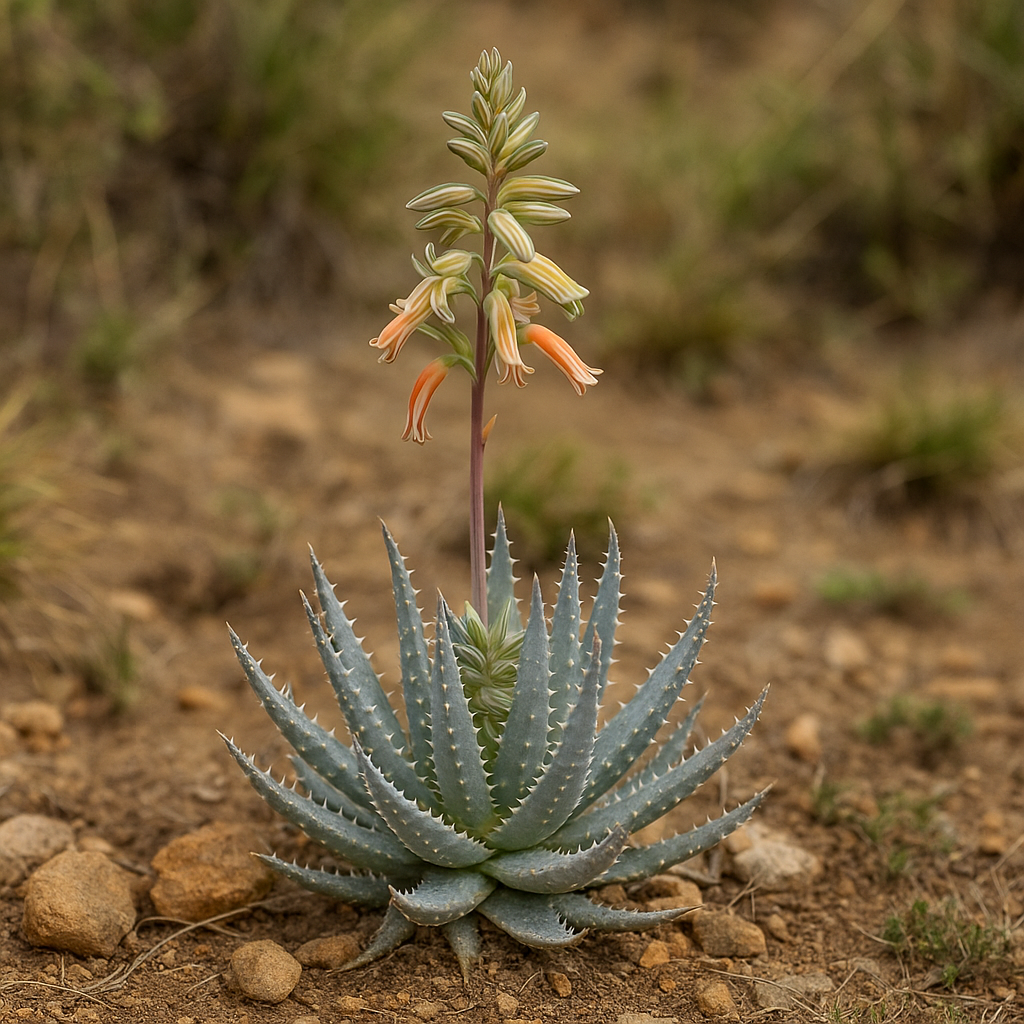
Aloe florenceae is a small, jewel-like aloe that wins you over with sheer detail: a perfectly proportioned rosette of cool blue-grey leaves, each one edged with tiny, pale teeth that catch the light like frosted lace. Native to Madagascar, this is a species for growers who appreciate compact aloes with crisp geometry and an elegant, wild look—ideal for collectors worldwide, and an excellent choice for South African succulent enthusiasts wanting something truly different from the common landscape aloes.
The plant remains low and tight, forming a symmetrical star of narrow, tapering leaves that radiate outward from the centre. The foliage is typically glaucous blue-green to steel-grey, often with a lightly dusted, matte finish that enhances the sculptural form. In strong sun and lean, mineral soils, it holds its compact shape beautifully, making it a natural fit for rocky, open, well-drained settings where surrounding vegetation stays low and unobtrusive.
When mature, Aloe florenceae produces a slender, upright flowering stalk that rises cleanly above the rosette. The flowers are borne in a neat cluster toward the top, with tubular blooms in soft warm tones—often creamy white to pale yellow, flushed with gentle apricot or salmon, sometimes with slightly deeper warmth as they open. This refined colour palette gives the plant a delicate, almost porcelain elegance in bloom, while still delivering the unmistakable nectar-rich appeal that aloes are known for. Flowering is most often associated with the cooler, drier part of the year in cultivation, although timing can shift with local climate and growing conditions.
Raising Aloe florenceae from seed is especially satisfying, as seedlings quickly show their character and allow subtle selection for rosette symmetry, leaf colour, and tooth definition. Provide bright light, excellent drainage, and careful watering that respects dry-down between cycles, and you’ll be rewarded with a resilient miniature aloe that looks spectacular in rock gardens, xeric beds, and specimen containers once established. Widely used common names and well-established synonyms are not consistently recorded for this species in cultivation, so it is generally offered simply as Aloe florenceae.


