
Aloe iringaensis – Iringa Aloe – 5 Seed Pack
R250,00
INTERNATIONAL CUSTOMERS: Please read our shipping terms and conditions here before placing your order: Shipping Terms and Conditions
2 in stock
Aloe is one of the most captivating succulent genera on Earth, celebrated for its bold architectural rosettes, resilient nature, and spectacular seasonal flower displays. From neat, miniature species that tuck themselves into rocky crevices to dramatic, stem-forming giants that dominate dry hillsides, aloes bring an unmistakable sense of place—sunlit, water-wise, and wonderfully wild—wherever they are grown.
What truly sets Aloe apart is the combination of sculptural foliage and nectar-rich blooms. The leaves range from smooth and glaucous to spotted, toothed, and richly textured, often changing colour with sun, drought, or cool weather. When they flower, aloes send up striking spikes or branched candelabras topped with tubular blooms in fiery reds and oranges, soft corals and pinks, or even yellows and greens—magnets for pollinators and a highlight in any garden or collection.
With origins spanning Africa, Madagascar, the Arabian Peninsula and surrounding regions, Aloe has evolved to thrive in demanding environments—making many species naturally suited to xeriscaping, rock gardens, containers, and drought-tolerant landscapes. Whether you’re a first-time grower or a seasoned collector, raising aloes from seed is especially rewarding: every plant tells a slightly different story, and each one matures into a unique, living sculpture that becomes more impressive with every season.
Aloe iringaensis – Iringa Aloe
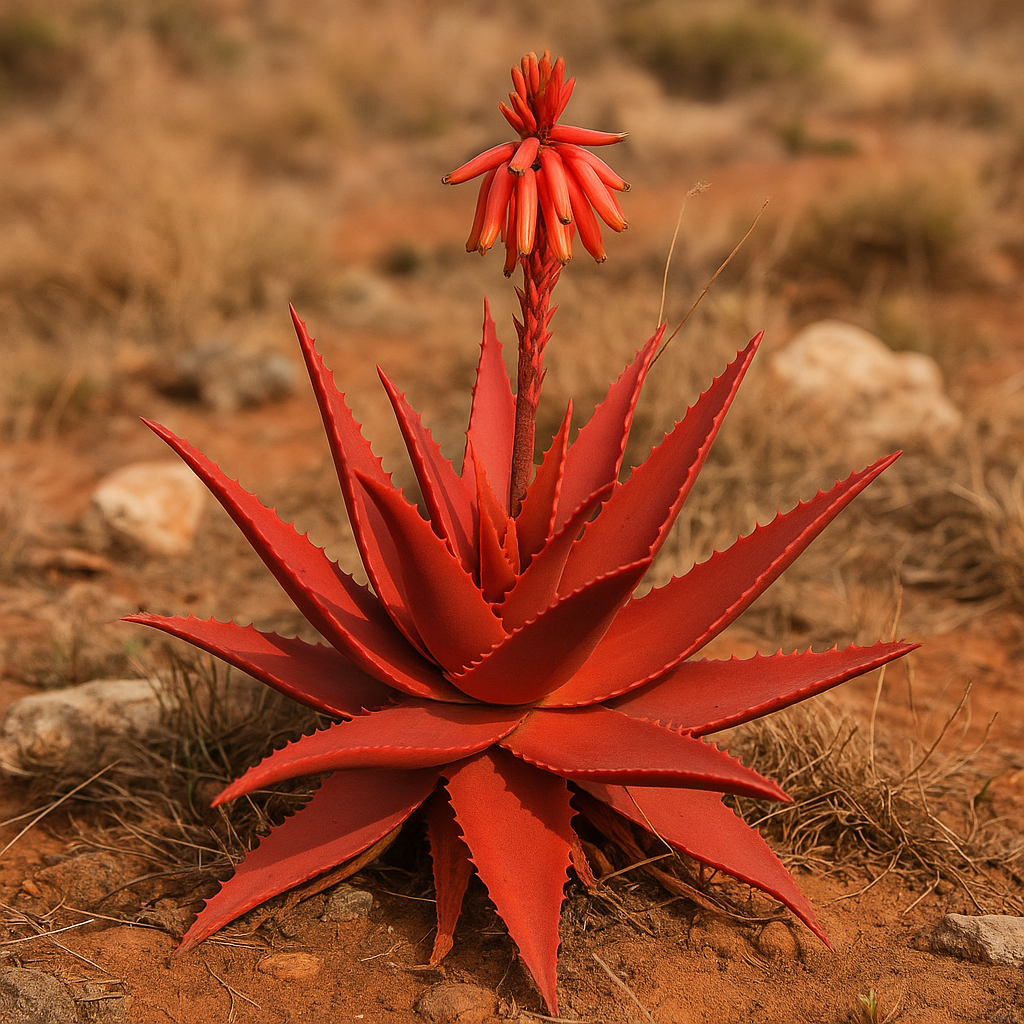
Aloe iringaensis is a dramatic, collector-worthy aloe prized for its bold colour and sculptural symmetry. In strong sun and lean, mineral soils it can flush deep copper to vivid brick-red, forming a sharply geometric rosette that looks like it has been cut from stone and set down on a rocky hillside. It’s an exceptional choice for growers who love aloes with intense stress-colouration and a truly wild, highland character.
The plant develops a compact, ground-hugging rosette of thick, lance-shaped leaves that arch slightly and taper to pointed tips. The leaf surfaces are typically smooth to lightly marked, while the margins carry neat, pale teeth that add texture and definition along every edge. In cultivation, young plants often colour up quickly when grown hard and bright, making this a rewarding species from seed for anyone who enjoys watching an aloe transform as it matures.
When in bloom, Aloe iringaensis sends up a sturdy, upright flowering stem topped with a dense head of tubular blooms in fiery tones—most often rich red to red-orange—standing out vividly against the surrounding dry grass and stone. The flowers are nectar-rich and classic “aloe bells,” creating a strong vertical accent above the rosette and adding real seasonal theatre to rock gardens, raised beds, or specimen pots. Flowering generally occurs during the cooler part of the year into early spring, though timing can vary with local climate and cultivation conditions.
This species is associated with Tanzania, centred around the Iringa region and neighbouring highland areas, where it inhabits exposed, rocky slopes and well-drained ground with sparse surrounding vegetation. For best results from seed, aim for bright light, excellent drainage, and a gritty, mineral-rich mix; keep moisture light and controlled while seedlings establish, then gradually harden plants to stronger sun to encourage compact growth and the signature red colouring. A superb option for South African growers in summer-rainfall or temperate regions (with winter protection from heavy frost), and equally desirable for international collectors seeking a striking, drought-tolerant aloe with serious visual impact.


