
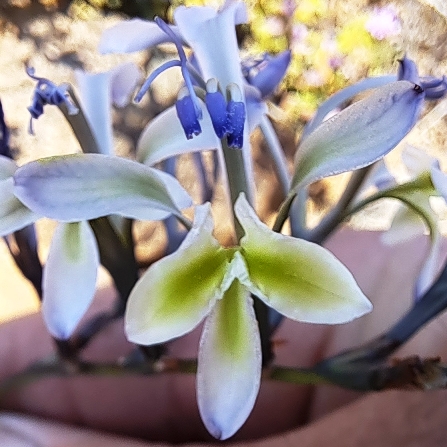
Babiana lobata – Richtersveld Branching Bobbejaantjie – 5 Seed Pack
R45,00
INTERNATIONAL CUSTOMERS: Please read our shipping terms and conditions here before placing your order: Shipping Terms and Conditions
9 in stock
The genus Babiana is endemic to southern Africa and comprises about 70 species, most of which are indigenous to South Africa where they can be found growing naturally in the south-western and western parts of the Western Cape, and in Namaqualand. The corms of several Babiana species are known to be edible and have been eaten by indigenous peoples in the northern parts of South Africa for ages. The genus name Babiana is derived from the Dutch word, baviaantje, which means little baboon, and refers to observations made by early colonists at the Cape of Good Hope, who witnessed that baboons commonly ate the corms of this genus. They are just about all winter-growing and generally bloom in late winter and spring. The extraordinary diversity in flower shape and colour, from long and tubular to broadly cup-shaped, and from pure white through countless shades of yellow to blue, pink, mauve, purple and crimson, have endeared babianas to gardeners around the world. Many of the species in this genus have a deliciously spicy sweet-smelling scent. They do well planted along with Aloes that share the same growth cycle.
Babiana lobata, commonly known as Richtersveld Branching Bobbejaantjie, is an endangered South African endemic perennial geophyte of 12–25 cm found in the Northern Cape in the Richtersveld, extending from Armanshoek to the Stinkfontein Mountains occurring on rocky lower slopes and flats. During late winter the inflorescence consists of mostly seven to twelve pale bluish mauve mirror-symmetrical flowers with yellow lower lateral tepals that may be flushed with mauve at their tips, emerging upright from the nearly horizontal branches.


