


Asclepias tuberosa – Butterfly Weed – 10 Seed Pack
R22,45
INTERNATIONAL CUSTOMERS: Please read our shipping terms and conditions here before placing your order: Shipping Terms and Conditions
10 in stock
Asclepias, the milkweeds, is a genus of herbaceous perennial, dicotyledonous plants that contains over 140 known species. Pollination in this genus is accomplished in an unusual manner. Pollen is grouped into complex structures called pollinia (or “pollen sacs”), rather than being individual grains or tetrads, as is typical for most plants. The feet or mouthparts of flower-visiting insects such as bees, wasps and butterflies, slip into one of the five slits in each flower formed by adjacent anthers. The bases of the pollinia then mechanically attach to the insect, pulling a pair of pollen sacs free when the pollinator flies off, assuming the insect is large enough to produce the necessary pulling force (if not, the insect may become trapped and die). Pollination is effected by the reverse procedure in which one of the pollinia becomes trapped within the anther slit.
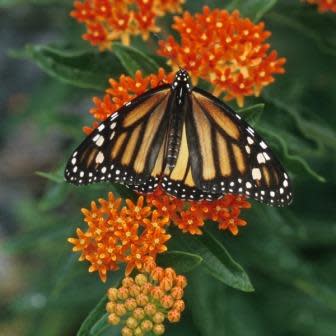
Asclepias tuberosa commonly known as Butterfly weed is a tuberous rooted, Missouri native perennial which occurs in dry/rocky open woods, glades, prairies, fields and roadsides throughout the State (Steyermark). It typically grows in a clump to 30 90cm tall and features clusters (umbels) of bright orange to yellow-orange flowers atop upright to reclining, hairy stems with narrow, lance-shaped leaves. Unlike many of the other milkweeds, this species does not have milky-sapped stems. Flowers give way to prominent, spindle-shaped seed pods which split open when ripe releasing numerous silky-tailed seeds for dispersal by the wind. Seed pods are valued in dried flower arrangements. Long bloom period from late spring throughout the summer. Flowers are a nectar source for many butterflies and leaves are a food source for monarch butterfly larvae (caterpillars). Also commonly called pleurisy root in reference to a prior medicinal use of the plant roots to treat lung inflammations. The plant attracts butterflies, bees, and hummingbirds.


