
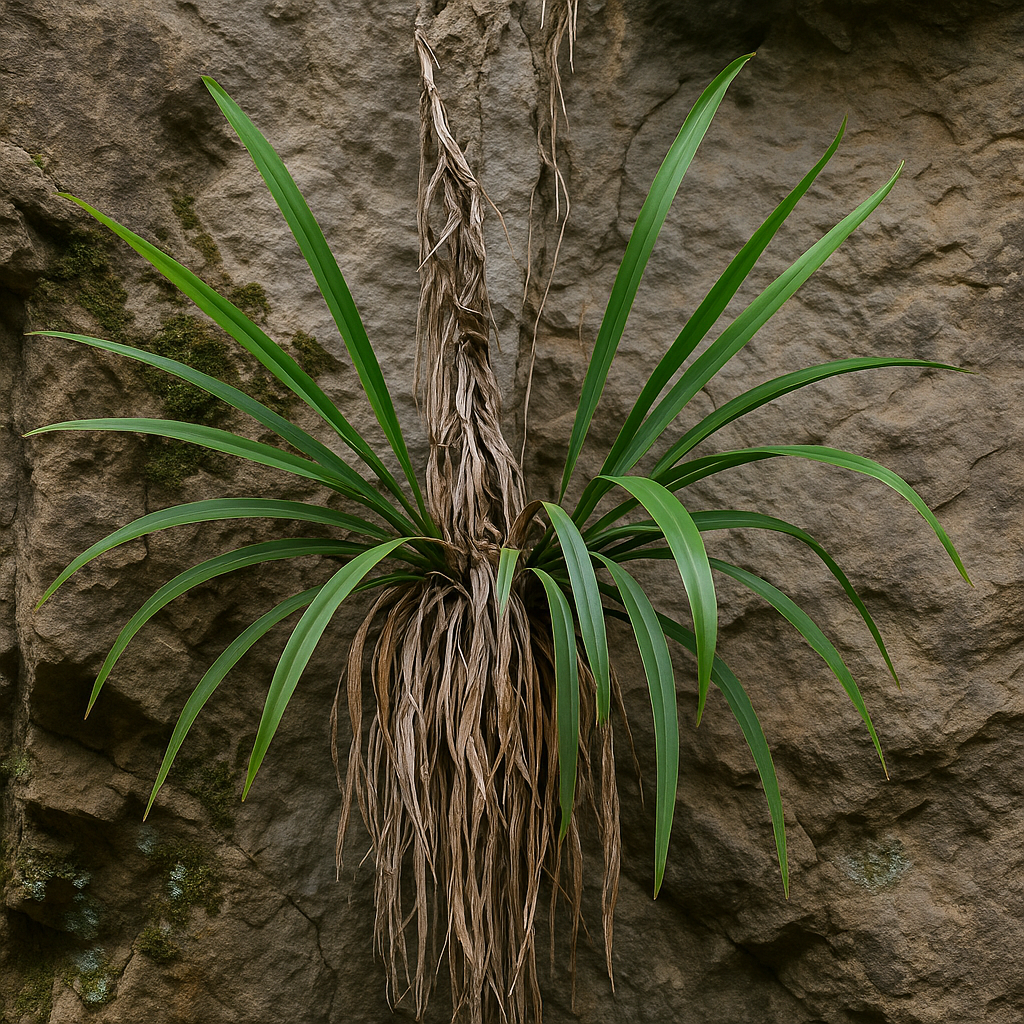
Chlorophytum cremnophilum – Cliff Green Lily – 5 Seed Pack
R41,50
INTERNATIONAL CUSTOMERS: Please read our shipping terms and conditions here before placing your order: Shipping Terms and Conditions
29 in stock
The genus Chlorophytum is best known to most people through the humble “spider plant” (Chlorophytum comosum), but behind that familiar house-plant lies a wonderfully diverse group of over 200 species spread across Africa, Madagascar, the Middle East and the Indian subcontinent. These are mainly tufted, perennial herbs with fleshy or tuberous roots and elegant, grass- to strap-shaped leaves. Their real magic appears in season, when airy stems rise above the foliage carrying dozens of starry white flowers that open in succession, creating a soft, sparkling cloud of bloom.
Many species are native to southern Africa, where they occur from fynbos and Namaqualand quartz flats to misty Drakensberg grasslands and shady forest margins. They are typically tough, water-wise plants adapted to summer rainfall rhythms or winter-rainfall droughts, storing reserves in their roots and retreating quietly underground when conditions are harsh. This makes them ideal candidates for South African gardens that must cope with heat, erratic rains and water restrictions, while still offering long flowering displays and food for bees, butterflies and other pollinators.
For seed growers and collectors, Chlorophytum offers an exciting palette: compact rosettes with crisped leaf margins, cliff-hangers with long arching leaves, miniature grass-like species for rock gardens, and robust clumps for borders and naturalistic plantings. Most are easy from seed, rewarding patient growers with flowers within a couple of seasons. The listings below focus on South African and neighbouring species, offering you a chance to grow your own wild “star-flowers” from regions as varied as Namaqualand, the Karoo and the high-lying grasslands.
Chlorophytum cremnophilum – Cliff Green Lily
Chlorophytum cremnophilum (sometimes still treated within Anthericaceae; close relative of the well-known C. comosum) is a true Eastern Cape cliff specialist with a look that’s both wild and architectural. Known locally as the cliff spider plant or cliff hen and chickens (Afrikaans: krans hen-en-kuikens), this recently described South African endemic comes from the Kouga and lower Grootrivier tributaries of the Gamtoos River system, where it hangs from mineral-poor sandstone cliffs in warm, frost-free Albany Thicket habitats.
In cultivation it forms a striking, evergreen, caulescent succulent: fleshy white roots feed long, pendent, lightly branching stems that can reach about a metre or more, each stem tipped with multiple upward-bending rosettes. The leaves are narrow, oblong to linear-lanceolate, distinctly channelled and leathery, creating a fountain-like silhouette that makes the plant ideal for pots, hanging baskets, vertical wall gardens, or rockeries in dry bushveld and thicket gardens. Unlike its “hen and chickens” relative, it does not produce plantlets on the flowering stalks, so seed-grown plants are especially rewarding to raise for a clean, natural form.
When mature, Chlorophytum cremnophilum sends up tall, airy panicles (often close to 1 m) carrying clusters of delicate, star-shaped white flowers, with only a few opening at a time. Flowering is mainly in late spring into early summer (October to December), a lovely seasonal cue for South African succulent growers. After flowering, the plant sets small 3-lobed capsules filled with flattened black seeds that are naturally wind-dispersed in summer—perfect for collectors wanting to propagate this rare cliff-hanger and add a genuinely local, conversation-starting species to their indigenous or water-wise plantings.


