
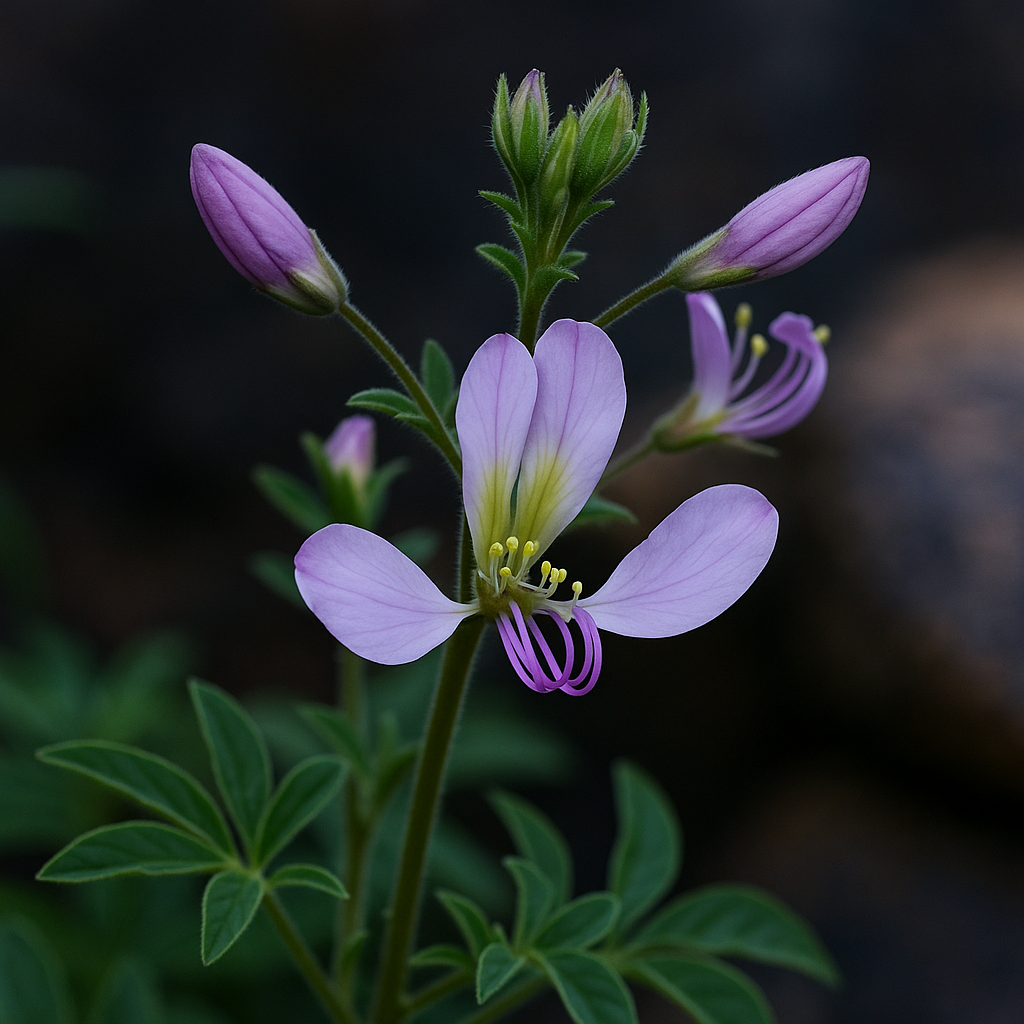
Cleome oxyphylla var. oxyphylla (Cleome davidii) – Pointed-leaf spindlepod, Pea-bush – 5 Seed Pack
R21,50
INTERNATIONAL CUSTOMERS: Please read our shipping terms and conditions here before placing your order: Shipping Terms and Conditions
15 in stock
Cleome is one of those genera that instantly earns its “spider flower” nickname. Most species carry airy, open blooms with whiskery, extended stamens that splay out like delicate legs, giving each flower a lively, almost firework-like look. The genus sits in the family Cleomaceae (once grouped with capers but now recognised as closer to mustards) and includes roughly 170 species of herbs and shrubs spread across warm regions of Africa, Asia, and the Americas.
In southern Africa, Cleome is a classic summer-rainfall wildflower group: many species pop up after good rains on disturbed ground, sandy flats, rocky grassland, or savanna edges. Their quick growing habit, long flowering season, and strong nectar/pollen production make them brilliant “ecosystem helpers,” pulling in bees, butterflies, and other pollinators when the veld is alive. Several species are also used traditionally as leafy vegetables or medicinal plants elsewhere in Africa, while others have become beloved ornamentals worldwide.
For gardeners, Cleome offers a mix of indigenous charm and cottage-garden drama: tall spires, palmate leaves, and flowers ranging from soft lilac and magenta to bright yellow. Whether you’re building a water-wise indigenous meadow, boosting pollinators in a food garden, or simply wanting that airy “wild elegance” in a sunny bed, spider flowers are generous, tough companions.
Cleome oxyphylla var. oxyphylla (syn. Cleome davidii; common name Pointed-leaf spindlepod / Pea-bush)
If you want a hardy, aromatic, semi-shrubby Cleome with big flower heads, this variety is a winner. Cleome oxyphylla var. oxyphylla offers a more permanent, structured presence than annual spider flowers, while still producing those dramatic, long-stamened blooms that make the genus so addictive.
It is indigenous to dry to semi-dry parts of southern Africa and is recorded from Namibia, Botswana and South Africa (including Northern Cape, North West, Free State and Limpopo). Plants form erect, often woody-based shrubs up to about 1 m tall, with narrow pointed leaves that are aromatic and softly hairy.
Large heads of rose-pink to purple flowers appear mainly from late summer into autumn.
The blooms are strongly attractive to insects, and the plant’s drought tolerance makes it valuable in water-wise indigenous gardens. Seed pods follow quickly, so it’s easy to harvest and maintain this local spindlepod in cultivation.
Cleome oxyphylla var. oxyphylla — sowing notes (dry shrubland spindlepod; Nov–Feb flowering)
This variety is native to dry shrubland/desert zones from western Zimbabwe into South Africa, and flowers mainly Nov–Feb.
It’s tougher and often a bit more shrubby than many annual Cleomes, so sow where it can stay for a while.
Sow in spring once day–night temp differences are noticeable and soils warm — roughly late September to November. A light cover is best (about 2 mm), and warm alternating temperatures help germination.
Karoo/Kalahari and hot inland gardens are ideal. On the coast, use very free-draining soil and avoid overfeeding; too much nitrogen gives leaf at the expense of flowers.


