
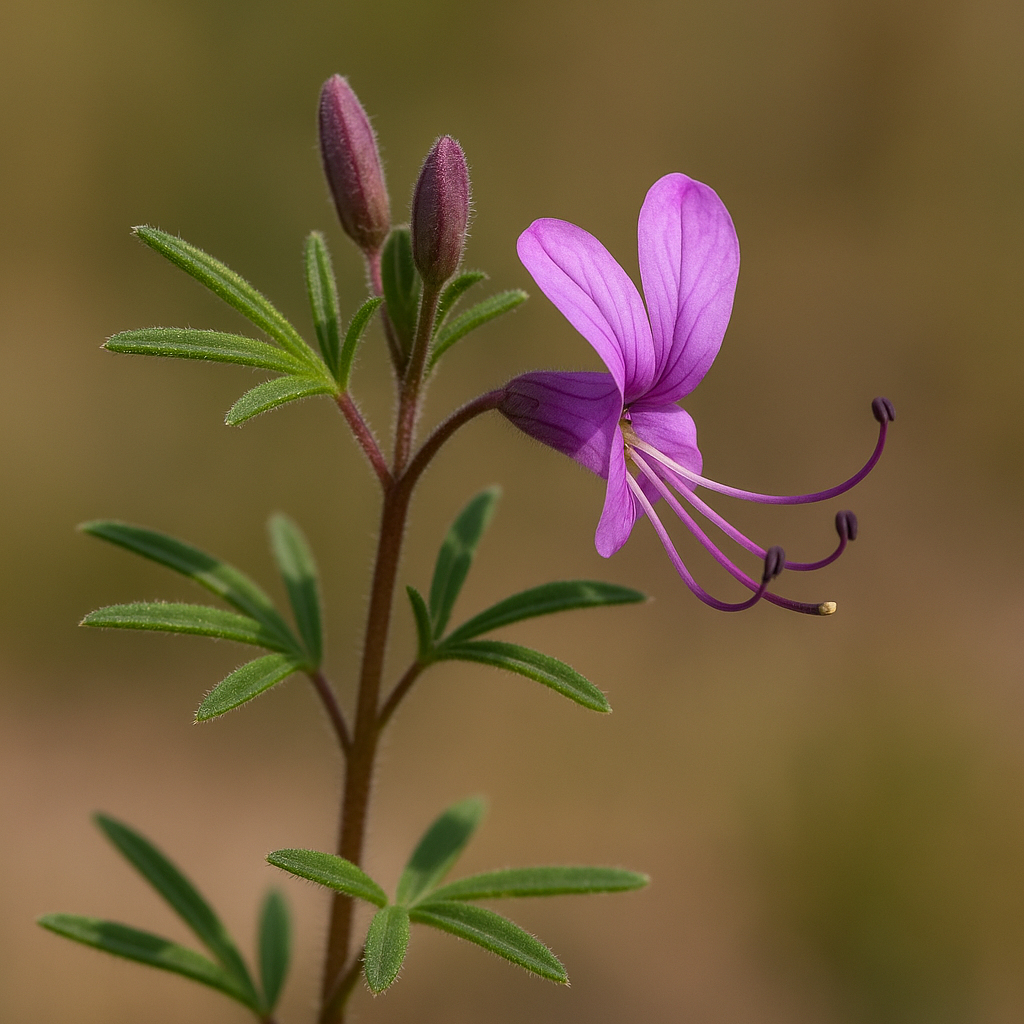
Cleome rubella (Cleome rupestris) – Mooinooientjie, Wildebosganna; Pretty Lady – 5 Seed Pack
R28,50
INTERNATIONAL CUSTOMERS: Please read our shipping terms and conditions here before placing your order: Shipping Terms and Conditions
30 in stock
Cleome is one of those genera that instantly earns its “spider flower” nickname. Most species carry airy, open blooms with whiskery, extended stamens that splay out like delicate legs, giving each flower a lively, almost firework-like look. The genus sits in the family Cleomaceae (once grouped with capers but now recognised as closer to mustards) and includes roughly 170 species of herbs and shrubs spread across warm regions of Africa, Asia, and the Americas.
In southern Africa, Cleome is a classic summer-rainfall wildflower group: many species pop up after good rains on disturbed ground, sandy flats, rocky grassland, or savanna edges. Their quick growing habit, long flowering season, and strong nectar/pollen production make them brilliant “ecosystem helpers,” pulling in bees, butterflies, and other pollinators when the veld is alive. Several species are also used traditionally as leafy vegetables or medicinal plants elsewhere in Africa, while others have become beloved ornamentals worldwide.
For gardeners, Cleome offers a mix of indigenous charm and cottage-garden drama: tall spires, palmate leaves, and flowers ranging from soft lilac and magenta to bright yellow. Whether you’re building a water-wise indigenous meadow, boosting pollinators in a food garden, or simply wanting that airy “wild elegance” in a sunny bed, spider flowers are generous, tough companions.
Cleome rubella
Cleome rubella is a delicate indigenous spider flower that brings a light, airy feel to dry-country wildflower planting. It’s a great choice for gardeners who enjoy smaller, more refined Cleomes that still deliver that unmistakable whiskery bloom silhouette.
This species is native to southern Africa, recorded from Namibia, Botswana and parts of South Africa, typically in arid to semi-arid, sandy or stony habitats. It grows as a warm-season herb, appearing after summer showers and completing its cycle quickly in the heat.
Flowers are in the pink-to-magenta Cleome range with long projecting stamens, giving a soft splash of colour above sparse veld vegetation. Blooming is mainly in summer after rainfall, and it sets neat slender pods full of seed. In gardens it’s ideal for sunny, well-drained beds, indigenous rockery edges, and naturalistic Kalahari-style planting.
Cleome rubella — sowing notes (dry-area annual of southern Africa)
A dry-area Cleome from Angola/Zambia south through Botswana, Namibia and SA, typically in desert or dry shrubland.
Think “summer-rainfall opportunist”: sow after the first proper spring/summer rains, usually October–December.
Sow shallowly with a fine cover (1–2 mm). As with other African Cleomes, avoid full light on seed during germination.
Keep moist to sprout, then let the soil dry slightly between waterings.
This species excels in hot, sandy, low-fertility beds. In richer garden soil, go light on compost and skip heavy fertiliser — it’s built for lean ground.


