
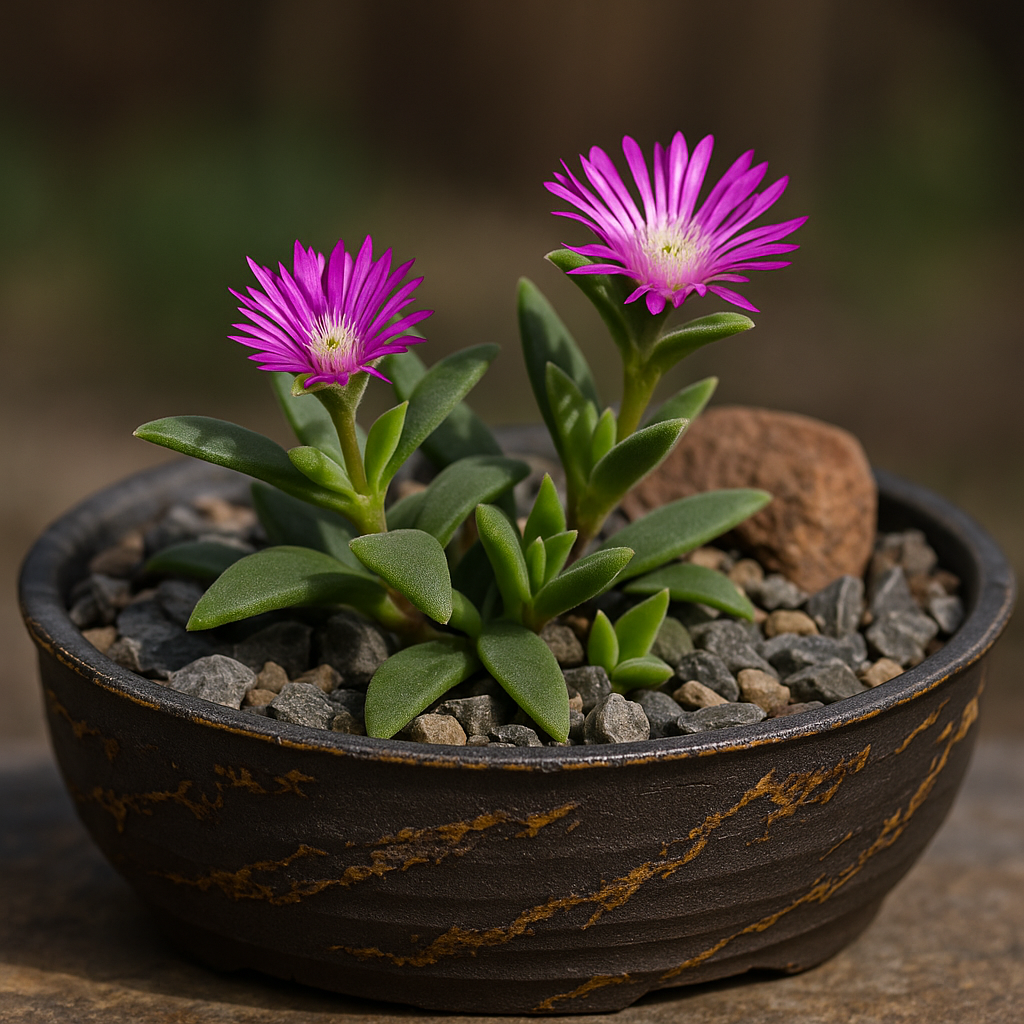
Delosperma suttoniae – 5 Seed Pack
R21,25
INTERNATIONAL CUSTOMERS: Please read our shipping terms and conditions here before placing your order: Shipping Terms and Conditions
2 in stock
If you love vygies and waterwise gardening, Delosperma is one of those genera that quickly becomes addictive. These are mostly low, mat-forming succulents in the Aizoaceae, famous for their shimmering “ice” cells on the leaves and stems that catch the light like tiny crystals – a clever way of reflecting harsh African sun while storing precious moisture.
The genus is centred in southern Africa, with the bulk of species in South Africa and Lesotho, but stretching north into eastern Africa as far as Ethiopia and even into the Arabian Peninsula. Many are local endemics tied to specific rock types or mountain systems – from arid Karoo flats and grassland dolerite outcrops to subalpine Drakensberg cliffs. Seed capsules are typically hygrochastic: they open when wet, using little “valves” and wings to present or flick out the seed in rain – exactly the kind of detail that makes them fascinating subjects for a seed-focused collector.
In the garden, Delosperma species are valued for their carpets of daisy-like flowers in intense shades of magenta, pink, purple, yellow and orange, often over a very long season. Given full sun and sharply drained, sandy or gravelly soils, many species are remarkably drought tolerant and need little more than occasional watering once established. They are ideal for rockeries, retaining walls, containers, green roofs and banks where a tough, colourful, pollinator-friendly groundcover is needed.
For a succulent enthusiast in South Africa, Delosperma offers a huge palette of local biodiversity – from tiny, niche endemics to showy garden workhorses – all fitting neatly into the broader push toward waterwise, climate-resilient gardening.
Delosperma suttoniae
Delosperma suttoniae is named after a botanist and is a hardy, mat-forming or low subshrubby succulent from rocky slopes and ledges. Its fleshy leaves and woody base allow it to withstand both drought and cold.
The species produces daisy-like flowers in the warm season, most often in pink, purple or lilac tones. These are held above the foliage and provide a bright, attractive display that draws in bees and other pollinators.
In cultivation, D. suttoniae is a good all-rounder for sunny, freely draining positions across much of South Africa. It works well in rockeries, on banks and in gravel beds. Once established, it will cope with infrequent watering and poor soils, making it a strong candidate for low-maintenance, indigenous plantings.


