
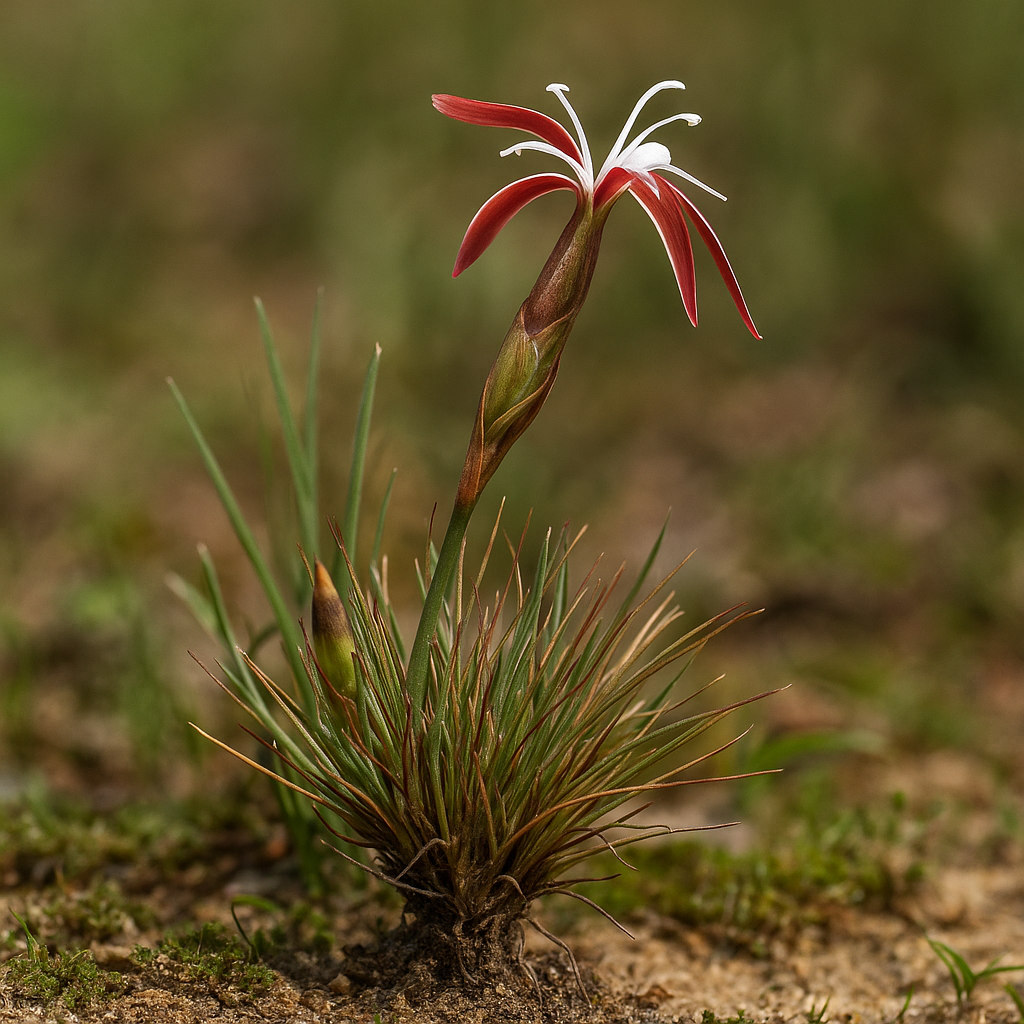
Dianthus holopetalus – Entire-petal Pink – 10 Seed Pack
R29,50
INTERNATIONAL CUSTOMERS: Please read our shipping terms and conditions here before placing your order: Shipping Terms and Conditions
40 in stock
The genus Dianthus – the famous “pinks” and “wild carnations” – brings together some of the toughest and most enchanting perennials you can add to a garden. From wind-scoured Drakensberg escarpments to misty Highveld grasslands and Cape sandstone slopes, southern African Dianthus species have evolved to cope with cold, wind, summer thunderstorms and long winter dry spells. In return they offer clouds of delicate, star-shaped flowers in shades of white, blush and vivid pink, often deliciously scented and loved by bees, butterflies and other pollinators.
Unlike their big florist cousins, these species remain neat, compact and easy to place. Most form small, evergreen clumps or cushions of narrow, often blue-green leaves that sit low against the soil, sending up wiry flowering stems in spring and summer. They are ideal for rock gardens, gravel beds, retaining walls, containers and any sunny, well-drained corner where waterwise, cold-tolerant plants are needed. Once established they ask for very little, yet reward you year after year.
For South African gardeners and collectors, the local Dianthus species are especially appealing: they are indigenous, tough, and perfectly adapted to our climate. Whether you garden on the frosty Highveld, in the Drakensberg, Namaqualand or the winter-rainfall Cape, there is a wild pink that will feel completely at home and bring a touch of alpine elegance to your beds and containers.
Dianthus holopetalus – Entire-petal Pink
This unusual species stands out in the genus because of its almost entire petals. While many Dianthus have strongly fringed edges, Dianthus holopetalus bears more or less whole, rounded petals with only slight teeth at the tips. This gives the flowers a clean, elegant look that contrasts beautifully with the fine, grassy foliage.
Native to high-altitude grasslands and open slopes in southern Africa, it forms small, dense tussocks of narrow blue-green leaves, hardy enough to survive snow, frost and summer hail. From these tufts arise slender stems bearing solitary flowers in shades of soft pink to lilac, sometimes almost white. The flowers open in midsummer, usually between December and February, when mountain grasslands are at their greenest.
In cultivation D. holopetalus thrives in cool, sunny Highveld or Drakensberg gardens, particularly in rockeries and raised beds where drainage is excellent. It is a refined species for collectors who want something a little different from the typical fringed pinks, and it mixes beautifully with small Helichrysum, Geranium and dwarf grasses.


