
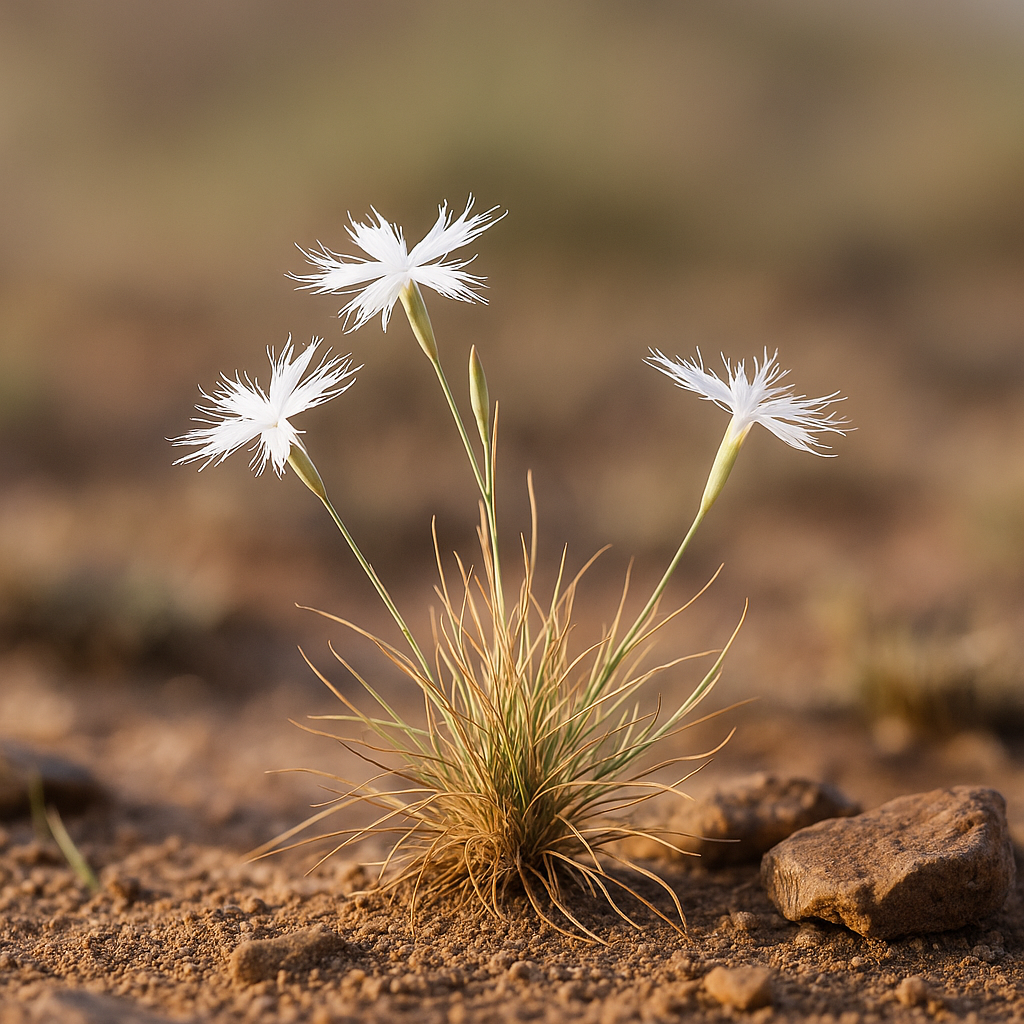
Dianthus namaensis var. dinteri – Dinter’s Namaqualand Pink – 10 Seed Pack
R29,50
INTERNATIONAL CUSTOMERS: Please read our shipping terms and conditions here before placing your order: Shipping Terms and Conditions
35 in stock
The genus Dianthus – the famous “pinks” and “wild carnations” – brings together some of the toughest and most enchanting perennials you can add to a garden. From wind-scoured Drakensberg escarpments to misty Highveld grasslands and Cape sandstone slopes, southern African Dianthus species have evolved to cope with cold, wind, summer thunderstorms and long winter dry spells. In return they offer clouds of delicate, star-shaped flowers in shades of white, blush and vivid pink, often deliciously scented and loved by bees, butterflies and other pollinators.
Unlike their big florist cousins, these species remain neat, compact and easy to place. Most form small, evergreen clumps or cushions of narrow, often blue-green leaves that sit low against the soil, sending up wiry flowering stems in spring and summer. They are ideal for rock gardens, gravel beds, retaining walls, containers and any sunny, well-drained corner where waterwise, cold-tolerant plants are needed. Once established they ask for very little, yet reward you year after year.
For South African gardeners and collectors, the local Dianthus species are especially appealing: they are indigenous, tough, and perfectly adapted to our climate. Whether you garden on the frosty Highveld, in the Drakensberg, Namaqualand or the winter-rainfall Cape, there is a wild pink that will feel completely at home and bring a touch of alpine elegance to your beds and containers.
Dianthus namaensis var. dinteri – Dinter’s Namaqualand Pink
This remarkable variety of Dianthus namaensis comes from arid, stony slopes and rocky outcrops in the Namaqualand and adjacent desert regions. It has evolved to cope with intense sun, heat, drought and big temperature swings. Plants form low, woody clumps or small cushions of narrow, often grey-green leaves, anchored by a strong root system that searches deep for moisture.
Var. dinteri is particularly striking because of its long, extremely finely divided petal tips, which create a filigree or spider-like effect. The flowers are usually pure white or very pale cream, standing out strongly against the red and brown stones of its habitat. Flowering tends to coincide with late winter and spring rains in the Succulent Karoo and Namaqualand, making it a star for collectors of arid-zone flora.
In cultivation, this variety is best treated as a xeric rock-garden subject. Give it full sun, excellent drainage, a gritty, poor soil mix and careful watering, allowing the soil to dry well between waterings. It is ideal for containers, raised beds and desert-style plantings, where its fragile-looking flowers contrast beautifully with tough surrounding succulents and shrubs.


