
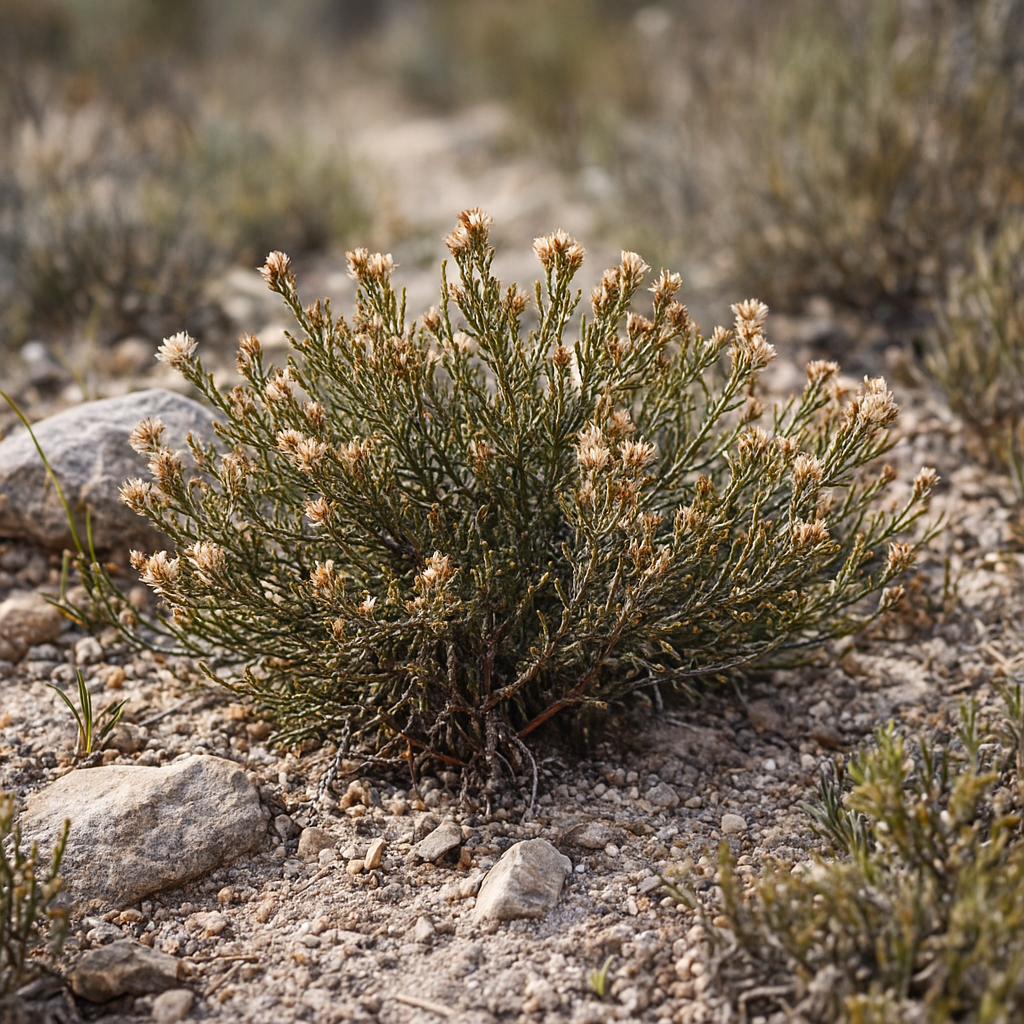
Dicerothamnus rhinocerotis (Elytropappus rhinocerotis) – Rhinocerosbush; Renosterbos – 5 Seed Pack
R21,50
INTERNATIONAL CUSTOMERS: Please read our shipping terms and conditions here before placing your order: Shipping Terms and Conditions
69 in stock
Dicerothamnus is a small Cape genus in the daisy family (Asteraceae), currently with just two recognised species: Dicerothamnus adpressus and Dicerothamnus rhinocerotis. Both were only recently separated from the old genus Elytropappus after taxonomic work on the “renosterbos” group, so you will still often see the older names in books and on plant labels.
These shrubs are an essential part of the fynbos and renosterveld landscapes, where their fine, ericoid foliage and small flowerheads create a soft grey-green backdrop for more showy species.
Naturally, Dicerothamnus is almost entirely South African, with both species endemic to the winter-rainfall regions of the Western and Eastern Cape and extending into drier Namaqualand and interior mountain slopes in the case of D. rhinocerotis.
They are tough, long-lived shrubs adapted to clay and sandstone soils, summer drought, regular fire and cold winter nights, powered by deep root systems that tap stored moisture far below the surface. Because they hold vast seed banks in the soil and respond strongly to disturbance, they are also important pioneer species in veld restoration.
For South African gardeners and landowners, Dicerothamnus offers more than just ecological value. Renosterbos in particular has a long history in Cape traditional medicine, while both species provide nectar and habitat for specialist insects and birds.
In a garden or smallholding, they lend a distinctly local character, stitching natural and cultivated areas together and thriving where many other plants struggle – especially on heavy clays and exposed, sun-baked slopes.
Dicerothamnus rhinocerotis (Elytropappus rhinocerotis) – Renosterbush, Rhenosterbush, Rhinoceros Bush, Rhinocerosbush; Anosterbos, Anosterbossie, Renosterbos, Renosterbossie, Renosterbostoppe, Renosterbostoppies, Renostertoppe, Renostertoppies, Vlieëbos, Vlieëbossie
Dicerothamnus rhinocerotis is the famous renosterbos – the grey, aromatic shrub that gives its name to the renosterveld vegetation type.
A single woody stem thickens into a gnarled base, sending up a mass of erect, whip-like twigs clothed in tiny triangular leaves pressed tightly against the stems. Fine white hairs between the leaves give each twig a woolly coating and the whole bush a characteristic dull grey colour, especially in older plants. At the tips of the shoots, clusters of very small flowerheads are produced in huge numbers; each head carries several minute purple florets but, viewed from a distance, the inflorescences appear brownish. As seed ripens, the pale, chaffy bracts around each head open out and the plant takes on a fluffy, straw-brown look.
Renosterbos is widespread and abundant, ranging throughout much of the Cape Floristic Region, Namaqualand and into the interior, as far north as the Richtersveld and as far east as Molteno and East London.
It is especially dominant on fertile, fine-grained shale and granite soils in winter-rainfall areas, where it forms extensive stands in renosterveld and disturbed fynbos. Plants tolerate frost, occasional snow and long summer droughts thanks to an exceptionally deep taproot, recorded at more than 6 m, which taps reliable groundwater.
Growth flushes during summer, flowering is mainly in early winter and seeds are shed in late winter, after which they enter a persistent soil seed bank waiting for the right fire and weather cues to germinate.
In cultivation, renosterbos is best suited to larger fynbos or renosterveld gardens, smallholdings and restoration projects rather than tiny city courtyards. It thrives in full sun on clay or loamy soils, particularly in winter-rainfall climates, and copes well with wind and exposure. As a garden subject it offers fine texture, movement and a strongly local sense of place, especially when combined with restios, geophytes and showier shrubs. It is also a valuable pioneer on tired or eroded land, where it helps stabilise soil and create “fertility islands” under its canopy. Traditional Cape remedies use infusions of the young branch tips for digestive complaints and fevers, but these uses are mentioned here for interest only – not as medical advice.


