
Ixia collina – 5 Seed Pack
R95,00
INTERNATIONAL CUSTOMERS: Please read our shipping terms and conditions here before placing your order: Shipping Terms and Conditions
20 in stock
Few flowering plants capture the extraordinary diversity and breathtaking beauty of South Africa’s indigenous flora quite like the genus Ixia. Commonly known as Corn Lilies or African Corn Lilies, these exquisite perennial geophytes belong to the Iridaceae family, commonly called the Iris family, which also includes such celebrated ornamental plants as Gladiolus, Freesia, Moraea and Crocosmia. Comprising approximately 100 recognised species, Ixia is an exceptionally diverse genus of cormous flowering plants native to southern Africa, with its greatest concentration of species occurring in the winter-rainfall regions of South Africa’s Western, Northern and Eastern Cape provinces. From the spectacular wildflower landscapes of Namaqualand and the rugged Cederberg Mountains to the rocky Roggeveld Escarpment, the rolling renosterveld hills of the Overberg and the dramatic mountain slopes of the Little Karoo, these remarkable plants represent some of the most captivating botanical treasures of the Cape Floristic Region.
The extraordinary ornamental appeal of Ixia lies in its astonishing diversity of flower colours, shapes and arrangements. Depending on the species, the delicate six-petalled blossoms may appear in brilliant shades of golden-yellow, fiery orange, scarlet-red, vivid magenta, soft rose-pink, lavender, violet, pale blue, creamy–white and even striking turquoise-green. Many species feature contrasting dark centres, intricately coloured throats, prominent golden stamens or beautiful markings that give their flowers an almost jewel-like appearance. While some ixias produce broad, open, star-shaped blossoms that face directly towards the sunlight, others display gracefully nodding, bell-shaped flowers, long slender floral tubes or unusual asymmetrical arrangements of their reproductive structures. Certain species release delightful fragrances reminiscent of roses or other sweet floral scents, while others are completely scentless, reflecting their diverse pollination strategies. This remarkable floral variation has evolved through intricate relationships with bees, beetles, butterflies and specialised pollinating flies, making Ixia a fascinating genus for botanists, conservationists and horticultural enthusiasts alike.
Growing from underground corms, Ixia species exhibit an equally fascinating diversity of growth habits and foliage. Some are charming miniature plants standing only a few centimetres above the ground, their brilliant flowers appearing almost directly among low-growing leaves, while others develop tall, elegant flowering stems that may exceed a metre in height. The foliage ranges from narrow, grass-like blades and slender, sword-shaped leaves to unusually rigid, leathery or cylindrical structures, each reflecting adaptations to the plant’s particular natural environment. Many species inhabit sandy fynbos flats, rocky mountain slopes, clay-rich renosterveld or exposed shale outcrops, while others are specially adapted to seasonally moist seeps, marshy depressions and mountain stream margins. Their remarkable ability to survive challenging environmental conditions is made possible by underground corms that store essential reserves, allowing the plants to retreat into dormancy during unfavourable seasons and re-emerge when conditions become suitable for growth.
One of the most captivating characteristics of the genus is its seasonal transformation. Most Ixia species are winter-growing, summer-dormant perennials that respond to the arrival of autumn and winter rainfall by producing fresh foliage and developing flowering stems. Their magnificent floral displays generally occur from late winter through spring, with certain high-altitude and late-flowering species extending the spectacle into early summer. During this relatively brief flowering period, the landscapes of the Cape can become adorned with breathtaking displays of brilliant colour, delicate floral forms and extraordinary botanical diversity. Many species are closely associated with the natural fire cycles of South Africa’s fynbos and renosterveld ecosystems, with flowering sometimes stimulated by the clearing of vegetation following wildfires.
For South African gardeners, Ixia offers a wonderful opportunity to celebrate the exceptional beauty of the country’s indigenous flora, while international growers and collectors can discover an enchanting group of flowering corms unlike anything found in conventional horticulture. Many of the more adaptable species are suitable for Mediterranean-style gardens, sunny borders, rock gardens and decorative containers, while rarer and more demanding varieties reward dedicated enthusiasts who enjoy the challenge of specialised bulb cultivation. Growing Ixia from seed is particularly satisfying, allowing gardeners to experience the complete development of these remarkable plants from delicate seedlings into mature flowering corms. Whether you are captivated by the vivid colours of Ixia maculata, the extraordinary turquoise-green flowers of Ixia viridiflora, the delicate lavender blossoms of Ixia brevituba or the fascinating botanical adaptations of the genus’s rarest mountain species, there is an Ixia to inspire almost every plant enthusiast. Discover the remarkable world of South African Corn Lilies and explore the exceptional diversity, elegance and horticultural potential of one of the Cape’s most extraordinary flowering plant genera.
Ixia collina
Discover the captivating beauty of Ixia collina, an exceptionally rare and enchanting South African wildflower renowned for its delicate nodding blossoms, graceful branching stems and unusual floral structure. Belonging to the Iridaceae family, this extraordinary cormous perennial is endemic to the Western Cape of South Africa, where its natural distribution is restricted to a remarkably small area of the Breede River Valley near Worcester, particularly around Aan de Doorns. Growing on moist, south-facing slopes of low shale and clay hills within the region’s distinctive karroid and renosterveld vegetation, Ixia collina is a botanical treasure of considerable conservation significance. Classified as Endangered on South Africa’s Red List of Plants, its exceptionally limited natural range and specialised habitat make it especially fascinating to collectors of rare South African geophytes, indigenous flora enthusiasts and international growers with a passion for unusual botanical species.
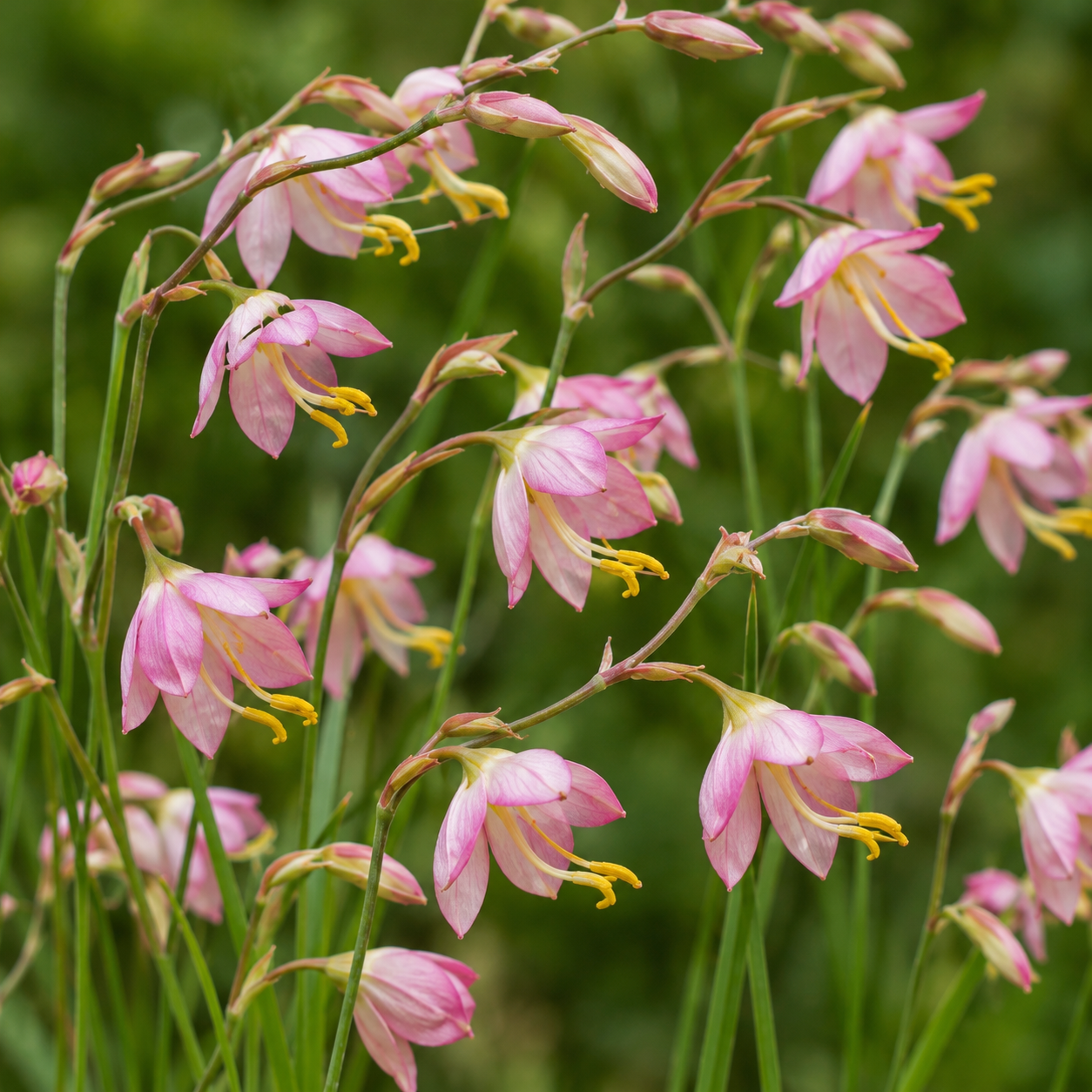
The outstanding attraction of Ixia collina lies in its exquisite, softly nodding flowers, which display a delightful combination of delicate blush-pink, pale rose and creamy-white tones. Each beautiful blossom consists of six gently spreading petals, often revealing deeper pink veining and subtly darker rosy margins, while the central throat transitions into soft cream and pale yellow. The flowers have a graceful, slightly bell-shaped appearance and are held sideways or gently downward, creating an elegant cascading effect along the slender flowering stems. One of the species’ most remarkable botanical characteristics is its unusual arrangement of stamens, which are positioned predominantly towards one side of the flower rather than symmetrically around the centre. Their golden-yellow anthers are supported by specially adapted filaments that curve and broaden near their tips, producing a fascinating floral structure rarely encountered among more familiar garden ixias. The flowers are also sweetly scented, adding another delightful dimension to their ornamental appeal.
Growing from a small underground corm, Ixia collina develops an elegant, upright habit, typically reaching approximately 50–90 cm in height. Its slender, wiry green stems generally produce two or three lateral branches that extend outward before curving gracefully upwards, creating a distinctive architectural appearance. Narrow, grass-like to sword-shaped green leaves emerge from the lower portions of the plant, complementing its airy growth habit without overwhelming the delicate floral display. Each flowering stem carries an attractive succession of pinkish buds and open blossoms, with the main flower spike capable of producing approximately seven to sixteen flowers. When several plants are grown together, their graceful branching stems and abundance of soft pink, gently nodding blossoms create a wonderfully romantic display, combining delicate colour, movement and intricate botanical detail.
In its natural Western Cape habitat, Ixia collina flowers during late winter to early spring, generally from late August through to mid-September. Following the cooler, wetter winter months, the developing corms produce fresh foliage and flowering stems, eventually revealing their exquisite pink blossoms as seasonal temperatures begin to rise. The flowers open progressively along their slender spikes, creating a beautiful succession of delicate blooms against the surrounding grasses and low-growing vegetation. As spring progresses and the dry summer season approaches, the above-ground growth gradually declines, allowing the plant to retreat into its underground corm for a period of seasonal dormancy. For South African gardeners and international growers, successful cultivation is best approached by recreating this natural winter-growing cycle, using a well-drained, mineral-rich growing medium with a suitable clay or loam component, bright natural light and carefully controlled moisture during active growth. Container cultivation is particularly beneficial in regions with severe winters, excessive summer rainfall or prolonged humidity, allowing greater control over seasonal conditions and protecting the dormant corms from excessive moisture.
Whether you are an avid collector of rare South African bulbs, a dedicated indigenous plant enthusiast, an international botanical hobbyist or a gardener seeking something truly extraordinary, Ixia collina offers an exceptional opportunity to appreciate one of the Western Cape’s most distinctive flowering geophytes. Its beautiful soft pink blossoms, sweet fragrance, fascinating one-sided stamens and graceful nodding flowers distinguish it from the more familiar ixias commonly encountered in horticulture. Raising this remarkable species from responsibly sourced seed offers the rewarding experience of nurturing a rare botanical treasure from germination through to the development of mature, flowering corms. Browse our online seed store and discover our vast range of rare, indigenous and exotic species, featuring an extensive and diverse selection of extraordinary botanical treasures for collectors, gardeners and horticultural enthusiasts worldwide. Buy Now or Add to Cart and begin your journey towards cultivating this enchanting South African wildflower. Seeds and All offers combined South African and International shipping.


