
Pleiospilos bolusii – Liverplant, Mimicry Plant, Quagga; Kwaggabal, Kwaggakos, Quagga Kos – 10+ Seed Pack
R14,00
INTERNATIONAL CUSTOMERS: Please read our shipping terms and conditions here before placing your order: Shipping Terms and Conditions
3 in stock
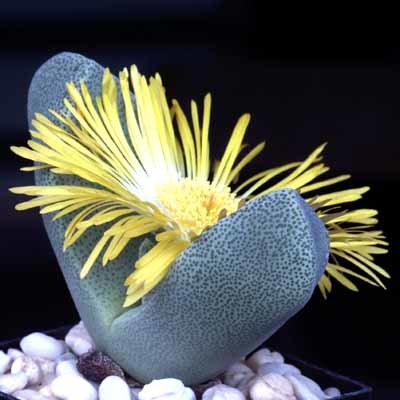
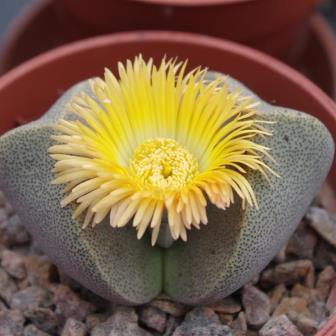
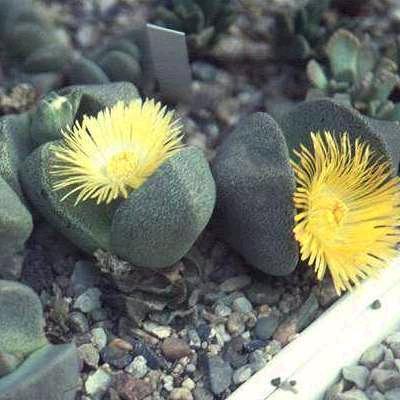
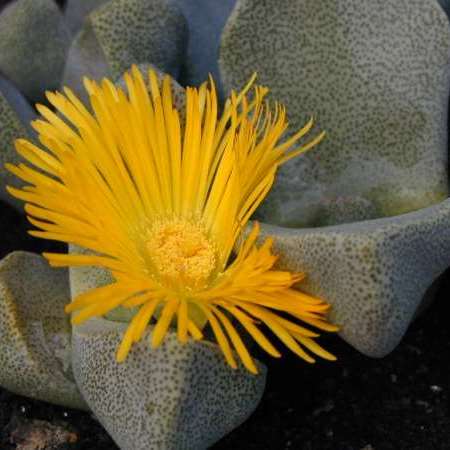
Pleiospilos is a genus of succulent flowering plants of the family Aizoaceae, native to South Africa. The name is derived from the Greek pleios “many” and spìlos “spot”. The plants are also known as kwaggavy (“Quagga mesemb”), lewerplant (“liver plant”), lewervygie (“liver mesemb”), klipplant (“stone plant”), split rock or mimicry plant. Pleiospilos species have two or four opposite, very fleshy, grey-green leaves growing from a short stem that may be underground. The leaves, with their hemispherical shape and pitted texture, often strongly resemble a pile of split pebbles to deter predators. Flowers emerge from the center of the leaves, and may be very big in relation to the overall size of the plant. They reproduce both sexually and asexually. Vegetative offshoots emerge from the root system. Seed set occurs in early spring around March. The species Pleiospilos bolusii and Pleiospilos nelii are cultivated as ornamentals.
Pleiospilos bolusii, The name `Duimpie-snuif’ literally means finger-snuff; traditionally it is used as a snuff. The pulverized plant is also reported to be an hallucinogenic additive to tobacco to be smoked, or else it can simply be dried and powdered and used as a snuff. The dosage is small with approximately 50 milligrams of plant chewed producing a feeling of euphoria, which lasts for about 20 minutes; this is followed by sedation. It produces yellow flowers. Commonly known as Kwaggabal, Kwaggakos or Quagga Kos in Afrikaans and Quagga in English, it is endemic to South Africa occuring in the Eastern Cape and Western Cape Provinces between Willowmore, Beaufort West and Aberdeen.


