
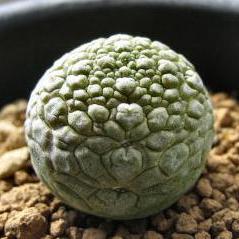


Pseudolithos migiurtinus – 5 Seed Pack
R125,00
INTERNATIONAL CUSTOMERS: Please read our shipping terms and conditions here before placing your order: Shipping Terms and Conditions
3 in stock
Pseudolithos is a genus of flowering plants of the family Apocynaceae, indigenous to arid areas of Somalia, Yemen and Oman. Phylogenetic studies have shown the genus to be monophyletic, and most closely related to the widespread Caralluma stapeliads of North Africa. Marginally more distantly related is a sister branch comprising the genera Echidnopsis and Rhytidocaulon. The plants were first described as a genus in 1965; the name “Pseudo-lithos” means “false-stone” and refers to their pebble-like appearance. It was originally proposed as Lithocaulon earlier in 1956, but this name was already in use for a genus of fossil algae. All species in this genus are highly succulent, small in size, and exhibit tessellation on their stems’ surface. Their small flowers appear on the spherical body’s surface.
Pseudolithos migiurtinus is one of the rarest and unique of the succulent milkweeds (Asclepiadaceae). It occurs naturally in a very difficult country to get into (and most importantly, out of); Somalia. Somalia is a dry tropical country on the east coast of Africa, just above Kenya. These plants, like most of the succulent milkweeds (stapeliads) are generally fly pollinated and conveniently smell like rotten meat or some type of manure. This species is usually single stemmed, so propagating them by cuttings is not a winning situation.


