
Silene uniflora ssp. uniflora – Sea Campion – 5 Seed Pack
R21,50
INTERNATIONAL CUSTOMERS: Please read our shipping terms and conditions here before placing your order: Shipping Terms and Conditions
13 in stock
Belonging to the Caryophyllaceae family, commonly known as the Pink or Carnation family, Silene is a fascinating and remarkably diverse genus of approximately 890 species of flowering plants, affectionately known as Campions and Catchflies. Distributed across much of the world, particularly throughout the Mediterranean, Europe, Asia and Africa, these captivating annuals, biennials and perennials are celebrated for their delicate yet striking flowers, ranging from pure white and soft pink to vivid magenta, scarlet and deep purple. Many species feature beautifully notched or fringed petals, distinctive inflated calyces and slender stems, while certain varieties release enchanting fragrances after sunset to attract nocturnal pollinators.
From charming alpine cushion plants and colourful meadow wildflowers to the intriguing South African Dream Herb, Silene undulata, traditionally associated with the cultural practices of the Xhosa people, this extraordinary genus offers something for every plant enthusiast. Whether grown in rock gardens, wildflower meadows, ornamental borders or specialised botanical collections, Silene species combine remarkable diversity, ecological value and ornamental beauty, making them rewarding additions to gardens and collections worldwide.
Silene uniflora ssp. uniflora – Sea Campion, Seaside Catchfly or Maritime Campion
Discover the enchanting coastal beauty of Silene uniflora ssp. uniflora, commonly known as Sea Campion, Seaside Catchfly or Maritime Campion, a delightful and exceptionally distinctive flowering perennial belonging to the Caryophyllaceae family, also known as the Pink or Carnation family. Native to the coastal regions of Europe and Macaronesia, this charming wildflower occurs naturally along the Atlantic and Baltic coastlines, including Great Britain, Ireland, Iceland, Norway, Sweden, Finland, Denmark, France, Spain and Portugal, as well as the Azores, Madeira and the Canary Islands. It thrives in some of Europe’s most demanding maritime environments, growing among rocky sea cliffs, coastal shingle, gravelly beaches, windswept headlands and occasional sandy coastal habitats. With its pristine white blossoms, beautifully patterned balloon-like calyces and attractive grey-green foliage, this remarkable species offers South African and International gardeners, collectors and wildflower enthusiasts an opportunity to cultivate a captivating treasure of Europe’s coastal botanical heritage.
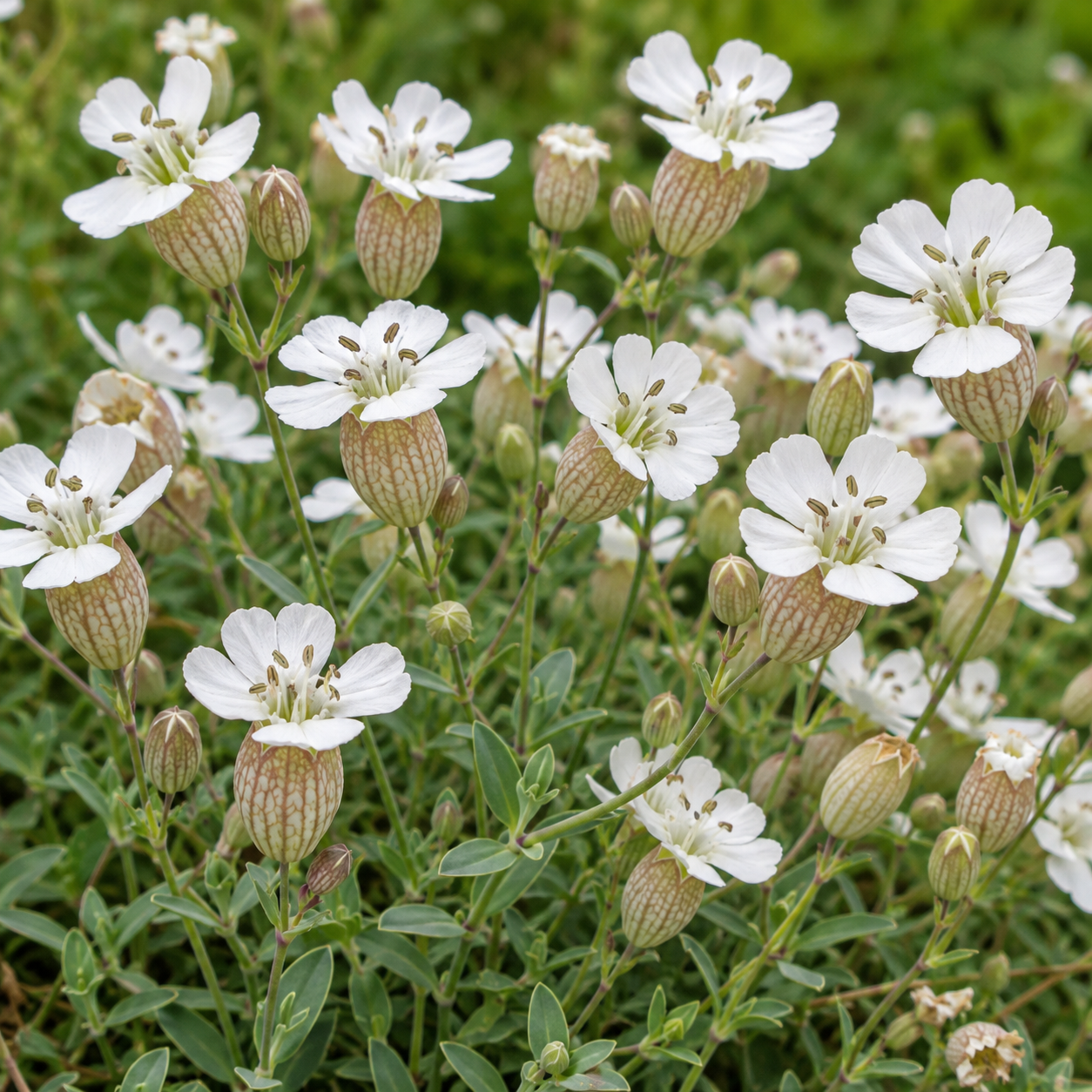
Silene uniflora ssp. uniflora is an attractive, low-growing, mat-forming herbaceous perennial, typically reaching approximately 10–30 cm in height while spreading considerably wider through its numerous branching stems. Its delicate, prostrate to gently ascending shoots develop into softly rounded cushions or loose carpets of attractive, grey-green foliage. The leaves are oppositely arranged, somewhat fleshy and narrowly lance-shaped to elliptical, often displaying a subtle bluish-green or silvery-grey appearance that beautifully complements the flowers. Rising gracefully above the compact foliage are exquisite snow-white blossoms, generally measuring approximately 20–25 mm across, each featuring five deeply notched petals that create the appearance of ten elegantly rounded floral lobes. The delicate petals surround a prominent cluster of pale stamens tipped with contrasting olive-brown to purplish anthers, while a subtle central crown of small white floral scales adds another layer of intricate beauty. Perhaps the plant’s most remarkable ornamental feature is its unusually inflated, bladder-like calyx, typically pale green to creamy-white and decorated with an extraordinary network of fine pinkish-brown, copper or reddish-purple veins. These beautifully patterned, almost translucent structures resemble miniature botanical lanterns, creating a spectacular contrast against the luminous white flowers and attractive foliage.
In its native European habitat, Silene uniflora ssp. uniflora flowers predominantly from late spring through summer, generally between May and August, with the main flowering period often occurring from June to August along the cooler Atlantic and northern European coastlines. In favourable conditions, flowering may begin earlier or extend into early autumn. Its blossoms are predominantly pure white to creamy white, occasionally displaying the faintest pinkish or purplish undertones, particularly towards the petal bases. The flowers are generally carried singly or in small, loosely arranged clusters on slender stems, allowing each delicate blossom to stand out beautifully against the surrounding foliage. Particularly fascinating is the contrast between the pristine white petals and the elaborate net-like markings of the inflated calyces, which remain ornamental as the flowers mature and seed capsules develop. When cultivated in groups, the numerous open blossoms create a wonderfully charming display of white floral cups suspended above a tapestry of softly coloured leaves and intricately patterned balloon-like calyces, making Sea Campion an exceptional choice for gardeners who appreciate delicate botanical elegance.
Beyond its ornamental appeal, Silene uniflora ssp. uniflora is especially fascinating for its remarkable adaptations to exposed coastal environments. Its compact, cushion-forming habit allows it to withstand persistent maritime winds, while its slightly fleshy foliage and persistent root system help it survive in freely draining, often nutrient-poor soils. Despite its delicate appearance, Sea Campion is a surprisingly resilient perennial capable of flourishing in locations where many conventional garden plants struggle. An especially intriguing botanical characteristic is its ability to tolerate certain naturally challenging soil conditions, with some populations of Silene uniflora having colonised metal-rich mining spoil and developed remarkable tolerance to elevated concentrations of zinc. Its nectar-producing flowers also provide valuable resources for pollinating insects, including bees and night-flying moths. Historically, the species has been known under several botanical names, including Silene maritima and Silene vulgaris ssp. maritima, reflecting its close relationship with the equally fascinating Bladder Campion. Its combination of coastal resilience, intricate floral structures and attractive spreading growth makes it particularly suitable for alpine gardens, coastal rockeries, gravel gardens, raised beds and specialised botanical collections. South African growers, especially those gardening in cooler coastal districts or Mediterranean-type climates, may find it an intriguing ornamental subject, while international gardeners will appreciate its adaptability to temperate coastal conditions and its distinctive European wildflower character. Excellent drainage, ample sunlight and protection from excessive summer heat are particularly important when cultivating this cool-temperate species in warmer regions.
Bring the timeless elegance of Europe’s wild coastlines to your garden with Silene uniflora ssp. uniflora. Whether you are passionate about unusual flowering perennials, fascinated by maritime plants or searching for a distinctive botanical treasure with extraordinary ornamental features, Sea Campion offers a captivating combination of beauty, resilience and natural intrigue. Its exquisite snow-white flowers, wonderfully inflated and intricately veined calyces, and softly spreading grey-green foliage make it an irresistible addition to specialised plant collections and coastal-inspired gardens. Browse our online seed store and explore our ever-growing range of rare, unusual and fascinating species from South Africa and around the world. Check out our extensive and diverse selection of botanical treasures to begin your next growing adventure! Seeds and All offers combined South African and International shipping, making it easier for plant lovers worldwide to discover and grow extraordinary species.


