
Strophanthus divaricatus – Golden Dragon Vine – 3 Seed Pack
R29,75
INTERNATIONAL CUSTOMERS: Please read our shipping terms and conditions here before placing your order: Shipping Terms and Conditions
10 in stock
Few flowering plants combine extraordinary beauty, botanical intrigue and fascinating history quite like Strophanthus. Belonging to the Apocynaceae family, commonly known as the Dogbane or Oleander family, this remarkable genus comprises approximately 39 accepted species of tropical and subtropical shrubs, woody climbers and scrambling vines. Native primarily to Africa, with additional species occurring in Madagascar and tropical Asia, Strophanthus is celebrated for its spectacular, often fragrant flowers, which range from creamy white and pale yellow to pink, red and richly patterned combinations. Some species produce astonishingly long, slender, ribbon-like petals that twist and trail elegantly from the flower, creating an almost otherworldly appearance. Indeed, the name Strophanthus originates from the Greek words strophos, meaning twisted cord, and anthos, meaning flower, a fitting tribute to these extraordinary blooms.
Beyond its ornamental appeal, Strophanthus possesses a captivating ethnobotanical history. Several species, including Strophanthus gratus and Strophanthus kombe, are renowned for producing powerful cardiac glycosides that have attracted considerable scientific and medicinal interest. Traditionally, certain species were also used in the preparation of hunting arrow poisons, highlighting their remarkable chemical properties and extreme toxicity. With their glossy foliage, distinctive flowers and fascinating seed pods that release silky, wind-dispersed seeds, these exceptional plants offer collectors, botanical enthusiasts and adventurous gardeners an opportunity to cultivate some of the most unusual flowering species in the plant kingdom.
Strophanthus divaricatus – Golden Dragon Vine
Discover the extraordinary beauty of Strophanthus divaricatus, often called the Golden Dragon Vine, a fascinating and highly ornamental tropical climber renowned for its remarkable star-shaped flowers and extraordinarily long, golden-yellow floral ribbons. Belonging to the Apocynaceae family, commonly known as the Dogbane family, this distinctive species is native to southern China and northern Vietnam, where it inhabits tropical and subtropical forests, woodland margins, dense thickets and areas of secondary vegetation. Naturally occurring from near sea level to elevations of approximately 900 metres, it grows as a woody climbing vine or scrambling shrub, reaching approximately 4–5 metres in height when supported by surrounding vegetation. Its slender, branching stems bear attractive, opposite, elliptic to slightly obovate leaves with smooth margins, prominent veins and rich, glossy green surfaces. Particularly interesting among the predominantly African members of its genus, this exceptional Asian species offers collectors an opportunity to explore the remarkable geographical diversity of Strophanthus.
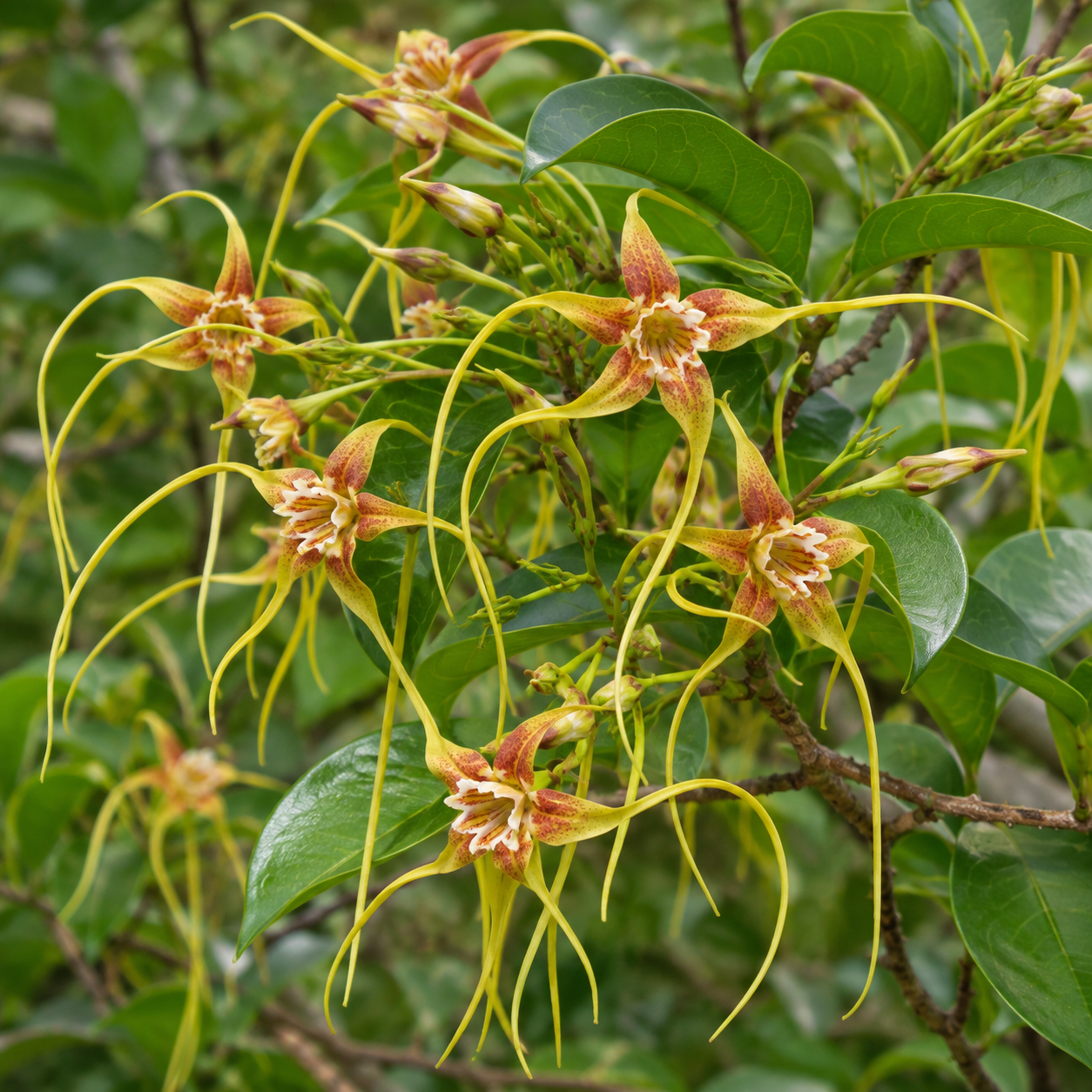
The magnificent flowers of Strophanthus divaricatus are true botanical masterpieces, displaying an intricate combination of delicate colouring and spectacular floral architecture! Produced in clusters along the climbing branches, the blossoms emerge creamy-white to pale yellow before gradually developing richer golden-yellow tones. Each extraordinary flower features five spreading, star-shaped corolla lobes beautifully decorated with reddish-brown to rusty-red spots and streaks, particularly towards their bases and around the floral throat. At the centre, a distinctive crown of ten small, creamy-white to pale greenish-yellow structures surrounds the reproductive organs, adding another fascinating element to the intricately patterned flowers. The most remarkable feature, however, is the extraordinary transformation of the corolla lobes into exceptionally long, slender, ribbon-like extensions that can reach approximately 10 cm in length. These graceful golden-yellow tails twist, curl and cascade dramatically around the blossoms, creating a spectacular display of delicate, flowing strands that appear almost like golden streamers suspended among the lush green foliage.
In its natural Asian habitat, Strophanthus divaricatus exhibits fascinating regional variations in its flowering season. In southern China, particularly Guangdong, Guangxi and surrounding regions, flowering can occur from November through May, with the most abundant displays generally appearing during April and May, corresponding to spring. In northern Vietnam, flowering is more commonly recorded during June and July, coinciding with the warmer, wetter summer months. This extended and geographically variable flowering period adds considerably to the species’ horticultural appeal. Following successful pollination, the flowers develop into distinctive pairs of elongated, rigid, woody seed follicles, typically measuring approximately 9–15 cm long. These unusual fruits spread widely apart, resembling a pair of slender horns, and eventually split open to release numerous elongated seeds equipped with silky, feather-like tufts. The delicate hairs allow the seeds to be carried away by the wind, providing an ingenious natural dispersal mechanism that complements the plant’s extraordinary floral adaptations.
For South African gardeners and international botanical enthusiasts, Strophanthus divaricatus offers an exciting opportunity to cultivate one of tropical Asia’s most unusual and visually striking flowering climbers. Its naturally scrambling growth habit makes it particularly attractive for sturdy trellises, pergolas, sheltered fences and specialist tropical plant displays. A fertile, freely draining growing medium, bright filtered sunlight or gentle morning sunshine, and regular watering during active growth should provide favourable conditions for healthy development. In South Africa’s warmer, frost-free subtropical regions, it may be cultivated outdoors in suitably protected positions, while growers in cooler international climates can enjoy this remarkable species in heated greenhouses, conservatories or spacious containers that can be moved indoors during winter. Beyond its outstanding ornamental qualities, Strophanthus divaricatus possesses an intriguing ethnobotanical history, having been used in traditional Chinese and Vietnamese preparations. However, its seeds and other plant parts contain highly poisonous cardiac glycosides and must never be consumed or used in homemade remedies. All plant material should be handled responsibly and kept safely away from children and pets.
Visit our online seed store and discover the extraordinary botanical diversity waiting to be grown! Buy Now or Add to Cart and explore our vast and diverse collection of rare, unusual and exotic species from around the world. Whether you are a passionate South African gardener or an international botanical collector, Seeds and All offers combined South African and International shipping, making it easier to grow something truly exceptional!


