
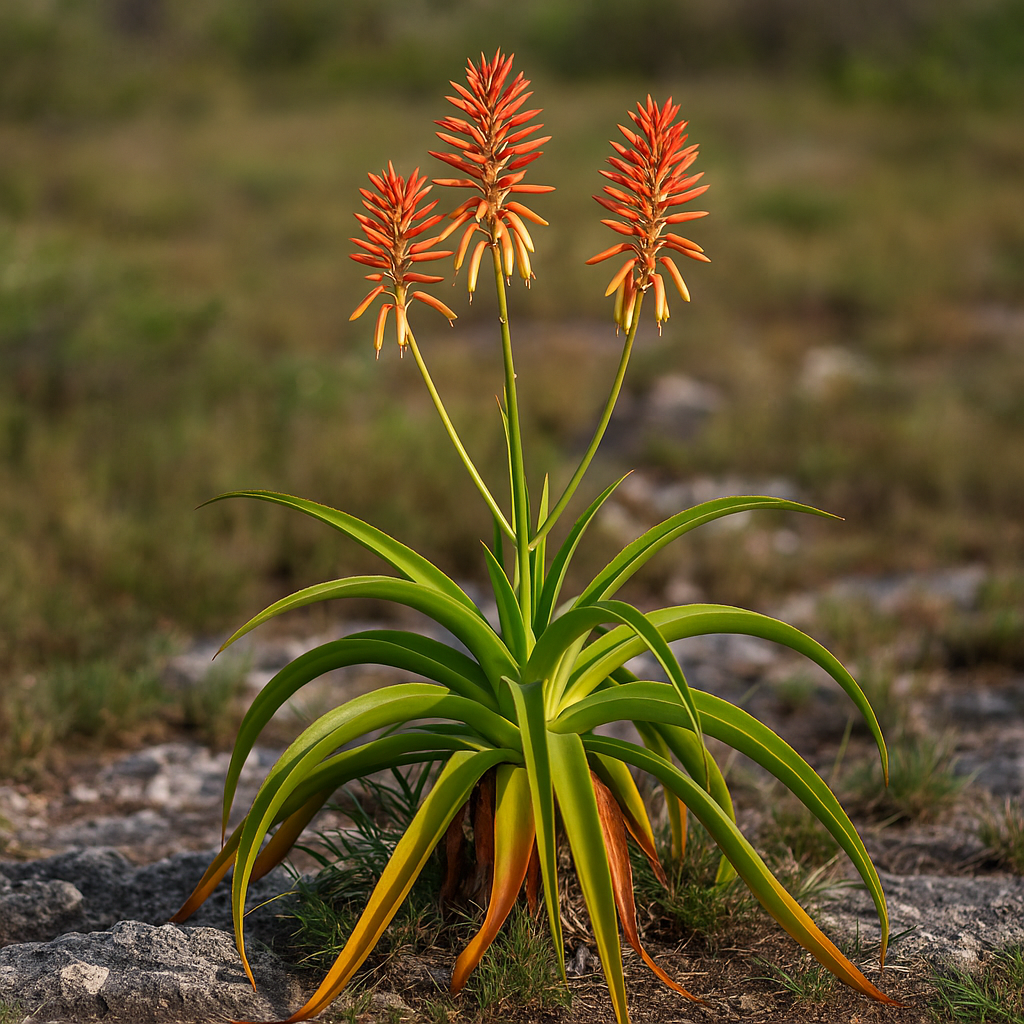
Aloe aldabrensis (Lomatophyllum aldabrense) – Aldabra Aloe – 5 Seed Pack
R215,00
INTERNATIONAL CUSTOMERS: Please read our shipping terms and conditions here before placing your order: Shipping Terms and Conditions
Out of stock
Email when stock available
Aloe is one of the most captivating succulent genera on Earth, celebrated for its bold architectural rosettes, resilient nature, and spectacular seasonal flower displays. From neat, miniature species that tuck themselves into rocky crevices to dramatic, stem-forming giants that dominate dry hillsides, aloes bring an unmistakable sense of place—sunlit, water-wise, and wonderfully wild—wherever they are grown.
What truly sets Aloe apart is the combination of sculptural foliage and nectar-rich blooms. The leaves range from smooth and glaucous to spotted, toothed, and richly textured, often changing colour with sun, drought, or cool weather. When they flower, aloes send up striking spikes or branched candelabras topped with tubular blooms in fiery reds and oranges, soft corals and pinks, or even yellows and greens—magnets for pollinators and a highlight in any garden or collection.
With origins spanning Africa, Madagascar, the Arabian Peninsula and surrounding regions, Aloe has evolved to thrive in demanding environments—making many species naturally suited to xeriscaping, rock gardens, containers, and drought-tolerant landscapes. Whether you’re a first-time grower or a seasoned collector, raising aloes from seed is especially rewarding: every plant tells a slightly different story, and each one matures into a unique, living sculpture that becomes more impressive with every season.
Aloe aldabrensis – Aldabra Aloe
Aloe aldabrensis, commonly known as the Aldabra Aloe, is a truly exotic treasure for collectors who enjoy growing plants with a strong sense of place. Endemic to the remote Aldabra atoll in the Seychelles, this species occurs naturally on sun-baked coastal limestone, growing amongst low scrub, driftwood and coral rock where few other succulents can cope. Originally described in the berry-fruited genus Lomatophyllum and still sometimes listed as Lomatophyllum aldabrense, it remains rare in cultivation and seed is seldom seen, making every seedling a small piece of Indian Ocean island flora for your collection.
Mature plants form a solitary to slowly clumping rosette of long, strap-like leaves that arch outwards in a graceful fountain, exactly as seen in our photographs. The leaves are glossy light to mid-green, often flushed orange-red on the outer, older blades in strong sun or seasonal drought, with fine but definite teeth along the margins. In habitat they sit snugly between pale limestone rocks and leaf litter, and the same effect can easily be recreated in a rockery or deep container with gritty, mineral soil. In flower, Aloe aldabrensis is spectacular: several tall, upright stems rise above the foliage, each branching near the top into slim, cylindrical racemes packed with glowing orange-red tubular flowers with yellowish tips – a perfect match to the images created for this listing. These nectar-rich blooms appear mainly in the warmer months, attracting sunbirds and other pollinators in frost-free climates, and are followed by small, fleshy, purple berries which contain the seeds.
For South African and international growers alike, Aloe aldabrensis is a rewarding but undemanding ornamental when given the conditions it enjoys in nature: full sun or very bright light, a warm aspect and sharply drained, lime-rich or sandy soil. It is ideal for coastal gardens, dry tropical and subtropical beds, or as a striking specimen in a large pot on a sunny patio, where its arching, sea-green leaves and coral-orange flowers lend a strong “island” character. In regions with frost or very cold winters, it is best grown in a greenhouse, sunroom or bright indoor position that stays above about 5–7 °C, with watering reduced in the cooler months. Sow fresh seed in a well-drained succulent mix, keep just lightly moist and warm, and you will soon have your own young Aldabra Aloes ready to plant into individual pots or a rocky bed. With patience, these seedlings will grow into the dramatic, long-leaved rosettes – a living reminder of one of the world’s most pristine coral atolls.


