
Aloe bukobana – 5 Seed Pack
R175,00
INTERNATIONAL CUSTOMERS: Please read our shipping terms and conditions here before placing your order: Shipping Terms and Conditions
10 in stock
Aloe is one of the most captivating succulent genera on Earth, celebrated for its bold architectural rosettes, resilient nature, and spectacular seasonal flower displays. From neat, miniature species that tuck themselves into rocky crevices to dramatic, stem-forming giants that dominate dry hillsides, aloes bring an unmistakable sense of place—sunlit, water-wise, and wonderfully wild—wherever they are grown.
What truly sets Aloe apart is the combination of sculptural foliage and nectar-rich blooms. The leaves range from smooth and glaucous to spotted, toothed, and richly textured, often changing colour with sun, drought, or cool weather. When they flower, aloes send up striking spikes or branched candelabras topped with tubular blooms in fiery reds and oranges, soft corals and pinks, or even yellows and greens—magnets for pollinators and a highlight in any garden or collection.
With origins spanning Africa, Madagascar, the Arabian Peninsula and surrounding regions, Aloe has evolved to thrive in demanding environments—making many species naturally suited to xeriscaping, rock gardens, containers, and drought-tolerant landscapes. Whether you’re a first-time grower or a seasoned collector, raising aloes from seed is especially rewarding: every plant tells a slightly different story, and each one matures into a unique, living sculpture that becomes more impressive with every season.
Aloe bukobana
Aloe bukobana is a compact, clumping aloe from the sandstone hills fringing Lake Victoria in north-western Tanzania, with its range extending into Rwanda, Burundi and south-western Uganda. In the wild it anchors itself in shallow soil pockets and rock crevices along short-grass, lichen-spotted escarpments between roughly 1 150 and 1 470 m altitude, where it endures intense sun, heavy summer rain and long, dry spells. This tough origin makes it an excellent candidate for water-wise gardens and collectors who value truly wild-looking East African species.
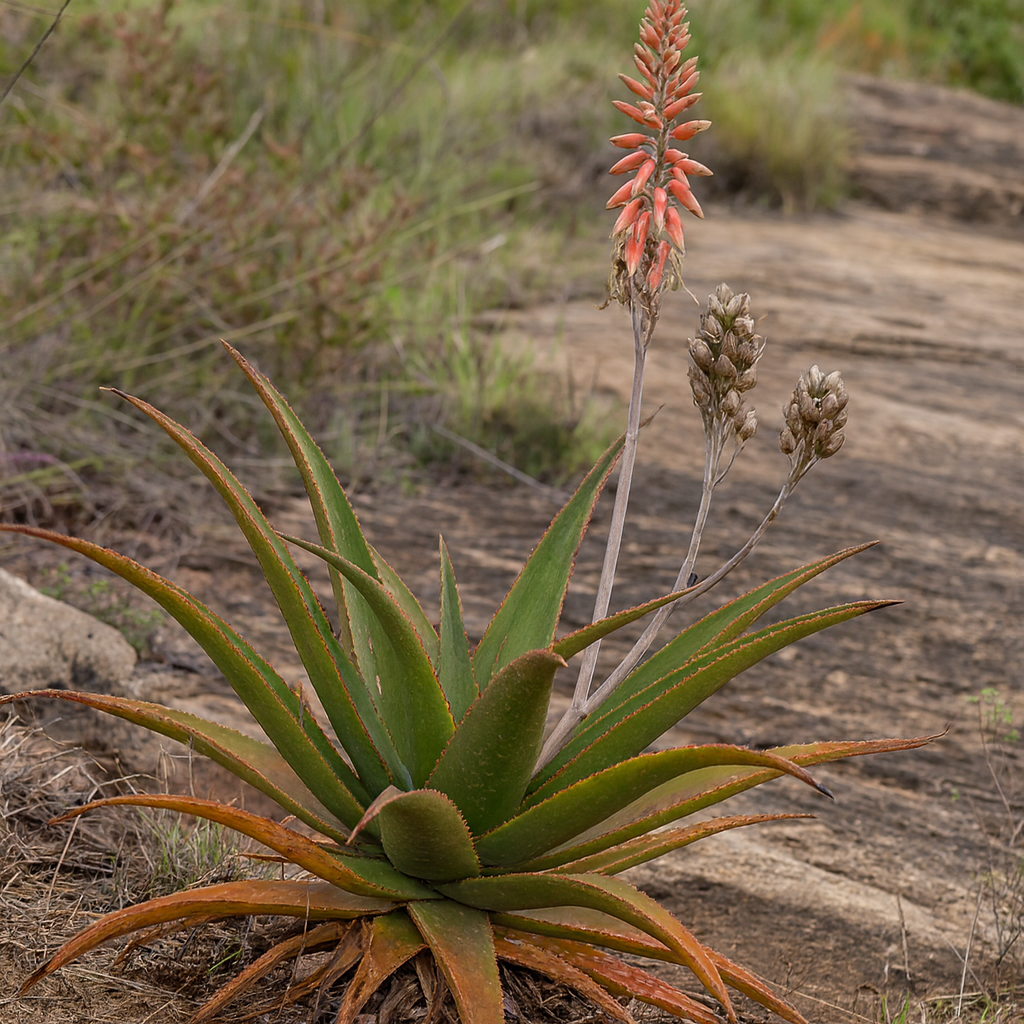
Plants form low, stemless rosettes that slowly divide into neat clumps. The leaves are narrow, triangular and slightly channeled, spreading and then gently arching outward over the rocks. Fresh growth is a rich, glossy green lightly decorated with pale transverse spots, while older leaves often take on warm bronze tones, especially in strong sun, with the small triangular teeth along the margins colouring a handsome reddish brown. The whole rosette has a poised, alert look – elegant enough for a feature pot, yet perfectly at home tucked between stones in a naturalistic rock garden.
In season Aloe bukobana sends up a slender, upright inflorescence that branches into several short, cylindrical racemes crowded with tubular flowers. The buds are a soft coral-to-salmon orange with paler tips, deepening in colour as they open and creating a striking contrast against the cool green of the leaves. In its native range it typically flowers in the warmer months, providing valuable nectar for sunbirds and insects; in cultivation, with good light and a marked dry rest, it usually blooms at least once a year and often more readily than many larger species.
For growers in South Africa and abroad, Aloe bukobana is an easy, rewarding species when given sharp drainage, plenty of sun and a watering regime that mimics its rocky homeland – thorough soaking followed by a full dry-down. It is ideal for containers, raised beds and rockeries, combining beautifully with other small aloes, dwarf agaves and grass-like companions. From a conservation and collector’s perspective, seed-grown plants offer the chance to cultivate a genuinely rare East African aloe while helping to reduce pressure on wild populations – a rugged, beautiful species that brings a piece of the Lake Victoria escarpment into your garden.


