
Aloe calidophila – 5 Seed Pack
R180,00
INTERNATIONAL CUSTOMERS: Please read our shipping terms and conditions here before placing your order: Shipping Terms and Conditions
10 in stock
Aloe is one of the most captivating succulent genera on Earth, celebrated for its bold architectural rosettes, resilient nature, and spectacular seasonal flower displays. From neat, miniature species that tuck themselves into rocky crevices to dramatic, stem-forming giants that dominate dry hillsides, aloes bring an unmistakable sense of place—sunlit, water-wise, and wonderfully wild—wherever they are grown.
What truly sets Aloe apart is the combination of sculptural foliage and nectar-rich blooms. The leaves range from smooth and glaucous to spotted, toothed, and richly textured, often changing colour with sun, drought, or cool weather. When they flower, aloes send up striking spikes or branched candelabras topped with tubular blooms in fiery reds and oranges, soft corals and pinks, or even yellows and greens—magnets for pollinators and a highlight in any garden or collection.
With origins spanning Africa, Madagascar, the Arabian Peninsula and surrounding regions, Aloe has evolved to thrive in demanding environments—making many species naturally suited to xeriscaping, rock gardens, containers, and drought-tolerant landscapes. Whether you’re a first-time grower or a seasoned collector, raising aloes from seed is especially rewarding: every plant tells a slightly different story, and each one matures into a unique, living sculpture that becomes more impressive with every season.
Aloe calidophila
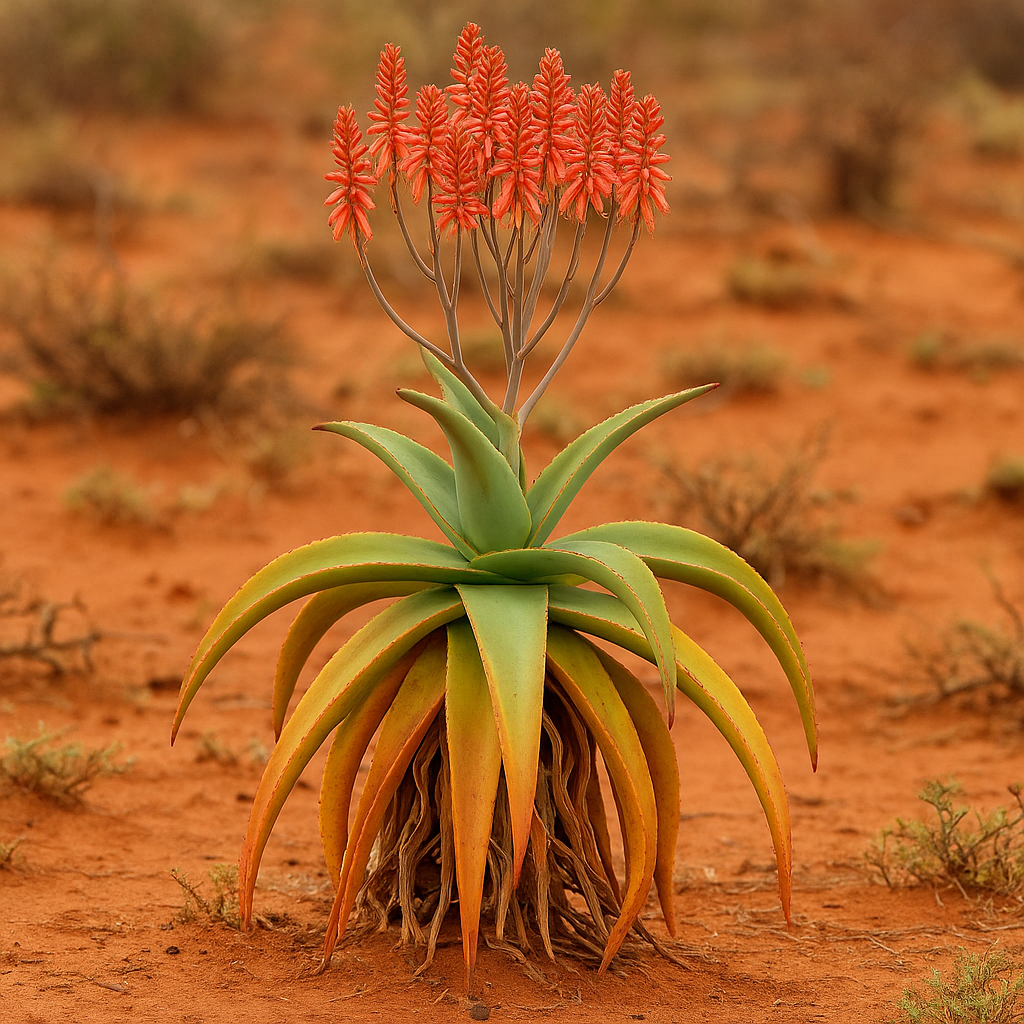
Aloe calidophila is a striking, heat-loving species from the arid bushlands of north-eastern Africa (Kenya), where it grows on rocky, sun-baked slopes and red sandy plains. Still rarely seen in cultivation, it forms a bold, architectural rosette that instantly evokes the open savanna. Mature plants build a broad rosette on a very short stem, with firm, slightly recurving leaves that can reach half a metre long. The upper leaves are a cool, glaucous green, while the older, lower leaves age through warm yellow and coppery tan tones, giving the plant a beautiful two-tone skirt even when it is not in bloom. Leaf margins carry evenly spaced, small teeth that are conspicuous but not overly vicious, adding just the right amount of texture.
When flowering season arrives, Aloe calidophila becomes genuinely spectacular. A tall, well-branched inflorescence rises well above the foliage, carrying many upright, cylindrical racemes crowded with tubular blossoms. The flowers open in rich salmon to orange-red shades with softer yellow tones toward the mouths, glowing against the blue-green leaves and drawing in nectar-feeding birds and insects. In its home range it tends to flower in the cooler, dry months, and in cultivation it usually blooms from mid-winter to early spring if given good light and a pronounced dry rest.
For South African and international growers, this species makes an excellent choice for hot, dry gardens and water-wise landscaping, as well as for large containers in regions with colder winters. It thrives in full sun, intense heat and sharply drained, sandy or stony soil, and is happiest when watered deeply but infrequently, with the soil allowed to dry between waterings. In frost-prone climates it should be grown in a pot that can be moved under cover or given light protection during very cold snaps. With its bold rosette, warm leaf colours and flamboyant branched flower display, Aloe calidophila offers collectors and designers a truly distinctive species that brings an authentic piece of the African semi-desert into any garden or aloe collection.


