
Aloe classenii – 5 Seed Pack
R175,00
INTERNATIONAL CUSTOMERS: Please read our shipping terms and conditions here before placing your order: Shipping Terms and Conditions
5 in stock
Aloe is one of the most captivating succulent genera on Earth, celebrated for its bold architectural rosettes, resilient nature, and spectacular seasonal flower displays. From neat, miniature species that tuck themselves into rocky crevices to dramatic, stem-forming giants that dominate dry hillsides, aloes bring an unmistakable sense of place—sunlit, water-wise, and wonderfully wild—wherever they are grown.
What truly sets Aloe apart is the combination of sculptural foliage and nectar-rich blooms. The leaves range from smooth and glaucous to spotted, toothed, and richly textured, often changing colour with sun, drought, or cool weather. When they flower, aloes send up striking spikes or branched candelabras topped with tubular blooms in fiery reds and oranges, soft corals and pinks, or even yellows and greens—magnets for pollinators and a highlight in any garden or collection.
With origins spanning Africa, Madagascar, the Arabian Peninsula and surrounding regions, Aloe has evolved to thrive in demanding environments—making many species naturally suited to xeriscaping, rock gardens, containers, and drought-tolerant landscapes. Whether you’re a first-time grower or a seasoned collector, raising aloes from seed is especially rewarding: every plant tells a slightly different story, and each one matures into a unique, living sculpture that becomes more impressive with every season.
Aloe classenii
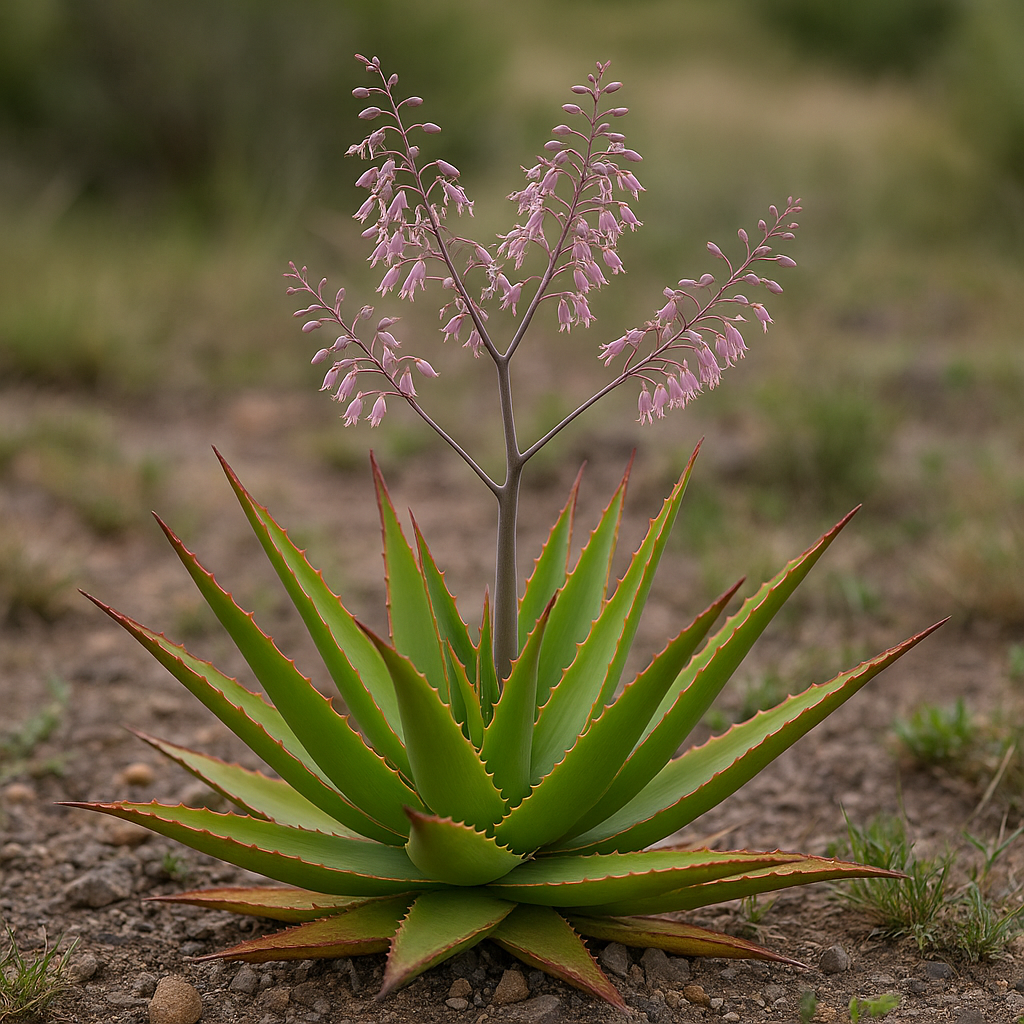
Aloe classenii is a very localised cliff aloe from Kenya, prized by collectors for its elegant form and airy, cloud-like flowers. In habitat it occupies humus pockets on gneiss outcrops around 600 m altitude, where it endures intense sun, wind and summer heat. In cultivation it keeps the same tough, architectural character, forming dense groups of rosettes that bring a strong sculptural focus to any rockery or succulent collection, while every flowering season it transforms into a haze of soft colour high above the foliage.
Plants are stemless to shortly stemmed, freely suckering from the base and eventually forming tight clumps. Each rosette carries around two dozen long, lance-shaped leaves that are dark olive green and often flush rich reddish tones on the sun-exposed side. Leaf surfaces are smooth and slightly glossy, with a narrow line of sharp, pale brown teeth along the margins and a firm terminal spine at the tip, giving the rosette a crisp, starburst outline. In good light the leaves remain compact and upright, making the plant ideal as a feature specimen in a dry border, raised bed or large container.
The inflorescences are one of the charms of Aloe classenii. Strong, purplish stalks rise well above the foliage and branch many times, carrying slender, cylindrical racemes crowded with small, tubular blooms. The flowers themselves are a deep wine-red to dusty pink, often with a soft powdery bloom, and hang gracefully on short pedicels with the stamens and style just protruding from the mouth. In suitable conditions plants usually flower in the cooler, drier months from late winter into spring, providing valuable nectar for sunbirds and other pollinators at a time when colour is often scarce in the garden.
For South African and international growers alike, Aloe classenii is surprisingly undemanding if its basic needs are met. Provide a very well-drained, gritty mix, a sunny position and infrequent, deep watering during the warmer growing season, allowing the soil to dry out between waterings. It tolerates heat and drought well, but should be protected from severe or prolonged frost; in colder climates it is best grown in a container that can be moved under cover for winter. Seed-grown plants adapt readily to cultivation, and by growing this species from seed you also help take pressure off its wild populations while enjoying a rare, beautifully proportioned aloe in your own collection.


