
Aloe diolii – 5 Seed Pack
R145,00
INTERNATIONAL CUSTOMERS: Please read our shipping terms and conditions here before placing your order: Shipping Terms and Conditions
10 in stock
Aloe is one of the most captivating succulent genera on Earth, celebrated for its bold architectural rosettes, resilient nature, and spectacular seasonal flower displays. From neat, miniature species that tuck themselves into rocky crevices to dramatic, stem-forming giants that dominate dry hillsides, aloes bring an unmistakable sense of place—sunlit, water-wise, and wonderfully wild—wherever they are grown.
What truly sets Aloe apart is the combination of sculptural foliage and nectar-rich blooms. The leaves range from smooth and glaucous to spotted, toothed, and richly textured, often changing colour with sun, drought, or cool weather. When they flower, aloes send up striking spikes or branched candelabras topped with tubular blooms in fiery reds and oranges, soft corals and pinks, or even yellows and greens—magnets for pollinators and a highlight in any garden or collection.
With origins spanning Africa, Madagascar, the Arabian Peninsula and surrounding regions, Aloe has evolved to thrive in demanding environments—making many species naturally suited to xeriscaping, rock gardens, containers, and drought-tolerant landscapes. Whether you’re a first-time grower or a seasoned collector, raising aloes from seed is especially rewarding: every plant tells a slightly different story, and each one matures into a unique, living sculpture that becomes more impressive with every season.
Aloe diolii
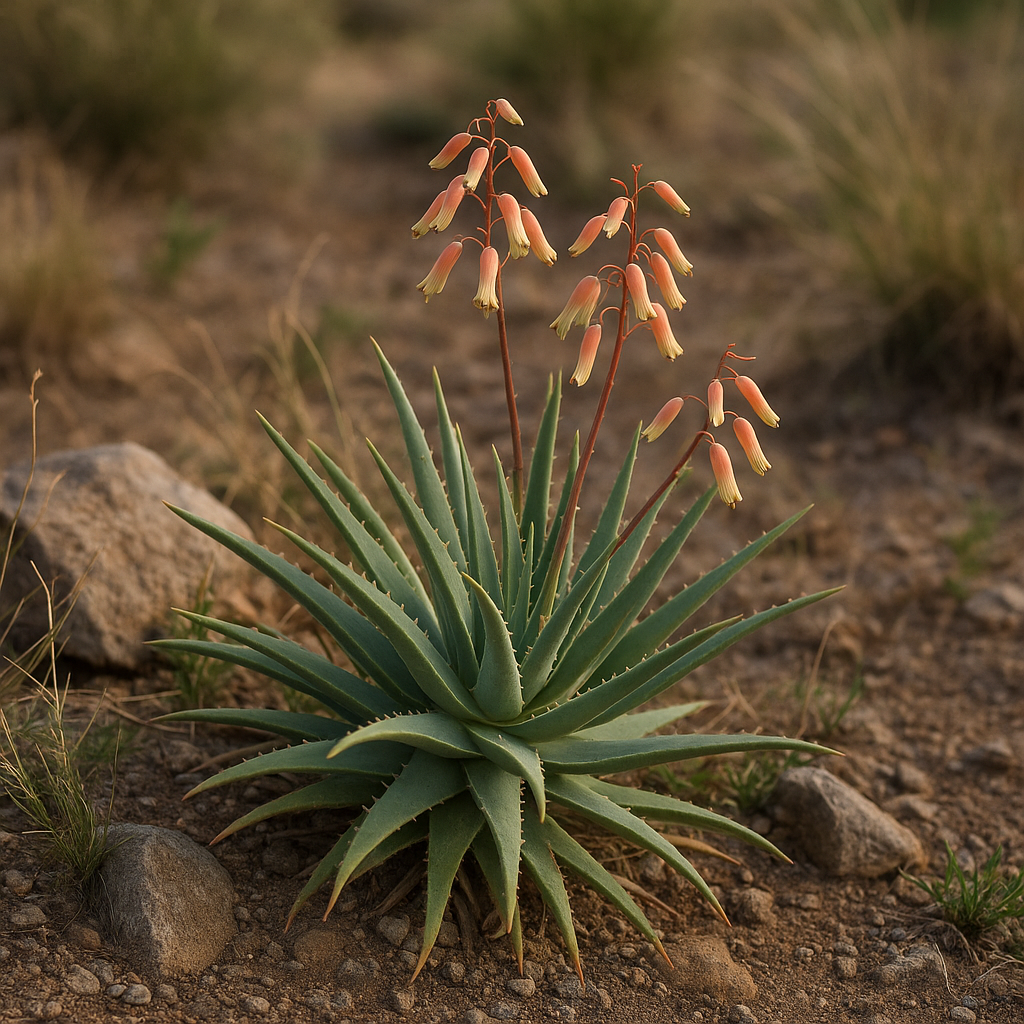
Aloe diolii is a graceful, Sudanese to Ethiopian scrambling aloe for collectors who enjoy more unusual, fine-textured species. Instead of forming a single rigid rosette, it develops low, branching clumps of many slender stems, each tipped with a star of narrow leaves. In its natural habitat it creeps between rocks and grasses on dry slopes, using its flexible shoots to weave through surrounding vegetation and catch every ray of sun. This growth habit makes it an excellent choice for naturalistic plantings, rockeries and mixed succulent beds where it can wander a little and soften hard edges.
The leaves are long, thin and slightly three-dimensional rather than flat, coloured a fresh grey-green to blue-green and scattered with small pale spots and fine, evenly-spaced teeth on the margins. As clumps mature, numerous wiry flower stalks rise above the foliage, branching near the top. The buds open into clusters of neat tubular flowers in soft shades of pink and coral with pale yellow to greenish tips – a delicate, almost pastel palette that glows beautifully in soft light. In warm climates the main flowering period is from late winter into spring, but established plants often flower more than once a year when well grown, providing a long season of colour and nectar for sunbirds and other pollinators.
For South African and international growers alike, Aloe diolii is easy and rewarding. It prefers a very well-drained, gritty soil and a sunny to lightly dappled position. In the ground, give it a slope, terrace or rock crevice where water cannot lie around the roots; in containers, use a coarse succulent mix and avoid over-potting. It is tolerant of heat and periods of drought once established, asking only for occasional deep watering during the growing season and a drier rest in winter. In frost-free or very light-frost regions it can be grown outdoors year-round; in colder climates it thrives in pots that can be moved under cover during the coldest months.
Because it stays relatively low and spreads rather than towering upwards, Aloe diolii is ideal for the front of a bed, cascading slightly over rocks, the edge of raised planters, or as a textural foil to chunkier aloes and euphorbias. Its airy clumps of leaves and sprays of tubular flowers give a wild, natural feel, yet the plant remains neat and manageable with minimal grooming. From specialist aloe enthusiasts to gardeners simply wanting something different in their drought-tolerant plantings, this species offers a distinctive, elegant look from a surprisingly tough and undemanding plant.


