
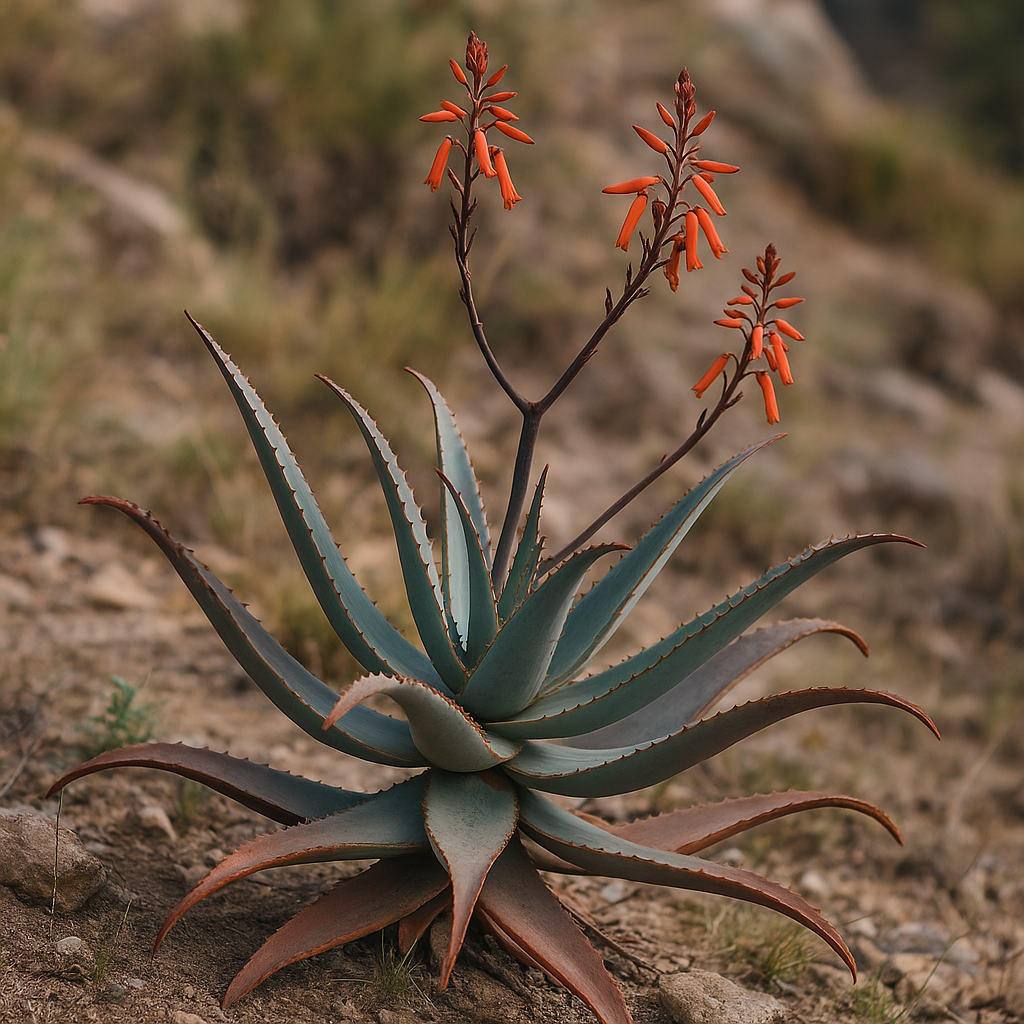
Aloe divaricata – 5 Seed Pack
R125,00
INTERNATIONAL CUSTOMERS: Please read our shipping terms and conditions here before placing your order: Shipping Terms and Conditions
9 in stock
Aloe is one of the most captivating succulent genera on Earth, celebrated for its bold architectural rosettes, resilient nature, and spectacular seasonal flower displays. From neat, miniature species that tuck themselves into rocky crevices to dramatic, stem-forming giants that dominate dry hillsides, aloes bring an unmistakable sense of place—sunlit, water-wise, and wonderfully wild—wherever they are grown.
What truly sets Aloe apart is the combination of sculptural foliage and nectar-rich blooms. The leaves range from smooth and glaucous to spotted, toothed, and richly textured, often changing colour with sun, drought, or cool weather. When they flower, aloes send up striking spikes or branched candelabras topped with tubular blooms in fiery reds and oranges, soft corals and pinks, or even yellows and greens—magnets for pollinators and a highlight in any garden or collection.
With origins spanning Africa, Madagascar, the Arabian Peninsula and surrounding regions, Aloe has evolved to thrive in demanding environments—making many species naturally suited to xeriscaping, rock gardens, containers, and drought-tolerant landscapes. Whether you’re a first-time grower or a seasoned collector, raising aloes from seed is especially rewarding: every plant tells a slightly different story, and each one matures into a unique, living sculpture that becomes more impressive with every season.
Aloe divaricata
Aloe divaricata is a striking Madagascan aloe for growers who love architectural form and rich, glowing colour. This species forms elegant, open rosettes of long, narrow leaves that curve and twist outward in all directions, creating a spidery fountain of steely blue-green foliage. In strong light the leaf surfaces take on soft grey and lilac tints, while the finely toothed margins often blush pink to bronze, giving the plant a subtle two-tone effect even when it is not in flower. With age, plants can form low, many-headed clumps that make a dramatic focal point in a dry garden, rockery or large container.
In habitat, Aloe divaricata is endemic to Madagascar where it grows on rocky hillsides, ledges and stony slopes, anchored into crevices with very little soil. The leaves are firm but relatively slender, armed with evenly spaced, small triangular teeth along the edges and narrowing to elegant, tapered tips. Flowering plants send up well-branched inflorescences that rise cleanly above the foliage, each branch carrying rows of tubular flowers that open from the base upwards. The blossoms are a deep coral to orange-red with softer, paler mouths and small greenish tips, standing out brilliantly against the cool-toned leaves.
In cultivation this aloe is well suited to warm, dry climates and Mediterranean or summer-rainfall gardens, provided drainage is excellent. It thrives in full sun to very bright light, where its colours intensify and the rosettes remain tight and upright. In mild climates it is ideal on a slope, rock wall or raised bed, while in colder regions it can be grown in a pot and moved under cover for winter. Flowering typically occurs from late winter into early spring, but may vary with local conditions. The long-lasting blooms are attractive to sunbirds and other nectar feeders, adding life and movement to the garden.
Seed-grown plants adapt readily to both South African and international conditions when given a gritty, fast-draining mix and careful watering. Sow fresh seed in late spring or early summer in a shallow tray, keep just lightly moist and provide warmth and bright, filtered light until germination. Young seedlings are surprisingly tough and quickly develop their characteristic spotted, blue-green leaves. With a little patience, Aloe divaricata will reward the grower with a sculptural, drought-tolerant specimen that captures the wild, rocky landscapes of Madagascar in miniature.
All orders will receive a discount coupon to be redeemed on your next purchase.
Seeds you may also like
Related Seed Products
Related products
-

Albuca maxima – Soldier-in-a-box, Geldbeursie, Wit Tamarak – 5 Seed Pack
R14,25 -

Albuca abyssinica – Koyosa, Kitunguu Pori – 5 Seed Pack
R11,25 -

Albuca grandis – 5 Seed Pack
R21,25 -

Acorus calamus – Sweet Flag Grass, Single-vein Sweetflag, Calamus – 10 Seed Pack
R15,00 -

Acrolophia cochlearis – 10+ Seed Pack
R16,50
