
Aloe knersvlakensis (Aloe khamiesensis subsp. knersvlakensis) – Knersvlakte Aloe – 5 Seed Pack
R195,00
INTERNATIONAL CUSTOMERS: Please read our shipping terms and conditions here before placing your order: Shipping Terms and Conditions
5 in stock
Aloe is one of the most captivating succulent genera on Earth, celebrated for its bold architectural rosettes, resilient nature, and spectacular seasonal flower displays. From neat, miniature species that tuck themselves into rocky crevices to dramatic, stem-forming giants that dominate dry hillsides, aloes bring an unmistakable sense of place—sunlit, water-wise, and wonderfully wild—wherever they are grown.
What truly sets Aloe apart is the combination of sculptural foliage and nectar-rich blooms. The leaves range from smooth and glaucous to spotted, toothed, and richly textured, often changing colour with sun, drought, or cool weather. When they flower, aloes send up striking spikes or branched candelabras topped with tubular blooms in fiery reds and oranges, soft corals and pinks, or even yellows and greens—magnets for pollinators and a highlight in any garden or collection.
With origins spanning Africa, Madagascar, the Arabian Peninsula and surrounding regions, Aloe has evolved to thrive in demanding environments—making many species naturally suited to xeriscaping, rock gardens, containers, and drought-tolerant landscapes. Whether you’re a first-time grower or a seasoned collector, raising aloes from seed is especially rewarding: every plant tells a slightly different story, and each one matures into a unique, living sculpture that becomes more impressive with every season.
Aloe knersvlakensis (Aloe khamiesensis subsp. knersvlakensis) – Knersvlakte Aloe
Rare, sculptural, and unmistakably “Knersvlakte” in character, Aloe knersvlakensis is a compact jewel from South Africa’s succulent karoo. In habitat it sits naturally among stones and low vygieveld shrubs, where the light is bright, the soil is sharply drained, and every drop of moisture counts. For collectors and growers worldwide, it offers that sought-after combination of wild provenance, architectural form, and a distinctive flowering season.
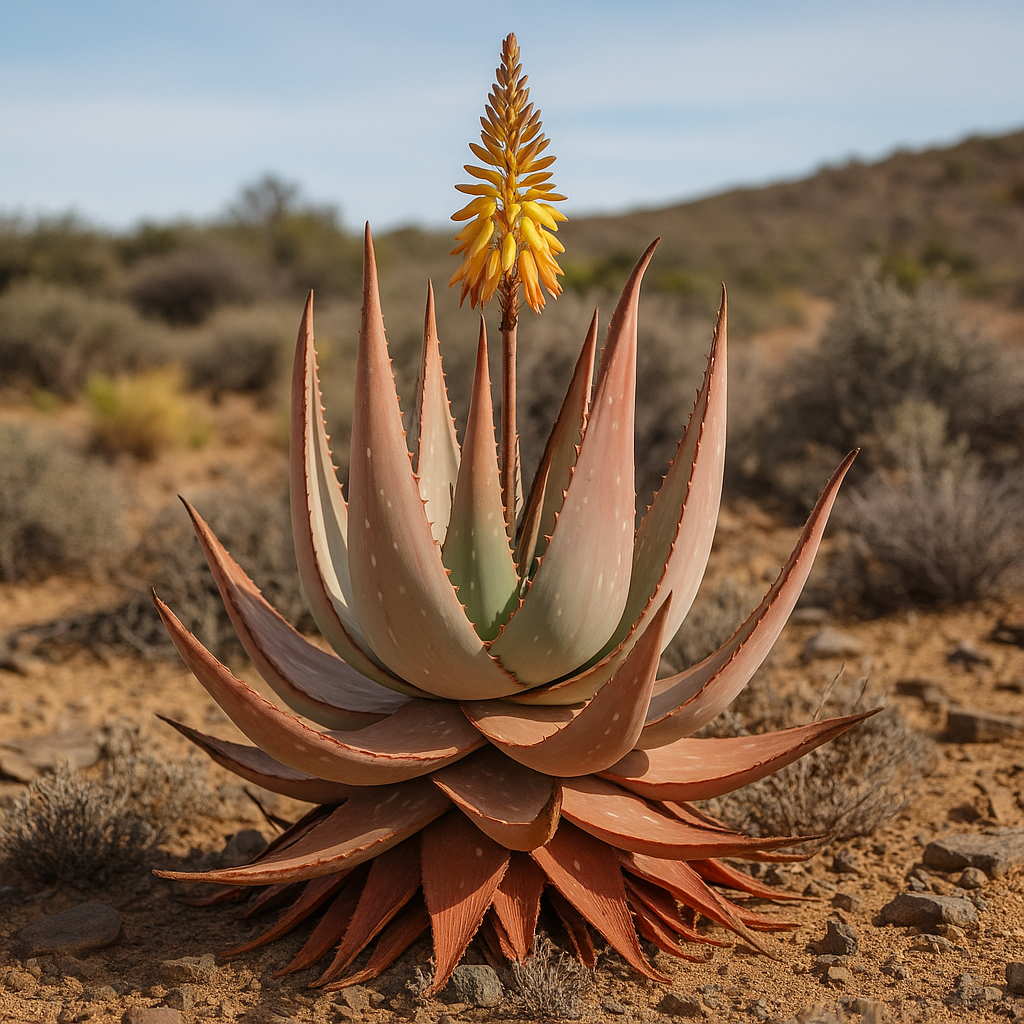
This aloe typically forms a neat, upright rosette that can become clump-forming with time, producing multiple heads on short, often branching stems. The leaves are pale green to blue-green and may show subtle spotting, with a clean, lineate look and pronounced reddish-brown marginal teeth that give the rosette a crisp, edged silhouette. In strong sun and dry conditions the leaf tones can warm to muted blushes and earthy pink-browns, creating a striking contrast against the surrounding gravel and rock.
Flowering is a highlight: branched inflorescences carry dense, torch-like racemes of tubular blooms in glowing orange-red, often finishing in lighter yellow to greenish-yellow tips, creating a warm, sunset gradient. In cultivation this display is most often associated with early autumn (commonly around March – April in the Southern Hemisphere), when the plant sends up its slender stalks above the rosettes and brings a bold burst of colour to an otherwise understated landscape palette.
Endemic to the Knersvlakte region of South Africa (a highly specialised quartz-gravel and rocky-ridge habitat within the Succulent Karoo), this plant is best grown hard and bright to keep its form tight and true. Give it maximum light, excellent airflow, and a mineral, fast-draining medium; water sparingly and allow the mix to dry well between waterings. From seed, patience is rewarded with plants that develop real character over time – ideal for serious aloe enthusiasts, conservation-minded collectors, and anyone who appreciates the beauty of a truly habitat-shaped succulent.


