
Aloe lavranosii – Lavranos’ Aloe – 5 Seed Pack
R225,00
INTERNATIONAL CUSTOMERS: Please read our shipping terms and conditions here before placing your order: Shipping Terms and Conditions
4 in stock
Aloe is one of the most captivating succulent genera on Earth, celebrated for its bold architectural rosettes, resilient nature, and spectacular seasonal flower displays. From neat, miniature species that tuck themselves into rocky crevices to dramatic, stem-forming giants that dominate dry hillsides, aloes bring an unmistakable sense of place—sunlit, water-wise, and wonderfully wild—wherever they are grown.
What truly sets Aloe apart is the combination of sculptural foliage and nectar-rich blooms. The leaves range from smooth and glaucous to spotted, toothed, and richly textured, often changing colour with sun, drought, or cool weather. When they flower, aloes send up striking spikes or branched candelabras topped with tubular blooms in fiery reds and oranges, soft corals and pinks, or even yellows and greens—magnets for pollinators and a highlight in any garden or collection.
With origins spanning Africa, Madagascar, the Arabian Peninsula and surrounding regions, Aloe has evolved to thrive in demanding environments—making many species naturally suited to xeriscaping, rock gardens, containers, and drought-tolerant landscapes. Whether you’re a first-time grower or a seasoned collector, raising aloes from seed is especially rewarding: every plant tells a slightly different story, and each one matures into a unique, living sculpture that becomes more impressive with every season.
Aloe lavranosii – Lavranos’ Aloe
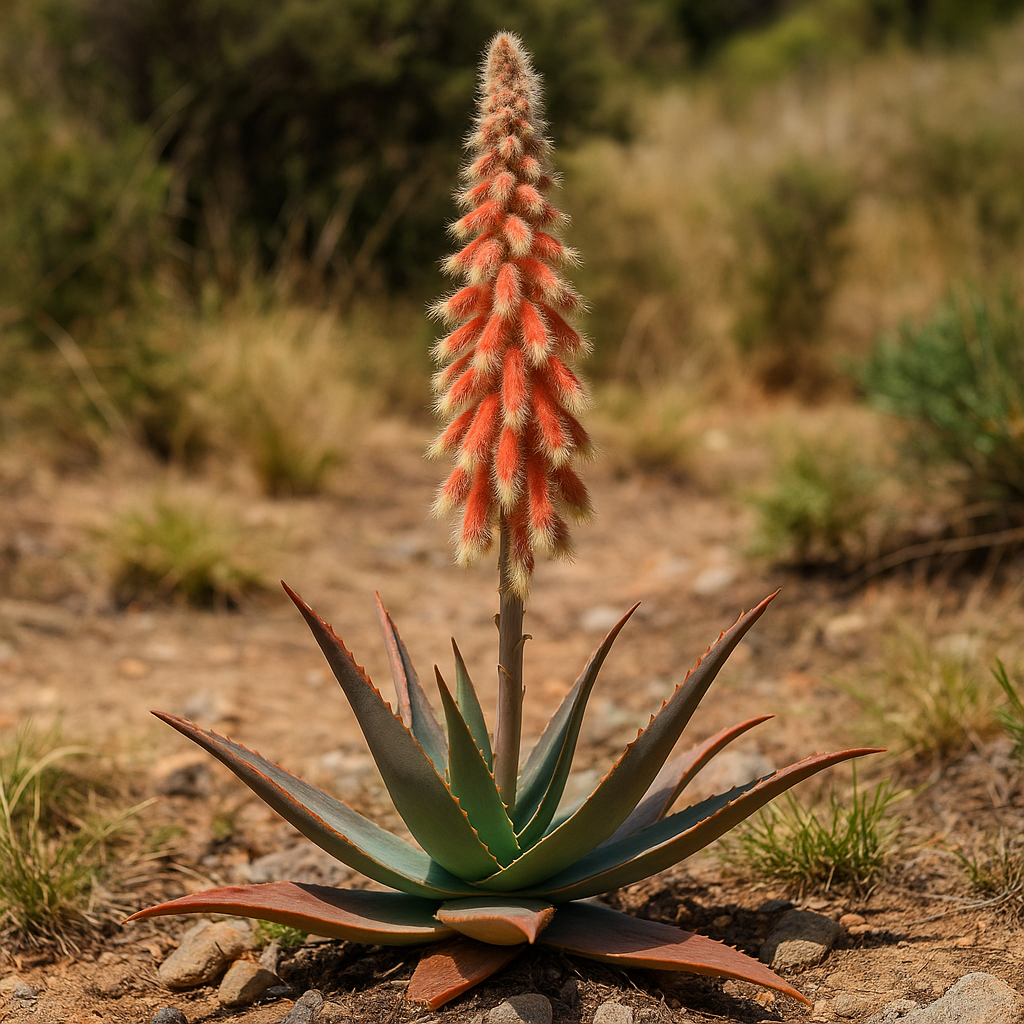
Aloe lavranosii is a true collector’s aloe with a bold, architectural presence even as a young plant. From seed it develops into a neat, grounded rosette that looks purpose-built for hot, open landscapes—clean lines, strong symmetry, and a subtle glaucous sheen that makes the foliage read as cool blue-green in natural light. When grown hard in bright sun, the plant rewards you with richer tones and sharper definition, turning each leaf into a sculptural blade.
In habitat this species is associated with the arid southern Arabian Peninsula, where aloes are shaped by intense sun, lean soils, and long dry spells. Expect it to appreciate open, well-drained ground with scattered stones and low, unobtrusive scrub—exactly the kind of dry, rocky setting where water moves through quickly and roots can breathe. It’s an excellent choice for xeric landscapes, rock gardens, and serious succulent collections where “tough beauty” is the goal.
The rosette is composed of thick, lance-shaped leaves that arch outward from a tight centre, with finely toothed margins that can flush warm orange-red along the edges under strong light and dryness. The flowering display is the showstopper: a tall, upright spike topped with a dense, tapered head of tubular blooms in fiery coral to orange-red, often softened by pale, fuzzy-looking buds/bracts that give the whole inflorescence a distinctive textured glow. Flowering is typically in the cooler season, most often from winter into early spring, with timing influenced by local conditions and rainfall patterns.


