
Aloe × imerinensis – 5 Seed Pack
R155,00
INTERNATIONAL CUSTOMERS: Please read our shipping terms and conditions here before placing your order: Shipping Terms and Conditions
5 in stock
Aloe is one of the most captivating succulent genera on Earth, celebrated for its bold architectural rosettes, resilient nature, and spectacular seasonal flower displays. From neat, miniature species that tuck themselves into rocky crevices to dramatic, stem-forming giants that dominate dry hillsides, aloes bring an unmistakable sense of place—sunlit, water-wise, and wonderfully wild—wherever they are grown.
What truly sets Aloe apart is the combination of sculptural foliage and nectar-rich blooms. The leaves range from smooth and glaucous to spotted, toothed, and richly textured, often changing colour with sun, drought, or cool weather. When they flower, aloes send up striking spikes or branched candelabras topped with tubular blooms in fiery reds and oranges, soft corals and pinks, or even yellows and greens—magnets for pollinators and a highlight in any garden or collection.
With origins spanning Africa, Madagascar, the Arabian Peninsula and surrounding regions, Aloe has evolved to thrive in demanding environments—making many species naturally suited to xeriscaping, rock gardens, containers, and drought-tolerant landscapes. Whether you’re a first-time grower or a seasoned collector, raising aloes from seed is especially rewarding: every plant tells a slightly different story, and each one matures into a unique, living sculpture that becomes more impressive with every season.
Aloe × imerinensis
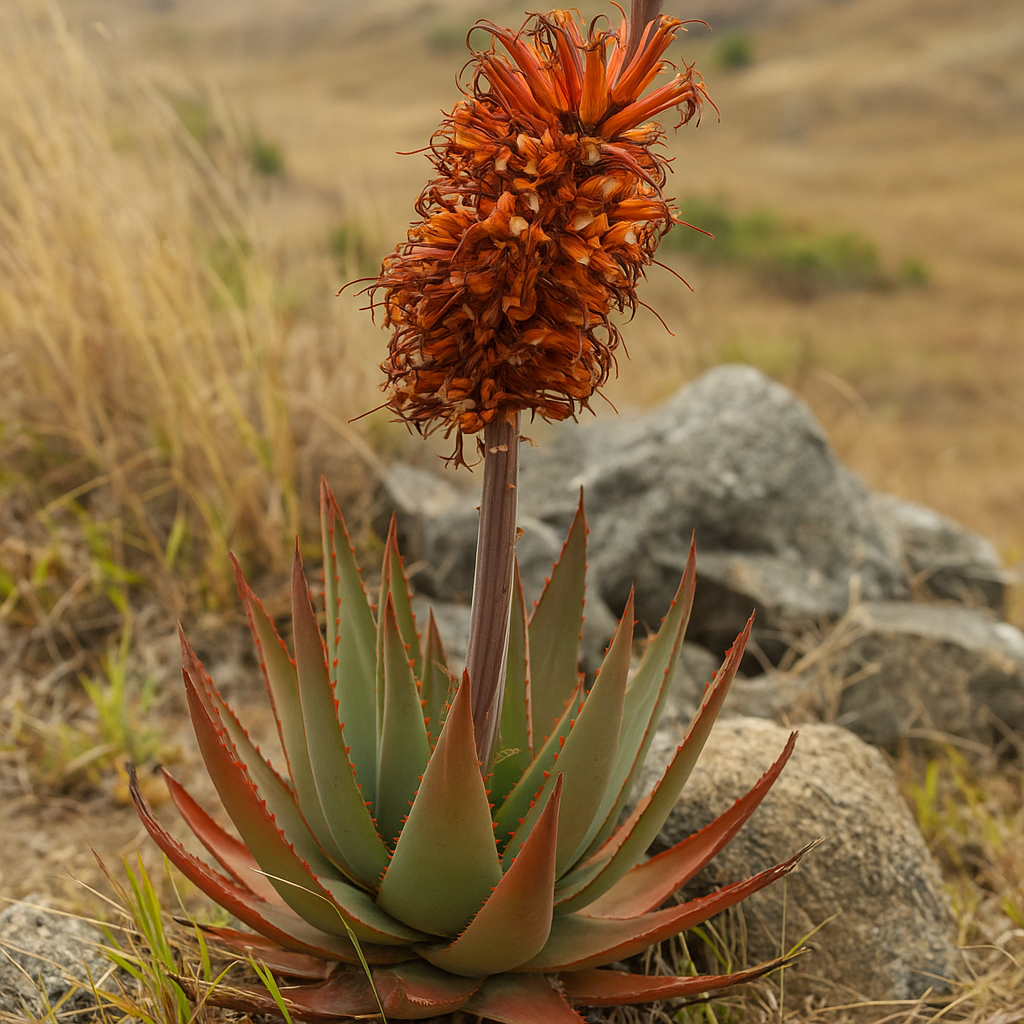
If you love aloes that look wild and dramatic in flower, Aloe × imerinensis is a real collector’s treat. It makes a bold, sculptural rosette and then throws up a strong, upright flowering stem crowned with a dense, torch-like head of tubular blooms in rich warm tones – think burnt orange to copper – creating that unmistakable “flame on a pole” silhouette that stands out from across the garden.
This plant is recorded from central Madagascar, where it occurs in dry, open habitats, and it is recognised as a natural hybrid between Aloe capitata and Aloe macroclada.
In cultivation, that heritage shows in its toughness and sun-loving character: it’s happiest where drainage is sharp, air movement is good, and the soil dries quickly after watering—much like a rocky hillside or grassy, stony slope.
Expect a neat, ground-hugging rosette of firm, lance-shaped leaves in muted grey-green, often blushed with warm reddish tones toward the outer leaves and margins. Fine teeth line the edges, giving the rosette a crisp, armoured look without being overly vicious. When mature, the plant produces a stout, slightly purplish flower stalk topped with a compact, densely packed cluster of tubular flowers in glowing orange shades that deepen as they age, creating a beautifully textured, “packed” inflorescence that looks especially striking against dry grassland colours.
For South African growers, this is an excellent water-wise aloe for rockeries, sunny beds, and specimen containers in frost-free or lightly frosty regions (protect from hard frost). International growers will do well with it in bright light, a greenhouse, or a sunroom with excellent drainage. As with many hybrid aloes, seedlings can show natural variation, which makes growing from seed especially rewarding—every batch can produce a few unique, standout plants while still keeping that bold Madagascan character.


