
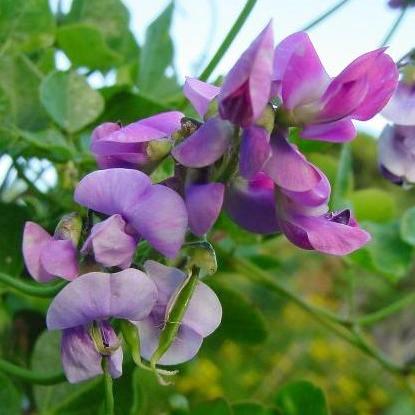
Dipogon lignosus – Cape Sweet Pea, Mile-a-minute Vine; Wilde Ertjie, Bosklimop – 5 Seed Pack
R47,50
INTERNATIONAL CUSTOMERS: Please read our shipping terms and conditions here before placing your order: Shipping Terms and Conditions
27 in stock
The genus Dipogon is a tiny but distinctive branch of the pea family (Fabaceae), remarkable because it contains just a single recognised species: Dipogon lignosus.
This “one-species genus” is native to the winter-rainfall Cape region of South Africa, where it scrambles through fynbos and coastal thicket, binding itself to rocks, shrubs and small trees with slender twining stems. In the wild it helps knit together sandy banks and rocky slopes, fixing atmospheric nitrogen through its roots like many legumes and providing nectar and pollen for bees and other insects.
Although it has a very local origin, Dipogon has travelled widely with gardeners and settlers. Dipogon lignosus is now grown across the world in mild, Mediterranean-type climates as an ornamental climber, and in some regions it has escaped gardens and become naturalised or even invasive, particularly in Australia and New Zealand.
Its graceful vines, fresh green trifoliate leaves and clusters of pea-flowers in soft pinks, mauves and purples make it a showy candidate for fences, pergolas and banks where fast coverage and colour are needed.
For seed growers the genus is rewarding and straightforward. Dipogon lignosus is a tough, drought-tolerant perennial that thrives in poor, sandy soils, copes with wind and salt, and responds generously to pruning. In suitable climates it can flower for long stretches of the growing season, often from late winter through spring and well into summer, making it a generous performer for both home gardens and larger landscapes.
Dipogon lignosus
Cape Sweet-Pea, Mile-A-Minute Vine
Synonyms: Dolichos lignosus, Dolichos dipogon.
Dipogon lignosus is a vigorous, twining perennial climber with all the charm of a sweet pea and the toughness of a Cape fynbos shrub. Native to the Western and Eastern Cape of South Africa, it scrambles through coastal scrub, forest margins and rocky slopes, weaving its way up support plants and over boulders.
In the garden it quickly forms a leafy, flowering screen on trellises, fences and pergolas, or a dense groundcover where there is nothing for it to climb. Stems are herbaceous when young but become woody at the base with age, helping the plant reshoot after pruning or light frost.
The foliage is classic pea family: trifoliate leaves made up of three diamond-shaped leaflets with a soft, medium-green colour above and paler undersides.
From late winter or early spring, and often right through summer in mild areas, the plant produces many short side-shoots carrying clusters of pea-flowers in shades of rose, lilac, magenta or white, often with a contrasting splash of colour in the banner petal. These nectar-rich blooms are highly attractive to bees and other pollinators, and they give way to small pods that ripen to release hard, glossy seeds. With regular dead-heading and a little supplementary water in very dry periods, flowering can be prolonged over many months.
For South African gardeners, Cape sweet-pea is perfectly at home in sandy or rocky soils of the winter-rainfall regions, where it relishes full sun, good drainage and cool, moist winters with dry summers. International growers in Mediterranean or other frost-free to light-frost climates can expect equally strong performance on banks, rough fences and sunny walls, provided drainage is good and soil is not waterlogged. Because Dipogon lignosus has become invasive in some countries, especially parts of Australia and New Zealand, buyers outside its natural range should check local regulations, grow it responsibly, and prevent unwanted spread into natural ecosystems.
When managed thoughtfully, it is a beautiful, fast-growing climber that turns bare structures into cascades of soft foliage and pea-flowers in a single season.


