
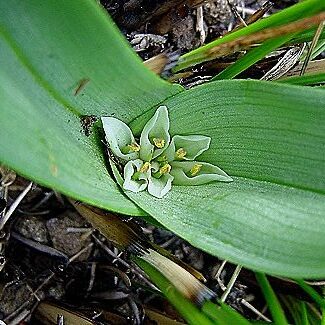
Colchicum longipes (Androcymbium longipes) – Men-in-a-Longboat – 5 Seed Pack
R31,25
INTERNATIONAL CUSTOMERS: Please read our shipping terms and conditions here before placing your order: Shipping Terms and Conditions
20 in stock
Colchicum is a fascinating and often surprising genus of cormous perennial geophytes in the family Colchicaceae. Best known to many gardeners as “autumn crocus” or “meadow saffron”, these plants are not true crocuses at all, but a distinct and highly collectible group with their own rhythm, beauty and botanical intrigue. Their flowers often appear suddenly from bare ground, creating the magical impression of blooms rising without leaves, while the foliage follows later as the plant enters its active growing phase.
The genus is remarkably diverse, with species occurring across Europe, North Africa, the Mediterranean region, western and central Asia, the Arabian Peninsula and into southern Africa. This broad distribution has produced a wide range of forms, from the familiar goblet-shaped pink, lilac, white or purple autumn-flowering species to more unusual African taxa formerly treated under related genera such as Androcymbium. Many species are winter growers, making them especially appealing to bulb enthusiasts who appreciate plants that come alive during the cooler months when much of the garden is resting.
A typical Colchicum grows from a corm protected by papery or fibrous tunics. Depending on the species, the flowers may appear in autumn, winter or spring, sometimes before the leaves and sometimes with them. The blooms can be delicate and crocus-like, broad and showy, or arranged in dense clusters surrounded by leafy bracts. This variability makes the genus particularly rewarding for collectors, as each species offers its own seasonal timing, floral character and growth habit.
For South African growers, Colchicum is especially interesting because the genus includes species native to southern Africa as well as Mediterranean and Eurasian species that can be cultivated successfully when their seasonal cycle is understood. For international growers, they are prized as unusual bulbs for pots, alpine houses, bulb frames, Mediterranean-style gardens and specialist collections. Their sudden flowering, long dormancy and patient seed-to-flower journey give them a quiet drama that makes them far more than ordinary garden bulbs.
All parts of Colchicum should be treated as poisonous if ingested, as many species contain colchicine and related alkaloids. They are best grown as ornamental and collector plants only, handled with care, kept away from children and pets, and never confused with edible saffron crocus.
Colchicum longipes (Androcymbium longipes) – Men-in-a-Longboat
Colchicum longipes is a wonderfully distinctive South African geophyte for collectors who appreciate unusual form, compact growth and the quiet elegance of indigenous winter-growing bulbs. Formerly known as Androcymbium longipes, this fascinating member of the Colchicaceae family is also associated with charming common names such as “men-in-a-boat” and “cup-and-saucer”, a perfect description of the way its flowers sit nestled in broad green leafy bracts.
This species is native to South Africa, occurring from the Cape Provinces to the Free State, with records through the Eastern Cape, Karoo regions and areas from Grahamstown towards East London. In habitat it is found on moist slopes, in stony grasslands and coastal areas, where it emerges during the cool growing season among grasses, rocks, leaf litter and natural veld vegetation. For South African growers, it is a beautiful indigenous bulb with strong regional character, while international collectors will appreciate it as an unusual South African Colchicum with a very different look from the familiar autumn crocus types.
The plant grows from a slightly flattened underground storage organ covered in dark fibrous tunics and produces several bright green leaves. The outer leaves often spread or lie close to the ground, while the inner leaves may stand more upright, forming a natural green cradle around the flowering centre. The flowers are crowded at the base of the leaves, with pointed, hooded white to creamy-white segments and dark purplish to maroon-toned styles or reproductive parts, creating a striking contrast against the fresh green foliage.
In habitat, Colchicum longipes flowers in winter, making it especially appealing to growers who enjoy plants that come alive when many others are dormant. The floral display is compact but highly detailed, with small white flowers gathered low in the centre of the plant, often partially enclosed by the surrounding bracts and leaves. Its beauty is subtle, architectural and very botanical, perfect for growers who enjoy rare veld flowers, Cape bulbs and unusual geophytes that reward close observation.
For cultivation, Colchicum longipes is best treated as a winter-growing, summer-dormant species. Sow seeds in a sharply drained mix with sand, grit or fine gravel, keep lightly moist during the cool active growing season, and allow the plant to rest drier during dormancy. It is well suited to deep pots, bulb frames, alpine houses, specialist geophyte collections and naturalistic indigenous gardens where good drainage and seasonal watering can be managed.
Add Colchicum longipes to your collection and enjoy the satisfaction of growing one of South Africa’s most interesting cup-and-saucer geophytes from seed. Check out our online seed store for a vast and diverse selection of rare, unusual and collectible species for growers, gardeners, hobbyists and plant collectors worldwide. Buy Now, Add to Cart and explore more exceptional bulbs, geophytes, succulents and indigenous botanical treasures. Seeds and All offers combined South African and International shipping, making it easy to build your collection with more of the species you love.


