
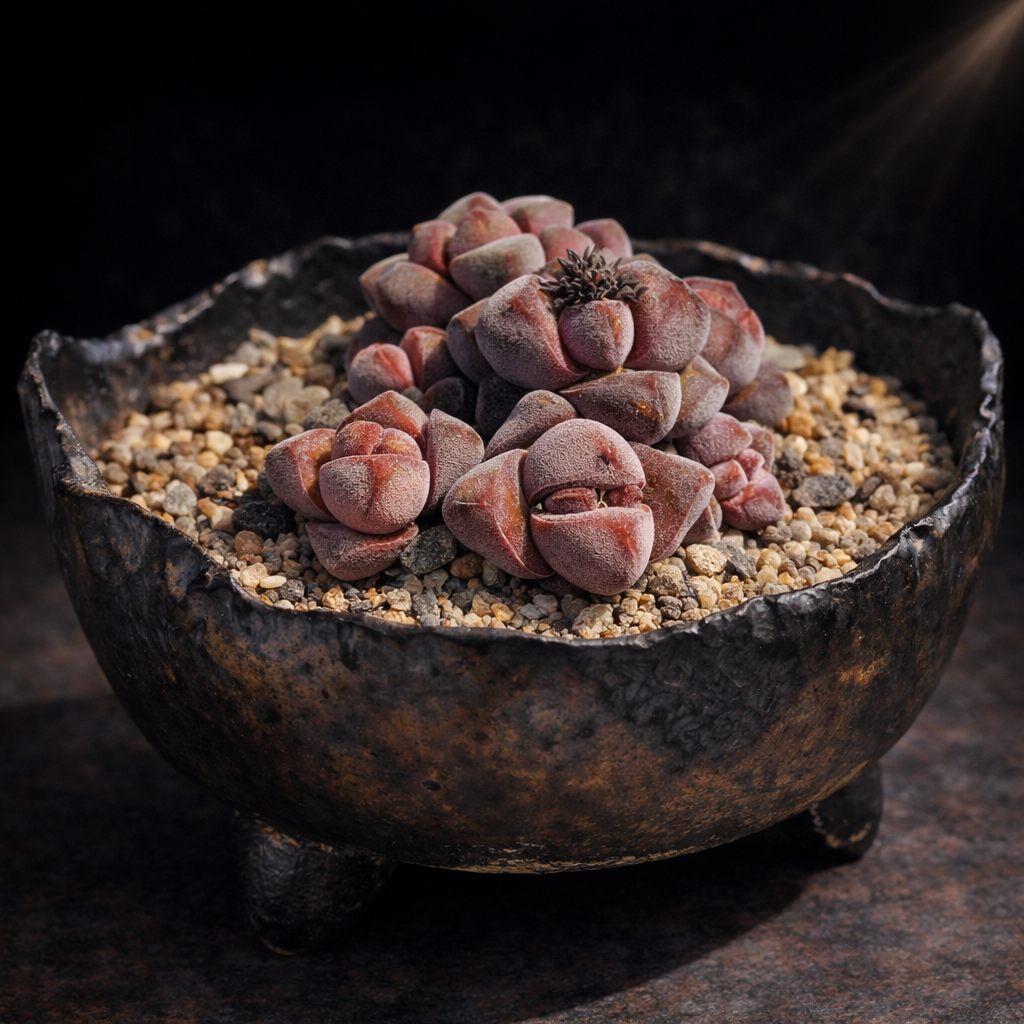
Crassula elegans ssp. namibensis – 10 Seed Pack
R65,00
INTERNATIONAL CUSTOMERS: Please read our shipping terms and conditions here before placing your order: Shipping Terms and Conditions
4 in stock
Crassula is one of the most fascinating succulent genera in cultivation, loved for the sheer range of forms it offers. Within the genus you find everything from tiny moss-like annuals and dwarf crevice dwellers to neat rosettes, stacked columnar plants, trailing growers and even shrub-sized species such as the well-known jade plant. Southern Africa is the heartland of the genus, with around 149 species recorded there, although Crassula as a genus is far wider-ranging and native on a cosmopolitan scale.
What makes Crassula especially compelling for growers is that it combines beauty with resilience. Many species are adapted to drought through succulent leaves and stems, and the genus is closely associated with CAM photosynthesis, a water-saving strategy in which the stomata open mainly at night rather than in the heat of the day. That is one reason why so many species thrive in water-wise gardens, containers, rockeries and specialist succulent collections.
For collectors, the genus offers endless variety in texture, colour and habit. Some species blush red in stronger light, some stay silver-blue or soft green, some form cushions, some stack into pagoda-like towers, and others disappear into the landscape as miniatures. For gardeners, Crassula is equally valuable because many species are adaptable, compact and rewarding from seed, making them ideal for both South African growers and international hobbyists looking to build a diverse succulent collection.
Crassula elegans ssp. namibensis
Crassula elegans ssp. namibensis is a true miniature gem from the arid landscapes of southern Africa, prized by collectors for its sculptural form, compact habit and wonderfully refined texture. Native to southern Namibia and also recorded from South Africa, this distinctive subspecies comes from dry rocky country where only the toughest and most characterful succulents thrive. For South African growers it offers the appeal of a genuine regional rarity, while international collectors will love its small size, strong personality and unmistakable desert elegance.
This is a perennial succulent that stays beautifully compact, usually forming short, much-branched little cushions with a slightly woody base. The leaves are tightly packed in opposite pairs so that the stems are often almost hidden, giving the plant a clustered, bead-like appearance. Each leaf is small, ovate and broadly triangular in section, with a softly rounded tip and a fine papillose surface that creates a powdery, textured look. In strong light the colouring can shift from soft green to brownish red or deep rosy tones, making this subspecies especially striking in shallow bowls and collector-style succulent plantings where its geometric little heads can really be appreciated.
Although grown mainly for its fascinating body form, Crassula elegans ssp. namibensis also produces delicate flowers that add another layer of charm. The blooms are tiny, tubular and usually cream to white, sometimes with beige or pale yellow tones, and they often age to a soft brownish shade. In habitat and cultivation, flowering is generally from autumn into winter, rising modestly above the clustered foliage and adding subtle seasonal interest without ever overpowering the plant’s beautifully compact shape.
For anyone building a serious miniature succulent collection, this is a species that deserves attention. Its neat clustered habit, tactile surface and muted desert colouring make it ideal for hobbyists, specialist growers, windowsill collectors and lovers of unusual southern African succulents. It is a plant with real collector appeal and a quietly dramatic presence, especially when grown in a shallow container with complementary gravel. Check out our online seed store, explore our Massive Range and Buy Now from Seeds and All. Seeds and All offers combined South African and International shipping, so this rare and remarkable succulent can find a place in collections both locally and worldwide.


