
Crassula muricata (Crassula divaricata) – 10 Seed Pack
R29,95
INTERNATIONAL CUSTOMERS: Please read our shipping terms and conditions here before placing your order: Shipping Terms and Conditions
5 in stock
Crassula is one of the most fascinating succulent genera in cultivation, loved for the sheer range of forms it offers. Within the genus you find everything from tiny moss-like annuals and dwarf crevice dwellers to neat rosettes, stacked columnar plants, trailing growers and even shrub-sized species such as the well-known jade plant. Southern Africa is the heartland of the genus, with around 149 species recorded there, although Crassula as a genus is far wider-ranging and native on a cosmopolitan scale.
What makes Crassula especially compelling for growers is that it combines beauty with resilience. Many species are adapted to drought through succulent leaves and stems, and the genus is closely associated with CAM photosynthesis, a water-saving strategy in which the stomata open mainly at night rather than in the heat of the day. That is one reason why so many species thrive in water-wise gardens, containers, rockeries and specialist succulent collections.
For collectors, the genus offers endless variety in texture, colour and habit. Some species blush red in stronger light, some stay silver-blue or soft green, some form cushions, some stack into pagoda-like towers, and others disappear into the landscape as miniatures. For gardeners, Crassula is equally valuable because many species are adaptable, compact and rewarding from seed, making them ideal for both South African growers and international hobbyists looking to build a diverse succulent collection.
Crassula muricata (Crassula divaricata)
Crassula muricata is one of those small South African succulents that instantly wins over serious collectors. Endemic to the Western Cape and associated with the winter-rainfall western parts of the Cape, it is a species of sandy, stony country that brings a very authentic Karoo-and-Cape feel to any specialist collection. For South African growers it offers local botanical character in miniature, while for international collectors it is the kind of lesser-known Crassula that feels genuinely special and refreshingly different from the usual mainstream species.
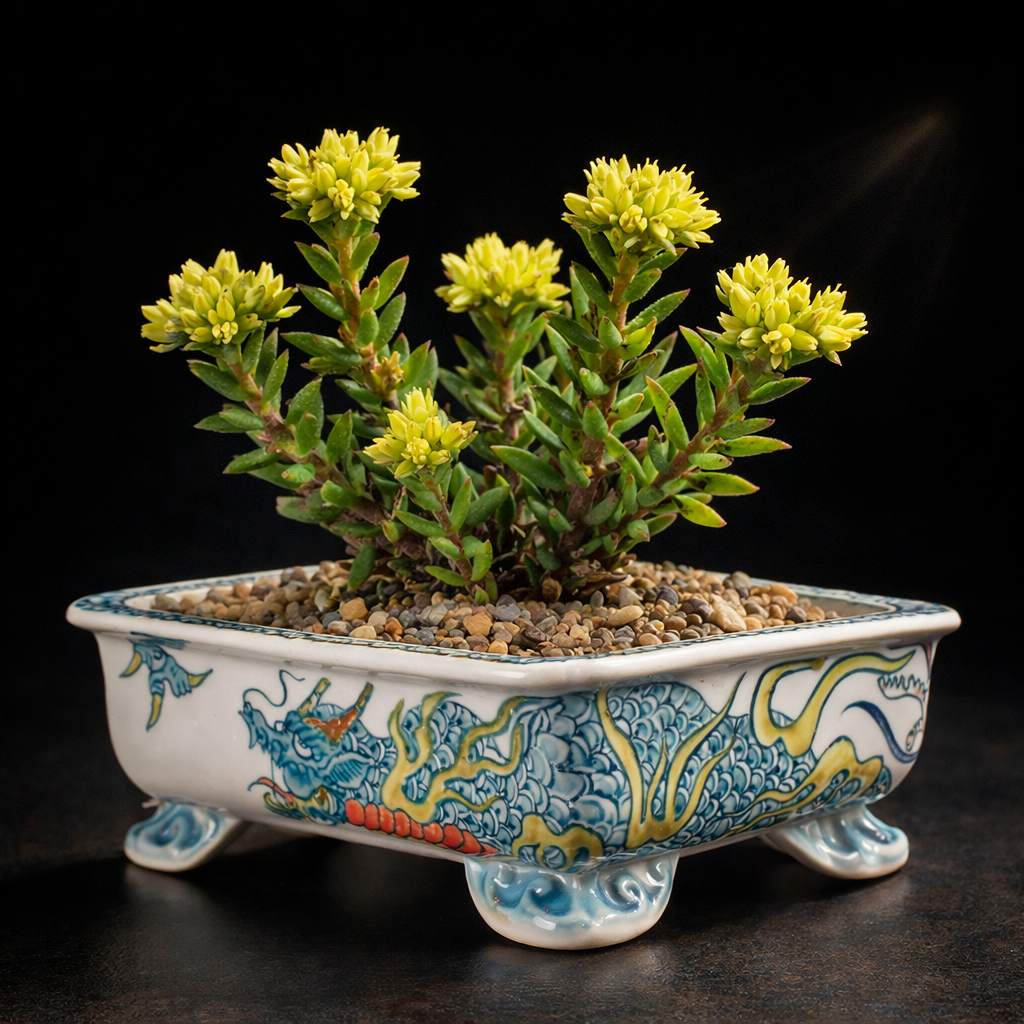
This is a compact succulent subshrub with a neat, much-branched woody framework and masses of tiny, sharply pointed fleshy leaves packed closely along the stems. The plant develops a dense, miniature shrubby form, with older growth becoming dark, textured, and almost bonsai-like, while the newer tips remain tighter, fresher, and more active. The foliage is small and triangular to ovate-triangular, creating a fine, detailed texture that looks especially attractive when grown in a decorative pot. In bright light the plant body can take on rich olive, bronze, and reddish-brown tones, giving it a rugged, sun-touched appearance that suits collectors who appreciate detail and age in a plant.
When in bloom, Crassula muricata adds another layer of charm with clustered starry flowers gathered at the branch tips. The flowers are best described as soft yellow to creamy yellow, matching the plant material shown, and they create a lovely contrast against the darker woody stems and the small, tightly arranged leaves. It is a species with a delicate but eye-catching floral display, and late spring appears to be its main flowering period in habitat. That combination of miniature shrubby structure and bright clustered bloom makes it a rewarding subject for succulent enthusiasts, hobbyists, and growers who enjoy unusual Cape miniatures with strong collector appeal.
Crassula muricata is ideal for collectors who love compact, branching species with real personality and a distinctly wild South African look. It fits beautifully into miniature succulent displays, collector benches, windowsill collections, and carefully chosen ceramic containers where its fine structure can be admired up close. Check out our online seed store, explore our extensive and diverse selection. Seeds and All offers combined South African and International shipping, making it easy for both local and overseas buyers to add this rare-looking little treasure to their collection.


