
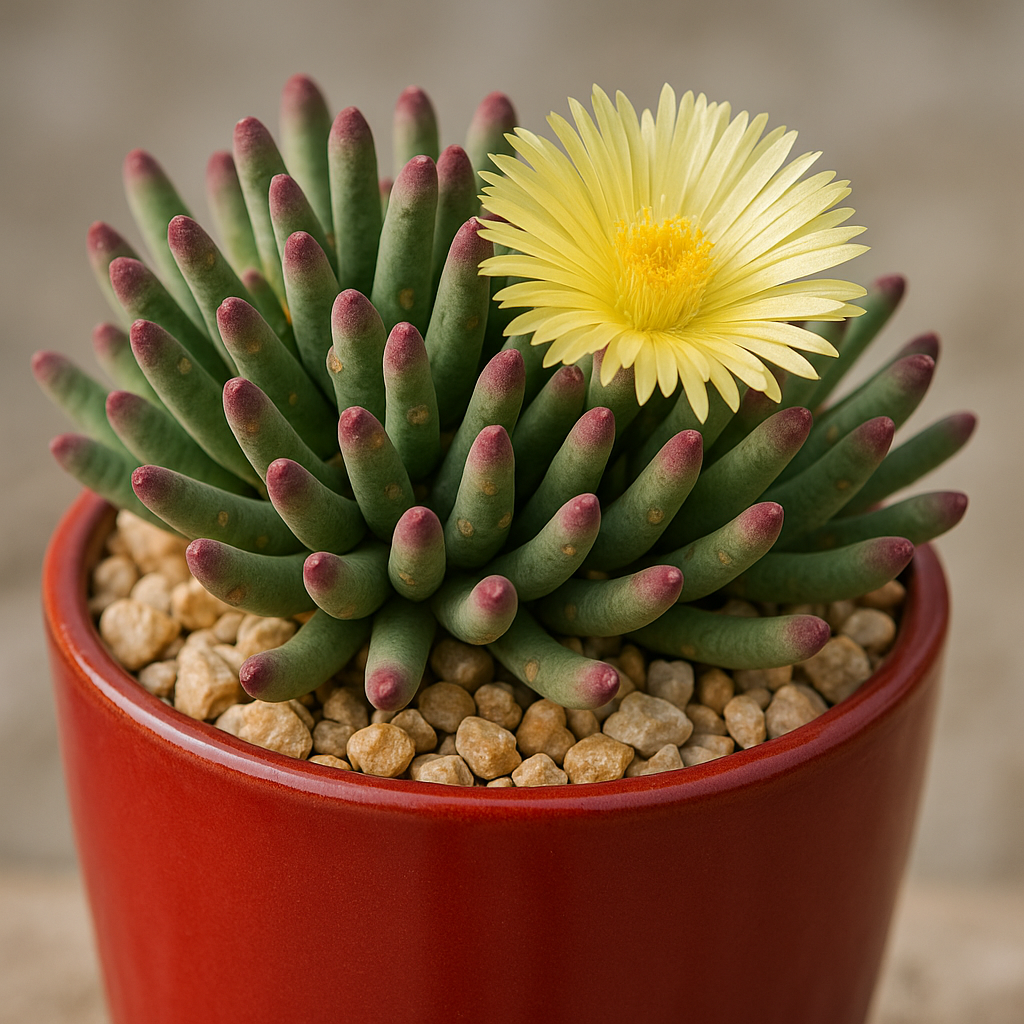
Cylindrophyllum calamiforme (Mesembryanthemum calamiforme) – Shafted Fingerfig – 5 Seed Pack
R21,50
INTERNATIONAL CUSTOMERS: Please read our shipping terms and conditions here before placing your order: Shipping Terms and Conditions
6 in stock
Cylindrophyllum is one of those distinctly South African mesemb genera that looks almost too sculptural to be real. Part of the Aizoaceae (the vygie family), these succulents are endemic to the Little Karoo and neighbouring dry interior valleys, where winter rain, blazing sun and stony soils shape everything that survives there.
The name literally points to what they do best: “cylindrical leaves.” Each plant carries clusters of thick, finger-like leaves that act as water tanks, often coated in a pale, glaucous bloom to reflect heat. In habitat they blend into quartz flats and shale rubble, but in a pot or rock garden they read like living sea-creatures — tidy, bold forms that stay attractive even when not in flower.
When the season is right, Cylindrophyllum rewards growers with classic mesemb daisies — usually white, cream or yellow-toned, with a bright central eye — appearing mainly from spring into early summer after the winter growth push. Many species follow a winter-growing rhythm with a slower, more resting phase through the hottest part of summer, which makes them especially well-suited to South African waterwise gardens and container collections.
Cylindrophyllum calamiforme – Shafted Fingerfig
Cylindrophyllum calamiforme is a Little Karoo specialist with a wonderfully quirky, almost coral-like silhouette. Older literature may record it under the basionym Mesembryanthemum calamiforme, but the accepted name today sits firmly in Cylindrophyllum.
If you love the oddballs of the vygie world, this species is pure joy — compact, architectural, and quietly dramatic in a pot.
The plant forms low, clumping cushions of thick, club-shaped cylindrical leaves, typically grey-green to blue-green and often flushed with pinkish or warm tips in strong sun. Like many winter-rainfall mesembs, it’s built for harsh, skeletal soils and will happily tuck into gritty rock-garden pockets or a shallow bowl where drainage is sharp.
In spring, after good winter moisture, C. calamiforme produces bright daisy flowers in pale lemon to richer yellow shades, lighting up the compact mound for weeks. The blooms are often afternoon-opening, attracting small pollinators and adding that unmistakable “Karoo veld in flower” feeling to your collection. Flowering is typically from late winter through spring into early summer, depending on local conditions.


