
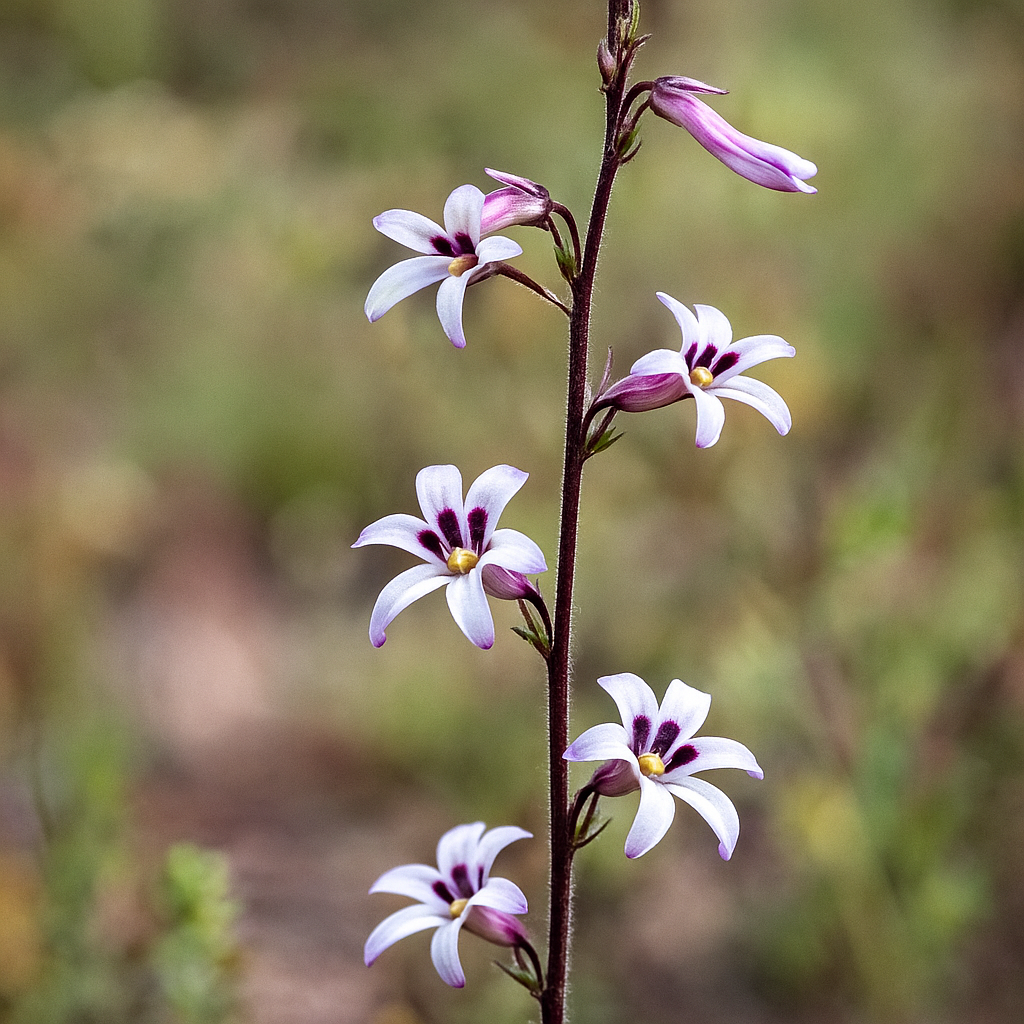
Cyphia campestris (Cyphia campestris var. nudiuscula) – Field Baroe – 5 Seed Pack
R32,25
INTERNATIONAL CUSTOMERS: Please read our shipping terms and conditions here before placing your order: Shipping Terms and Conditions
20 in stock
Cyphia is one of those quietly charismatic South African genera that tends to hide in plain sight until it flowers. Belonging to the bellflower family (Campanulaceae, in the Cyphioideae line), Cyphia sits close to Lobelia but has its own unmistakable look: delicate, two-lipped, lobelia-like blooms carried on slender stems, often in soft whites, pinks or mauves with subtle throat markings.
Most Cyphia species are small perennial geophytes, surviving the harshest seasons via rounded to elongated underground tubers. Each year those tubers send up fresh shoots that may twine through surrounding vegetation or stand upright in open patches, giving the plants a light, airy, almost “wildflower-vine” habit. Leaves are usually alternate and modest in size, which makes the flowers feel even more ethereal when they arrive.
South Africa is the heartland of Cyphia diversity. The genus ranges through both summer- and winter-rainfall regions, with many species tied to fynbos, renosterveld, or rocky grassland niches. Their life strategy is classic Cape-style resilience: grow when moisture is reliable, retreat to the tuber when it’s not, and re-emerge with a flush of blooms that reward patient gardeners and collectors.
Cyphia campestris
Cyphia campestris is a charming, tuber-forming endemic from the Western Cape, bringing a refined fynbos elegance to the garden. It’s a modest plant in stature but rich in botanical interest, sending up an erect to lightly twining seasonal stem from a hidden underground tuber. In growth it carries slim, often reduced linear-lanceolate leaves and produces its flowers along a delicate, one-sided terminal raceme — a classic Cyphia silhouette that feels both wild and dainty.
In nature this species is found in fynbos and renosterveld landscapes from the Hex River Valley and Worcester area down toward Riversdal, favouring moist, sandy ground on mountain slopes and shale-derived soils. That makes it a wonderful choice for Western Cape indigenous gardeners, fynbos pot collections, or anyone wanting to grow a true local geophyte that reflects our Cape floral heritage. Its habitat is increasingly pressured by invasive alien plants, so cultivating it is also a small act of conservation.
Taxonomically, Cyphia campestris is sometimes treated within a broader Cyphia linarioides complex by older checklists, but current South African plant assessments recognise it under its own name. Synonyms recorded for local material include Cyphia campestris var. campestris and Cyphia campestris var. nudiuscula. No widely established vernacular/common name is consistently documented for this particular species, so it’s generally traded under its botanical name. Flower colour and exact timing can vary by locality; like many winter-rainfall Cyphia from the Cape, it is expected to bloom from late winter into spring, typically with soft pale tones in the white-to-mauve range typical of the genus.


