
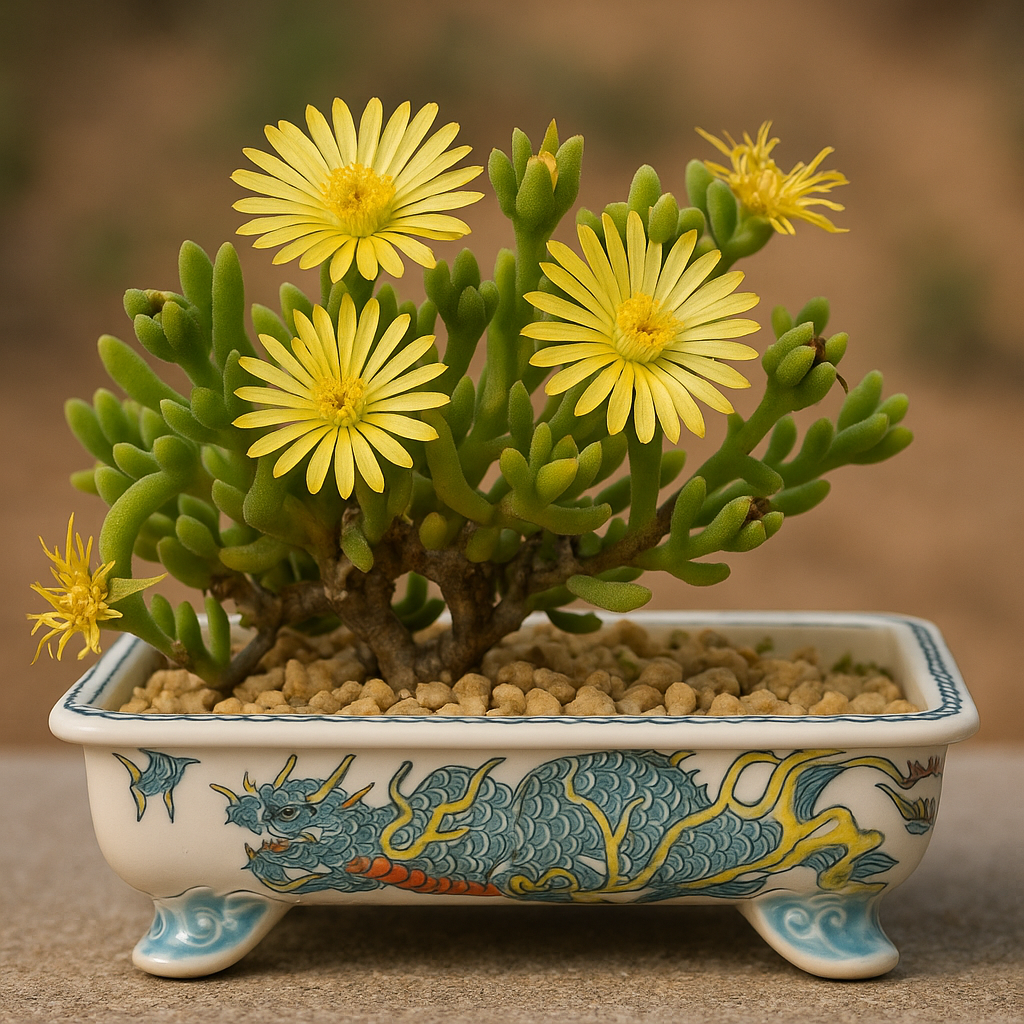
Delosperma crassum (Drosanthemum robustum) – 5 Seed Pack
R22,50
INTERNATIONAL CUSTOMERS: Please read our shipping terms and conditions here before placing your order: Shipping Terms and Conditions
1 in stock
If you love vygies and waterwise gardening, Delosperma is one of those genera that quickly becomes addictive. These are mostly low, mat-forming succulents in the Aizoaceae, famous for their shimmering “ice” cells on the leaves and stems that catch the light like tiny crystals – a clever way of reflecting harsh African sun while storing precious moisture.
The genus is centred in southern Africa, with the bulk of species in South Africa and Lesotho, but stretching north into eastern Africa as far as Ethiopia and even into the Arabian Peninsula. Many are local endemics tied to specific rock types or mountain systems – from arid Karoo flats and grassland dolerite outcrops to subalpine Drakensberg cliffs. Seed capsules are typically hygrochastic: they open when wet, using little “valves” and wings to present or flick out the seed in rain – exactly the kind of detail that makes them fascinating subjects for a seed-focused collector.
In the garden, Delosperma species are valued for their carpets of daisy-like flowers in intense shades of magenta, pink, purple, yellow and orange, often over a very long season. Given full sun and sharply drained, sandy or gravelly soils, many species are remarkably drought tolerant and need little more than occasional watering once established. They are ideal for rockeries, retaining walls, containers, green roofs and banks where a tough, colourful, pollinator-friendly groundcover is needed.
For a succulent enthusiast in South Africa, Delosperma offers a huge palette of local biodiversity – from tiny, niche endemics to showy garden workhorses – all fitting neatly into the broader push toward waterwise, climate-resilient gardening.
Delosperma crassum (Drosanthemum robustum)
Delosperma crassum is a Western Cape endemic, a sturdy succulent shrublet that can reach around 30 cm high, with thick, finger-like bright green leaves and a woody base. It inhabits rocky sites near towns such as Groot Graafwater in the western parts of the Cape, where it weathers intense summer sun and periods of drought. The plants produce relatively large flowers, up to about 25 mm across, with straw-coloured to yellowish petals that often show warmer tones towards the base.
In cultivation D. crassum offers more height and presence than many creeping Delospermas. It makes a superb small shrub for dry rock gardens, gravel terraces and large containers, where its chunky stems and finger-like leaves add bold texture. The straw-yellow flowers appear mainly in mid to late season, providing colour when many other mesembs have finished, and they look striking against dark stone or gravel mulches.
For South African buyers, this species is an excellent option for authentic fynbos and Succulent Karoo-style plantings in coastal and inland Western Cape conditions. It demands sharp drainage and full sun, and once established is extremely drought tolerant. From seed it behaves much like other Delospermas: sow finely on a gritty mix, keep lightly moist to germinate, then gradually harden off to the bright, dry conditions in which this tough shrub truly shines.


