
Disa similis – Goldtrim Disa – 10+ Seed Pack
R45,00
INTERNATIONAL CUSTOMERS: Please read our shipping terms and conditions here before placing your order: Shipping Terms and Conditions
6 in stock
Disa is one of the great showpiece genera of the orchid family, Orchidaceae – a distinctly African group of mostly terrestrial, tuberous orchids celebrated for their sculptural flowers, vivid colour, and often very specialised habitats. Kew’s Plants of the World Online currently treats Disa as a genus in Orchidaceae with 186 accepted species, while South Africa is a major centre of diversity for the group. From the legendary red Disa uniflora, the “Pride of Table Mountain”, to delicate white, pink, mauve, orange, yellow, and red species from streamsides, seepages, grasslands, fynbos slopes, mountain ledges, and high-altitude wetlands, Disa offers growers and collectors some of the most elegant and sought-after terrestrial orchids in the world. Many species are cool-growing plants adapted to clean water, excellent air movement, bright filtered light, and sharply drained yet constantly moist root conditions; others are seasonal geophytes that demand a more precise wet-and-dry rhythm. This is a genus for patient growers, but it rewards that care with pollinator attracting flowers of exceptional refinement, ecological intrigue, and unmistakable South African character.
Disa similis – Goldtrim Disa
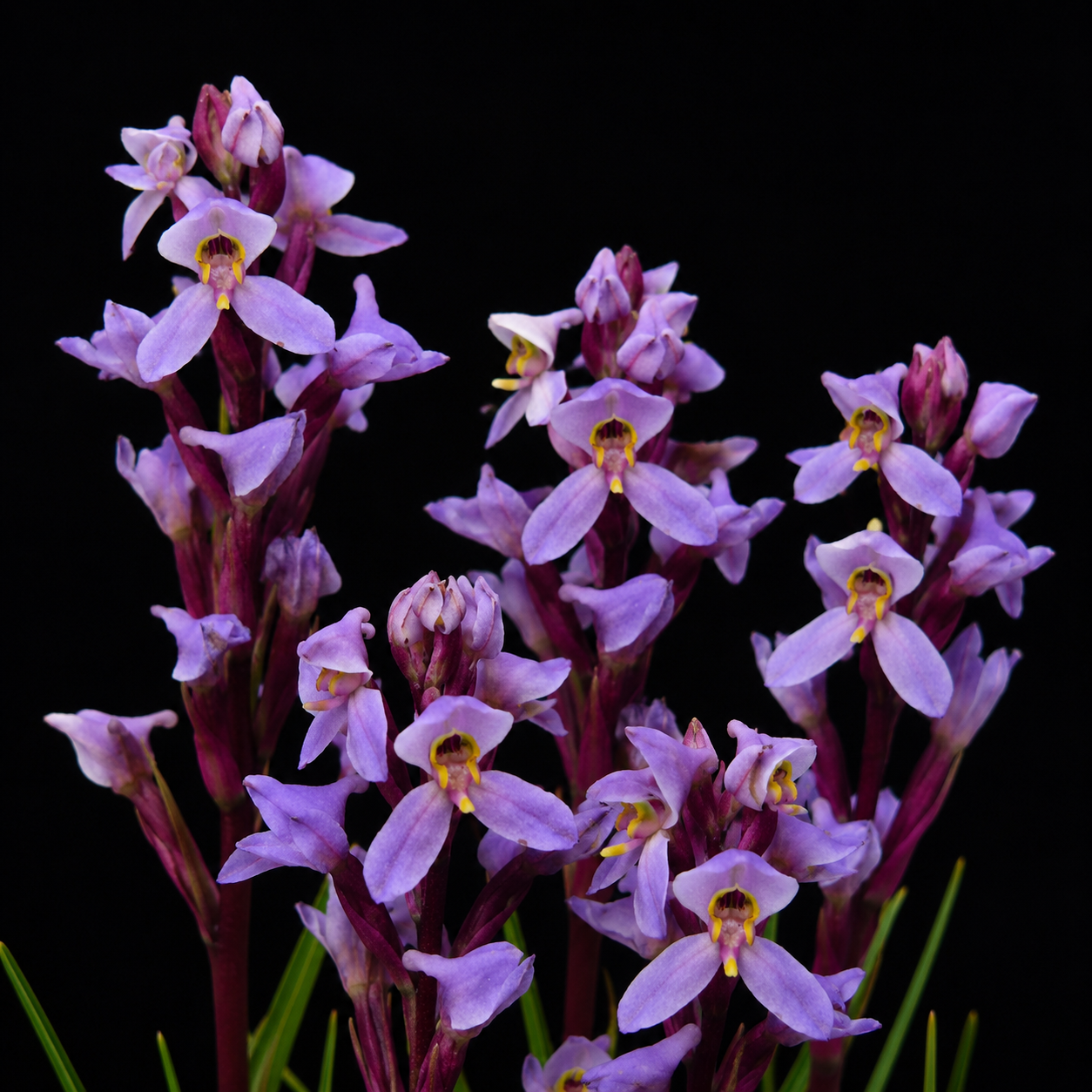
Disa similis is a captivating African terrestrial orchid for the collector who appreciates subtle elegance rather than loud display. This distinctive species produces upright, richly coloured flower stems carrying many dainty, open blooms in soft lavender, lilac and mauve tones. Each flower is beautifully accented by a bright yellow throat and lip detail, giving the inflorescences a lively, jewel-like quality against the dark burgundy stems. Compact yet full of character, it is a superb choice for specialist orchid growers, indigenous plant enthusiasts and anyone building a refined collection of rare African flora.
In nature, Disa similis is found in southern and south-tropical Africa, including South Africa, Zambia and Angola. Within South Africa it is recorded from the Eastern Cape and KwaZulu-Natal, where it grows as a terrestrial orchid in moist, marshy grassland, swamps and seasonally wet places. This natural association with damp grassland makes it especially appealing to growers who enjoy recreating specialised habitat conditions and cultivating plants with a strong sense of place.
The plants are slender, upright and elegant, emerging from underground tubers with narrow green leaves and reddish-purple flowering stems. In bloom, they carry a generous display of small orchid flowers arranged along the stem, with soft violet to lilac petals and sepals, yellow inner markings and a refined, open-faced form. In habitat, flowering is mainly in spring, from about September to November, with October often being the peak season, when the plants stand out above surrounding grasses with their fresh, luminous colour.
For South African growers, Disa similis offers the excitement of cultivating a remarkable indigenous orchid with real botanical presence. For international collectors, it is a fascinating species from the African orchid flora, ideal for those who enjoy unusual terrestrial orchids, moist-growing species and plants that reward patience and careful cultivation. It is best suited to growers who can provide cool to mild conditions, bright filtered light, excellent air movement and a consistently moist yet well-aerated growing medium.
Visit our online seed store and discover the massive range of rare, unusual and collectible species offered by Seeds and All. Add Disa similis to your collection today and enjoy the challenge and reward of growing one of Africa’s charming terrestrial orchids from seed. Buy Now, Add to Cart and browse our extensive and diverse selection of botanical treasures. Seeds and All offers combined South African and International shipping, making it easy for local and overseas growers to order more from one convenient source.


