
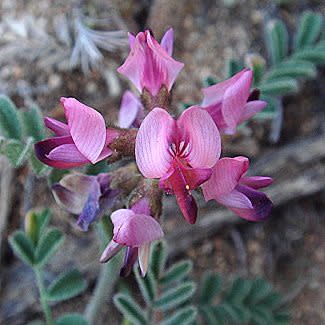


Lessertia diffusa – Dou-ertjiebos, Dou-Gansiebos, Klappertjie, Klein-jantjie-bêrend, Kloekie – 5 Seed Pack
R15,00
INTERNATIONAL CUSTOMERS: Please read our shipping terms and conditions here before placing your order: Shipping Terms and Conditions
40 in stock
Lessertia species are mainly perennials with a few annuals. The genus consists of erect, prostrate or decumbent herbs and shrubs. It has compound or rarely unifoliate leaves, paired stipules, an elongated or subcapitate raceme, paired bracts. All these features are similar to Sutherlandia. The group differs from Sutherlandia in flower and fruit. In Lessertia flowers are small and they range from 6-10 mm long. They are pink, yellow or purple in colour. Fruits are either linear, compressed or subcompressed and few are inflated. In Sutherlandia (cancer bush group), flowers are very big, red in colour about 15 to 30 mm long. Fruits are also big, inflated and bladder-like in form. The name of the genus Lessertia was established in 1802 and it was named in honour of Benjamin Delessert, a Frenchman who edited the Icones selectae (1820-1846).
Lessertia diffusa, commonly known as Dou-ertjiebos, Dou-Gansiebos, Klappertjie, Klein-jantjie-bêrend or Kloekie, is a South African indigenous prostrate perennial growing in dry sandy areas of the Northern Cape and Western Cape Provinces. It has very divided leaves and mauve pea-like flowers in long spikes.


