
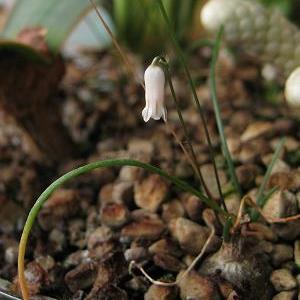
Drimia uniflora (Litanthus pusillus) – Solitary Squill, TomThumb Hyacinth; Kleinduimpie-hiasint – 5 Seed Pack
R15,00
INTERNATIONAL CUSTOMERS: Please read our shipping terms and conditions here before placing your order: Shipping Terms and Conditions
14 in stock
Drimia is a genus in the Hyacinthaceae family (or expanded Asparagaceae family) of bulbous plants that are deciduous or rarely evergreen. Bulbs can be small or large, subterranean or growing on or close to the ground. The one or more leaves are often dry at flowering. In 2004 a number of genera were included in this genus once separated as other genera. Some of these genera were formerly monotypic with species formerly included in other genera, like Ledurgia, Boosia, Geschollia and a couple had two species, like Ebertia and Rhadamanthopsis. Others with more species that were included were Urginavia, Indurgia and Thuranthos. They included the Mediterranean, North African and western Asiatic species formerly in Urginea in Drimia but not everyone agrees. African genera once separated as Litanthus, Rhadamanthus, Schizobasis and Tenicroa are now included in Drimia. These plants are common in seasonally dry or semi-arid regions and many of them flower in late spring or summer regardless of the rainfall pattern.
Drimia uniflora, synonymously known as Litanthus pusillus and commonly known as Solitary Squill or TomThumb Hyacinth in English and Kleinduimpie-hiasint in Afrikaans, is a South African indigenous perennial bulb found in the Eastern Cape, Free State, Gauteng, KwaZulu-Natal, Mpumalanga, Northern Cape, North West and Western Cape provinces where it occurs from the Ghaamsberg in Namaqualand and the Little Karoo through to Pondoland and northern Provinces, extending into Eswatini and southern Zimbabwe occurring in rock crevices or rocky cliffs, in seasonally damp and sheltered situations, sometimes in mats with moss or other dwarf succulents. Drimia uniflora is a very small bulb with one to 2 leaves that grow up to 6cm tall. The single white bell flower grows on a spike taller than the leaf.


