
Carpobrotus muirii – Dwarf Sourfig; Dwerg Suurvy – 5 Seed Pack
R9,75
INTERNATIONAL CUSTOMERS: Please read our shipping terms and conditions here before placing your order: Shipping Terms and Conditions
12 in stock
Carpobrotus commonly known as Hottentot Fig, Sour Fig, Horse Fig, Creeping Fig, Pigface or Ice plants is a genus of ground-creeping mesembs, with succulent leaves and large daisy-like flowers. The genus name refers to the edible fruits. It comes from the Greek “karpos” (fruit) and “brota” (edible). The Carpobrotus genus is placed in the Aizoaceae family. Carpobrotus species are often used for groundcover due to its fast growth, ground hugging characteristics, and resistance to fire. Carpobrotus are also drought resistant. Carpobrotus species are also used medicinally. Carpobrotus juice, from the leaves, can be used as a mild astringent. When mixed with water the juice can be used to treat diarrhoea, dysentery and stomach cramps. It can also be used as a gargle for sore throat and laryngitis, and mild bacterial infections of the mouth. The leaf juice can also be used externally, much like Aloe vera for burns, abrasions, open cuts, grazes, mosquito bites and sunburn. It is also used to treat ringworm, eczema, dermatitis, herpes, thrush, cold sores, cracked lips, chafing, skin conditions and allergies. An ancient remedy for constipation is to eat the fruit with brackish water. Syrup made from the fruit is said to have laxative properties. A mixture of leaf juice, honey and olive oil in water is an old remedy for TB. Suurvy Jam is also made from the fruit of this genus. Seed can be sown in spring, early summer or autumn. Carpobrotus species are well suited to water-wise gardens.
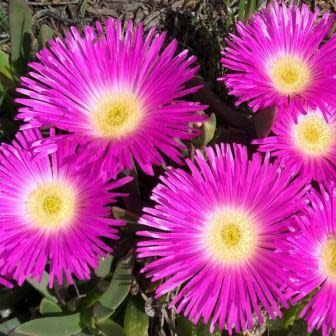
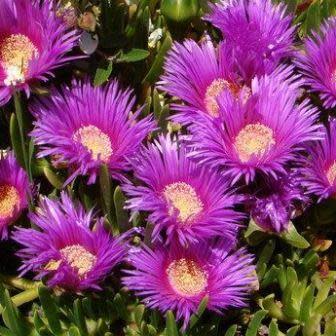
Carpobrotus muirii, synonymously known as Mesembryanthemum muirii and common known as Dwarf Sourfig in English and Dwerg Suurvy, Vyerank or Vyeranke in Afrikaans is a South African endemic species found growing in the Western Cape Province from Stilbaai to De Hoop and Riversdale. This species of Carpobrotus has distinctively slender incurved, glaucous-green leaves. Its sweet edible fruits are grazed by tortoises and other southern African animals, and are also used locally to make traditional preserves.


