
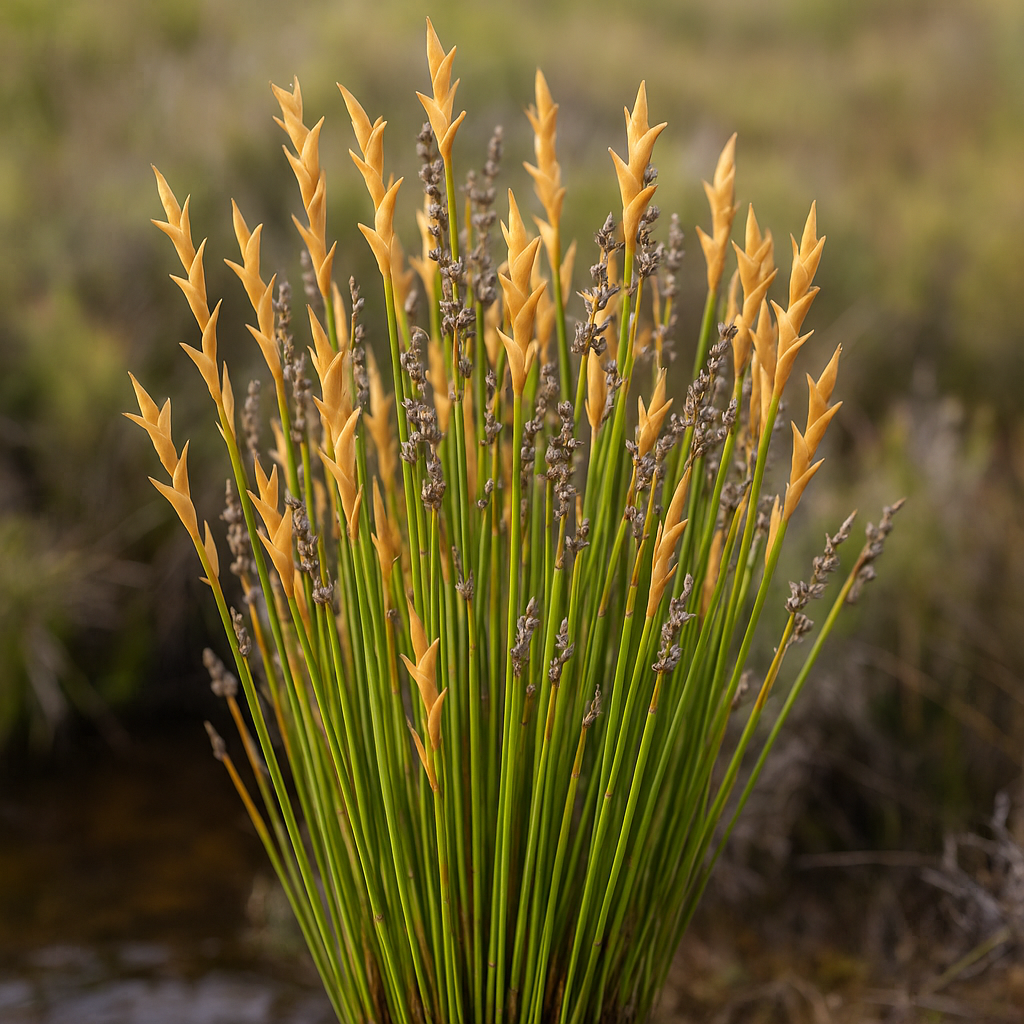
Elegia asperiflora (Restio asperiflorus) – Rough Goldreed – 10 Seed Pack
R25,00
INTERNATIONAL CUSTOMERS: Please read our shipping terms and conditions here before placing your order: Shipping Terms and Conditions
30 in stock
Elegia is a genus you can hear before you see it. These reed-like Cape plants, members of the Restionaceae, are the whispering backdrop of fynbos – swaying, rattling and glinting in the wind on mountain slopes, in marshy hollows and along coastal dunes. Restios are one of the key structural elements of South African fynbos vegetation, forming tough, evergreen clumps from a woody rhizome and ranging from ankle-high cushions to statuesque screens over 2 m tall.
The genus Elegia, with around 50 species, is almost entirely confined to the Cape Provinces of South Africa, and many species are strictly endemic to quite small areas. Their fine, rush-like culms carry papery brown sheaths and tasselled flowering heads in shades of gold, chestnut and red-brown. The tiny flowers themselves are usually white to greenish and wind-pollinated; the real show comes from the sheaths and bracts, which give the group its “goldreed” look.
Elegia species have long been valued as thatching and broom materials, with famous species like E. tectorum and E. capensis used historically for roofs, brooms and basketry. Today, they are increasingly grown as ornamental “Cape reeds” and exported as cut foliage for floristry, thanks to their architectural form and long-lasting, decorative seed heads.
In the garden, Elegias behave more like miniature bamboos or rushes than grasses: evergreen, clump-forming, wind-tolerant and long-lived. They prefer full sun, sandy to loamy, acidic, well-drained soils, and plenty of cool-season moisture, mirroring the winter-rainfall climate of the fynbos. Once settled, they are water-wise, cope well with wind and coastal conditions, and bring movement, sound and fine texture to fynbos beds, pond margins and naturalistic plantings.
For seed growers, Elegia has one more trick: the seeds are strongly stimulated by smoke. In nature, fire sweeps through fynbos and smoke chemicals in the first post-fire rains trigger mass germination. In cultivation, smoke water or commercial “Cape seed primer” dramatically improves germination rates in many Elegia species, making them an excellent match for South African growers already used to Protea and Erica sowing techniques.
Elegia asperiflora (Elegia asperiflora var. lacerata, Elegia ciliata, Elegia dregeana, Elegia glauca, Elegia lacerata, Restio asperiflorus) – Rough Goldreed
Elegia asperiflora is a lesser-known goldreed from the Cape fynbos, distinguished botanically by slightly roughened culms (as the name suggests) and a neat, clump-forming habit. It belongs to the restio clan that provides so much texture and structure to natural fynbos, yet in cultivation it remains under-used and offers a wonderful opportunity for collectors.
Clumps consist of upright, reed-like culms carrying narrow papery sheaths that darken with age to chestnut-brown. The flowering stems carry modest but attractive bronzy-brown spikelets during the cool season, creating a fine, feathery effect against the sky. As with most Elegia species, male and female plants differ subtly in their flowering structure, so group plantings are particularly effective.
Elegia asperiflora is well-suited to water-wise fynbos gardens and mixed gravel plantings where it can sway alongside proteas, pincushions and small shrubs. Plant in a sunny, open position in acidic, sandy soil with good winter moisture and light summer watering if necessary. It handles coastal exposure and wind well once established. Grow plants from smoke-treated seed or divide older clumps carefully at the start of the rainy season.


