

Entada rheedii – African Dream Bean; Reuseseeboontjie – 170 Seeds
R3570,00
INTERNATIONAL CUSTOMERS: Please read our shipping terms and conditions here before placing your order: Shipping Terms and Conditions
1 in stock
Entada rheedii, commonly known as African Dream Herb, Giant Sea Bean or Snuff Box in English and Reuseseeboontjie, Seeboontjie or Boonbobbejaantou in Afrikaans, is a perennial climbing vine that is used by African traditional healers to induce vivid dreams that enable them to communicate efficiently with their ancestors. The seeds of this remarkable plant are coveted items in the local muthi market because of their medicinal and magical value.
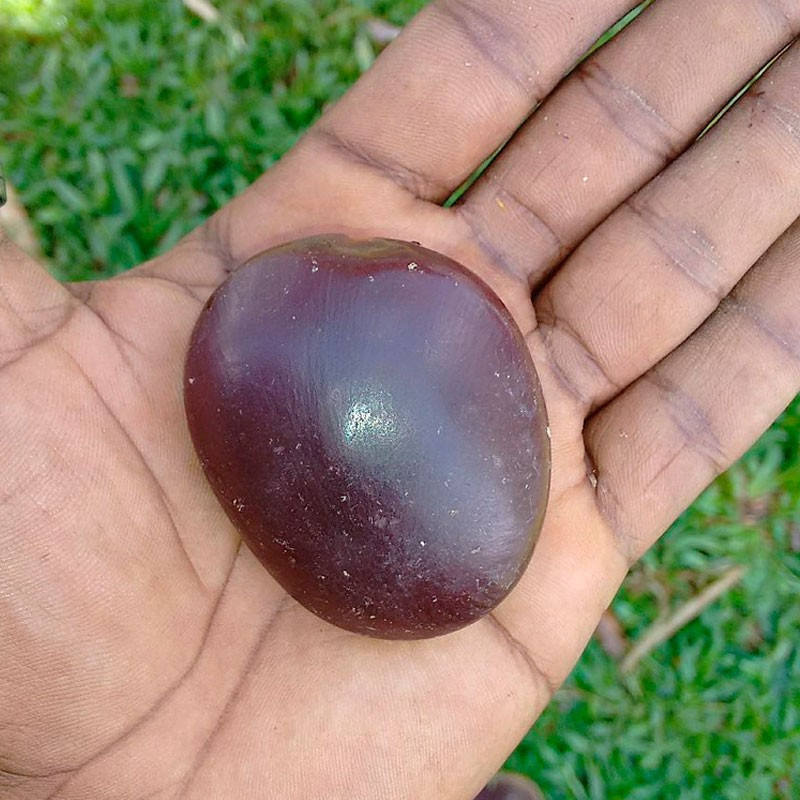
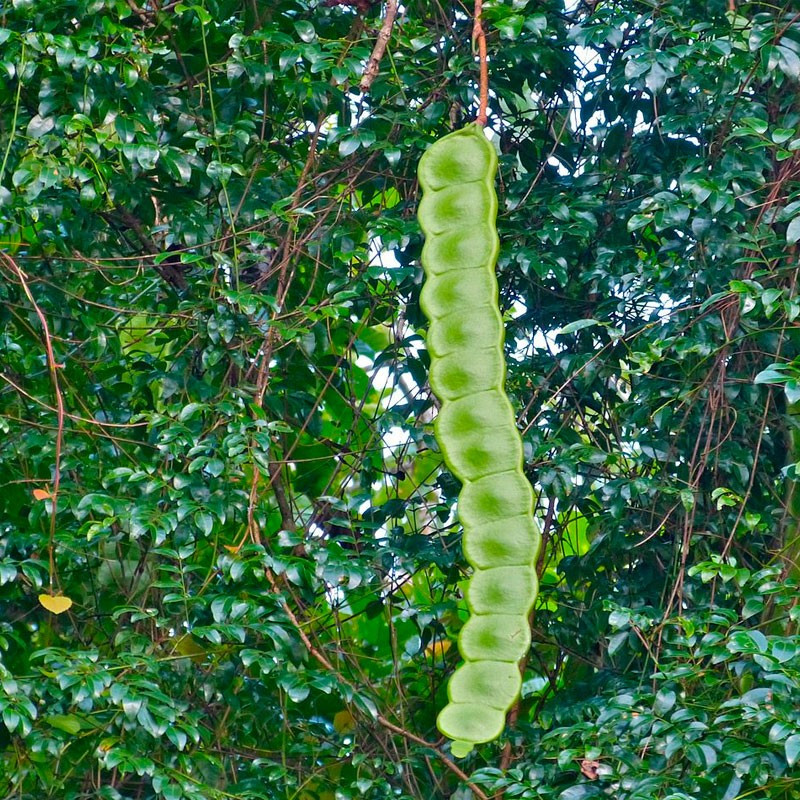
Entada rheedii is a large liane with a main stem that can grow up to 75 m, long with a girth of up to 400 mm. The stems twine clockwise and anticlockwise around other trees for support. The flowers are pleasantly fragranced, yellowish white or greenish yellow, in spikes that grow up to 230 mm long, from the axil of the leaves. It flowers in mid-summer, from December to January. The fruit is an enormous flat, woody and segmented pod, that measures up to 2 m long and 150 mm wide. Seeds are shiny, hard, dark brown, ± 50 × 35 mm.
Flowers produce gigantic pods that contain large seeds. The seeds are dispersed by water, and it takes some years before the seed coat is naturally scarified, and the embryo can root. Once the plant has rooted, it encircles a surrounding and grows upwards.
Entada rheedii has many uses amongst indigenous tribes in Africa. In South Africa, it is used by traditional healers to induce vivid dreams that allow them to communicate efficiently with their ancestors. To induce these vivid dreams, dried seeds are powdered and smoked in a pipe before bedtime. The seeds are also believed to have magical properties. They are worn as necklaces and bracelets to bring good luck to the owner.
In Asia, a paste made from the leaves, bark and roots, is used to clean wounds, treat burns and heal jaundice in children. Tea made from the whole plant is used to improve blood circulation to the brain and heal the after-effects of a stroke. The bark is used to treat diarrhoea, dysentery and parasitic infections.
In Australia, the seeds are leached in water to remove toxic secondary metabolites, and they are cooked and consumed as a vegetable by the Aborigines. The plant is also used for making rope, fish poison, and for firewood.


