

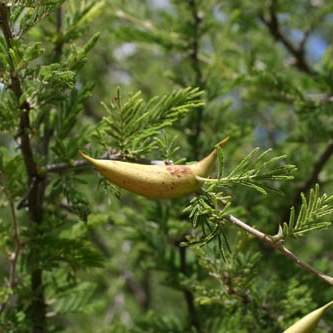
Vachellia luederitzii (Acacia luederitzi) – False Umbrella Thorn, Kalahari Acacia; Baster-haak-en-steek – 5 Seed Pack
R19,50
INTERNATIONAL CUSTOMERS: Please read our shipping terms and conditions here before placing your order: Shipping Terms and Conditions
23 in stock
Vachellia is a genus of flowering plants in the legume family, Fabaceae, commonly known as thorn trees or acacias. It belongs to the subfamily Mimosoideae. Its species were considered members of genus Acacia until 2009. Vachellia can be distinguished from other acacias by its capitate inflorescences and spinescent stipules. Before discovery of the New World, Europeans in the Mediterranean region were familiar with several species of Vachellia, which they knew as sources of medicine, and had names for them that they inherited from the Greeks and Romans. The wide-ranging genus occurs in a variety of open, tropical to subtropical habitats, and is locally dominant. In parts of Africa, Vachellia species are shaped progressively by grazing animals of increasing size and height, such as gazelle, gerenuk and giraffe. The genus in Africa has thus developed thorns in defence against such herbivory. The members of Vachellia are trees or shrubs, sometimes climbing, and are always armed. Of the 163 species currently assigned to Vachellia, 52 are native to the Americas, 83 to Africa, Madagascar and the Mascarene Islands, 32 to Asia and 9 to Australia and the Pacific Islands.
Vachellia luederitzii, previously known as Acacia luederitzii and commonly known as False Umbrella Thorn, Kalahari Acacia or Baster-haak-en-steek, forms a medium-sized tree with a flattened to rounded canopy. When this tree is in flower it will attract butterflies to the garden. Birds like white-browed Sparrow-weavers also nest in the trees. The gum is edible, but not in common use. The fruit of Vacellia luederitzii is also edible. Medicinally ash from this species is used to prevent infection of the naval in new born babies. The wood and bark are used for fencing poles. Traditionally the bark and the root core are used to make arrow quivers & pestles. The bark fibres are used for hut building and to make cords for jewellery.


