
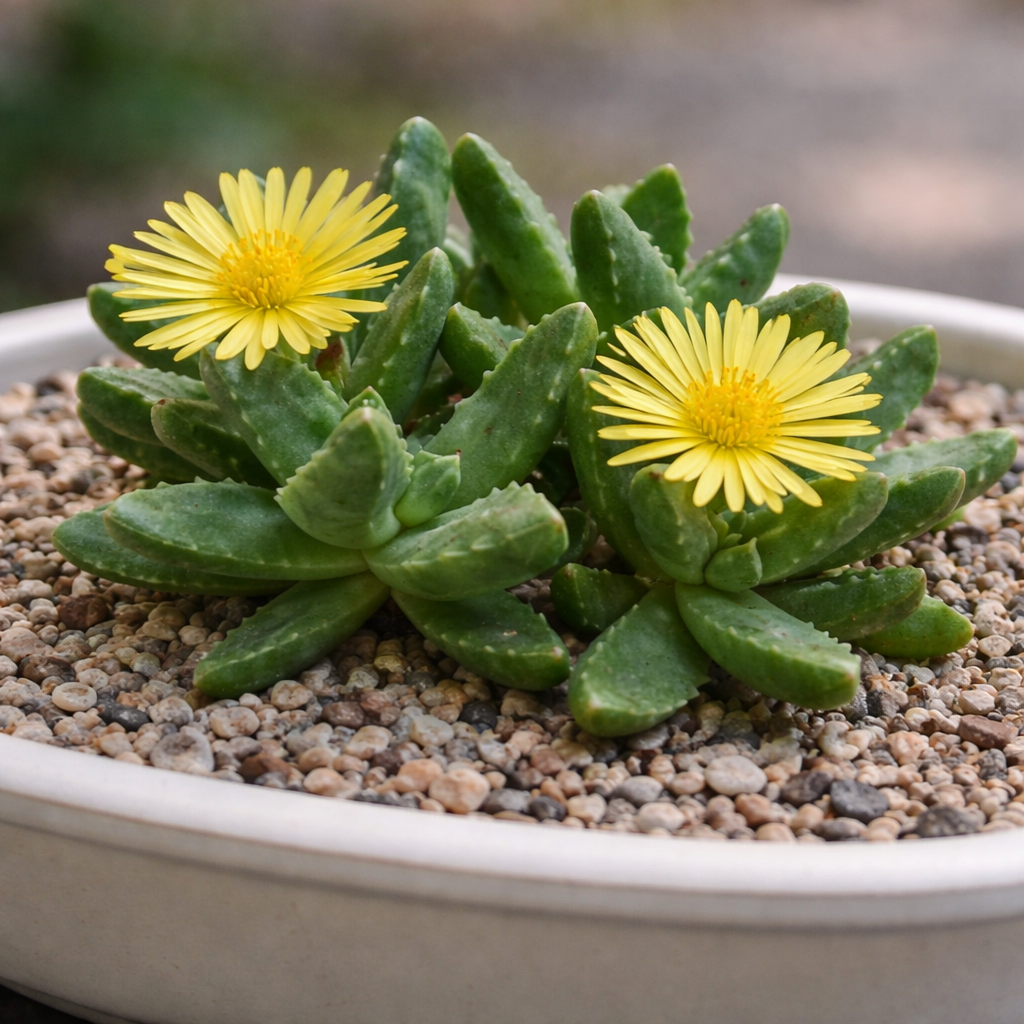
Faucaria nemorosa (Faucaria tigrina subsp. nemorosa) – Forest Tiger Jaws – 10 Seed Pack
R42,50
INTERNATIONAL CUSTOMERS: Please read our shipping terms and conditions here before placing your order: Shipping Terms and Conditions
20 in stock
Faucaria is a compact genus of South African endemic succulents from the Aizoaceae family, best known by the striking common name “Tiger Jaws.” This nickname comes from the thick, fleshy leaves edged with soft, tooth-like projections that give each rosette a bold, sculptural appearance. The genus name Faucaria is derived from Latin, meaning “jaws,” perfectly describing these distinctive plants.
Naturally found in the Eastern Cape and Karoo regions, Faucaria species form small clumps of stemless rosettes, usually reaching up to 8 cm in diameter. Their foliage is typically light green but may flush reddish-purple in strong sunlight, making them attractive year-round. These compact plants are ideal for pots, windowsills, and small succulent displays.
From late winter to early spring, Faucaria produces large, bright yellow daisy-like flowers from the centre of the rosette. They thrive in very well-drained soil and full sun, with reduced watering during their natural winter rest period. Easy to grow from seed and highly rewarding, Faucaria is an excellent choice for both beginners and experienced succulent collectors.
Faucaria nemorosa (Faucaria tigrina subsp. nemorosa) – Forest Tiger Jaws
Faucaria nemorosa is one of the most distinctive members of the “tiger jaws” group, prized for its bold leaf architecture and luminous flowers. Forming compact, low-growing clumps, this species produces thick, triangular leaves arranged in opposite pairs, each leaf edged with soft, tooth-like projections that resemble a gaping jaw. Unlike some harsher-looking Faucaria species, the marginal teeth are comparatively gentle, giving the plant a refined yet unmistakably sculptural presence.
This species is endemic to South Africa, occurring mainly in the Eastern Cape, where it grows in sheltered, rocky situations and light thicket or scrub, often benefiting from partial shade and slightly higher organic content than its more arid relatives. The specific epithet nemorosa – meaning “of wooded or shaded places” – hints at its preference for less exposed habitats. These conditions make it especially appealing to growers looking for a Faucaria that adapts well to containers, shaded succulent beds, or protected rockeries.
Flowering typically occurs in autumn to early winter, when plants produce large, daisy-like blooms in a striking bright yellow. The flowers open in strong light and can be surprisingly large relative to the plant, creating a vivid contrast against the deep green foliage. For South African growers, Faucaria nemorosa is a rewarding indigenous succulent with character and seasonal interest; for international collectors, it offers a unique, habitat-linked variation on the classic tiger jaws theme – ideal for succulent enthusiasts who appreciate both form and subtle ecological nuance.


