
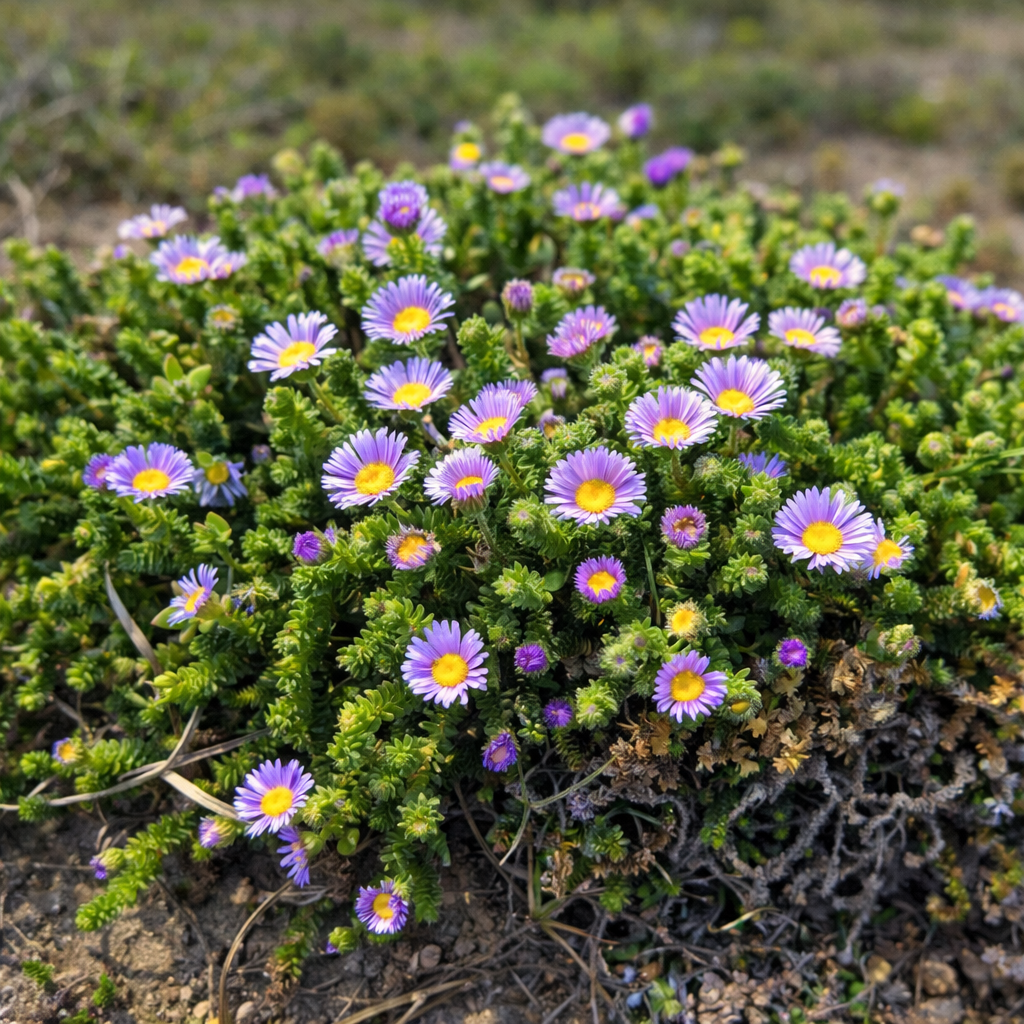
Felicia echinata (Aster echinatus) – Prickly Felicia – 5 Seed Pack
R29,95
INTERNATIONAL CUSTOMERS: Please read our shipping terms and conditions here before placing your order: Shipping Terms and Conditions
1 in stock
The genus Felicia is one of southern Africa’s most charming daisy groups, celebrated for its sparkling yellow centres framed by ray florets in shades of blue, violet, lilac and white. Belonging to the Asteraceae, these plants range from tiny ground-hugging cushions and rocky crevice specialists to airy shrublets dancing above dry grasslands and fynbos slopes. Many Felicia species are exquisitely adapted to harsh conditions – sun, wind, poor soils and seasonal drought – yet reward gardeners with clouds of cheerful blooms that attract bees, butterflies and other pollinators. With their wild elegance and remarkable resilience, Felicia daisies bring a distinctly South African brilliance to gardens worldwide.
Felicia echinata (Aster echinatus, Aster echinatus paralia, Felicia paralia, Pteronia echinata) – Prickly Felicia, Dune Felicia
Felicia echinata is an unforgettable little felicia with a tough, coastal personality – a compact, wind-hardened plant that looks perfectly at home among sand, stones, and low dune vegetation. Its neat habit and cheerful daisy faces make it a superb choice for naturalistic gardens and collectors who love truly habitat-faithful plants.
It is endemic to the Eastern Cape to Western Cape coast, typically on coastal sands and limestone-derived soils, where it endures bright sun, wind exposure, and fast-draining ground.
The plant is recognised for its stiff, bristly or prickly foliage and its bright flowers, which may appear mauve to pale lilac, sometimes fading paler, with classic yellow centres. Flowering can be long and generous, recorded from autumn into spring (around April to October) depending on local conditions.
Cultivation Note: Treat this as a true sun-and-drainage specialist. Sow seed on a sandy, well-drained mix, keep evenly moist until sprouting, then grow on in strong light with careful watering. In gardens, it’s best in raised beds, sandy rockeries, coastal gardens, or pots where drainage is exceptional.


