
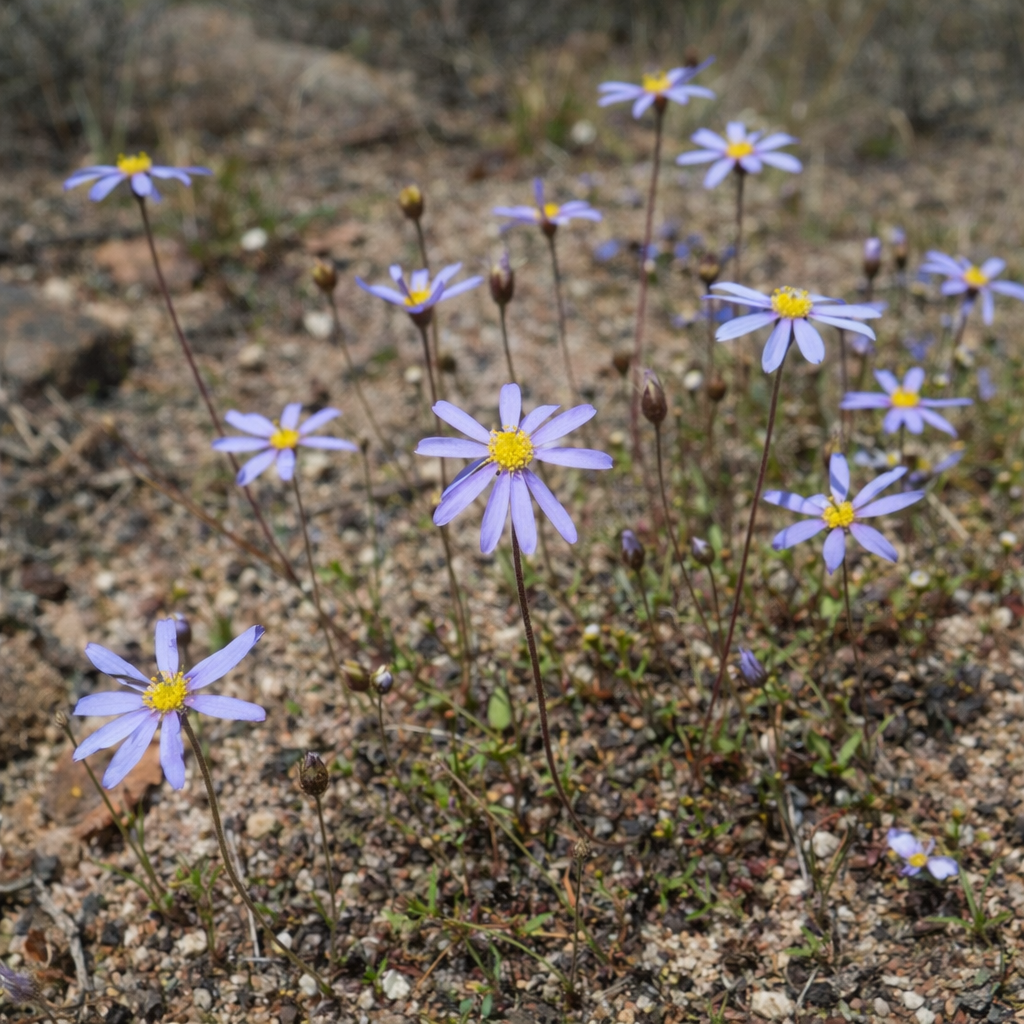
Felicia merxmuelleri – Silky Felicia; Astertjie – 5 Seed Pack
R22,50
INTERNATIONAL CUSTOMERS: Please read our shipping terms and conditions here before placing your order: Shipping Terms and Conditions
2 in stock
The genus Felicia is one of southern Africa’s most charming daisy groups, celebrated for its sparkling yellow centres framed by ray florets in shades of blue, violet, lilac and white. Belonging to the Asteraceae, these plants range from tiny ground-hugging cushions and rocky crevice specialists to airy shrublets dancing above dry grasslands and fynbos slopes. Many Felicia species are exquisitely adapted to harsh conditions – sun, wind, poor soils and seasonal drought – yet reward gardeners with clouds of cheerful blooms that attract bees, butterflies and other pollinators. With their wild elegance and remarkable resilience, Felicia daisies bring a distinctly South African brilliance to gardens worldwide.
Felicia merxmuelleri – Silky Felicia; Astertjie, Bloublommetjie, Sambreeltjies
Elegant and airy, Felicia merxmuelleri is a true “wildflower photographer’s plant” – slender stems topped with delicate, daisy-like blooms that look effortlessly natural. The flowers present soft lilac to mauve rays surrounding a golden-yellow centre, creating a classic Felicia look with a light, graceful attitude.
This species is endemic to the Northern Cape and Western Cape Provinces of South Africa, where it grows in open, sunlit habitats with mineral soils and scattered low vegetation. In a garden setting it’s ideal for growers who want an indigenous plant that feels authentically veld-grown rather than overly domesticated.
Growth is typically tufted to lightly shrubby at the base, sending up wiry flowering stems that move beautifully in a breeze. Blooms tend to appear most freely in spring, often continuing into early summer under good conditions, and the plant pairs perfectly with other fine-textured, drought-tolerant species.
Cultivation Note: Provide full sun and a fast-draining sandy or gravelly soil. Water sparingly once established, but don’t allow seedlings to dry out completely while young. Excellent for xeriscapes, indigenous borders, and rockery plantings, especially when sown in drifts for a natural, meadow-like effect.


