
Ficus lingua – Small-leaved Fig – 5 Seed Pack
R29,50
INTERNATIONAL CUSTOMERS: Please read our shipping terms and conditions here before placing your order: Shipping Terms and Conditions
8 in stock
Ficus is a pan-tropical genus of about 850 species of woody trees, shrubs, vines, epiphytes and hemiepiphytes in the family Moraceae. Ficus occupies a wide variety of ecological niches; most are evergreen, but some deciduous species are endemic to areas outside of the tropics and to higher elevations. Fig species are characterized by their unique inflorescence and distinctive pollination syndrome, which utilizes wasp species belonging to the Agaonidae family for pollination. The fruit of most species are edible though they are usually of only local economic importance or eaten as bushfood. However, they are extremely important food resources for wildlife. Figs are also of considerable cultural importance throughout the tropics, both as objects of worship and for their many practical uses.
Ficus lingua – Small-leaved Fig
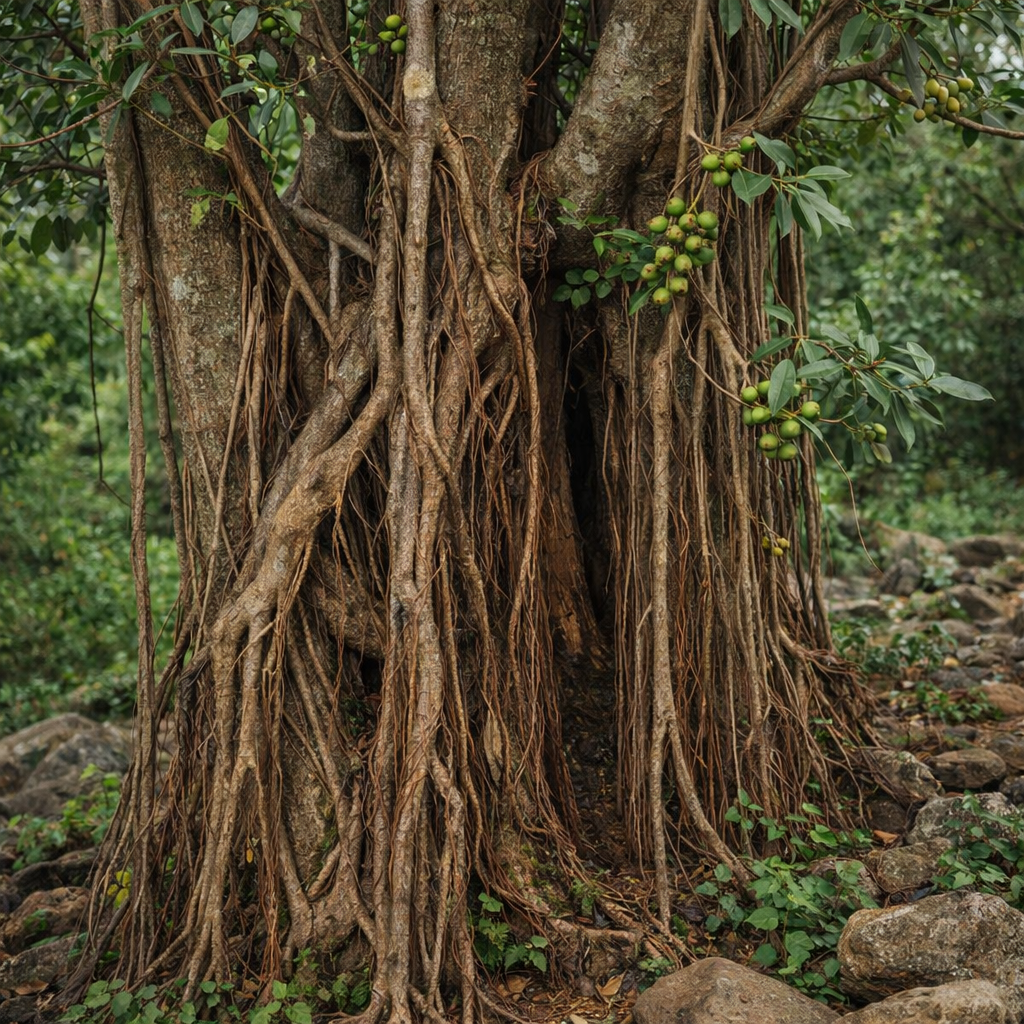
If you love figs for their ancient, sculptural presence, Ficus lingua is a standout. In maturity it can develop a powerful trunk with an intricate lattice of descending aerial roots that merge into thick, rope-like columns, giving the tree a dramatic, “cathedral” character even when seen from a distance. The canopy is evergreen to semi-evergreen in mild climates, carrying glossy, leathery leaves that are distinctly tongue-shaped – broader toward the tip, neatly tapered at the base – and held in handsome clusters along the branchlets.
Ficus lingua is an African fig associated with warm, sheltered habitats such as coastal and riverine forest margins, moist woodland, and rocky, well-drained slopes where humidity or seasonal moisture supports aerial rooting and steady growth. In the landscape it can present as a dense, spreading small to medium tree at first, later becoming markedly architectural as buttressing and aerial roots thicken and knit together. The bark tends toward pale grey to grey-brown, often textured and softly mottled with age, beautifully contrasting with the rich green foliage.
As with all figs, the “flowers” are not showy petals but tiny blooms concealed inside the fig structure (the syconium), so flowering is subtle – creamy to pale internally and easily missed. The real display comes from the fruiting: clusters of rounded figs forming along the twigs and older wood, typically green when young and maturing through yellow-green tones, often developing warmer hues as they ripen depending on conditions. Fruiting is usually heaviest in the warmer months (often from spring into late summer/autumn), with intermittent crops possible in frost-free or mild areas – an irresistible drawcard for birds and other wildlife.
Seed-grown Ficus lingua offers exciting variation and the satisfaction of raising a true wild fig from the very beginning – ideal for collectors, restoration-minded growers, and anyone wanting a charismatic indigenous-style shade tree in suitable climates. Given warmth, light, and good drainage, seedlings establish readily and can be trained into a sturdy standard, or allowed to express their natural tendency toward aerial rooting where humidity and shelter encourage it. A superb choice for larger gardens, wild edges, and subtropical landscapes where a living sculpture – leafy, fruitful, and full of presence – is exactly what you want.


