

Cyrtanthus sanguineus – Fire Lily, Inanda Lily, Kei Lily; Keilelie, Vuurlelie – 5 Seed Pack
R65,00
INTERNATIONAL CUSTOMERS: Please read our shipping terms and conditions here before placing your order: Shipping Terms and Conditions
4 in stock
Cyrtanthus belongs to the Amaryllidaceae, the amaryllis family, and is one of Africa’s most captivating perennial bulb genera. It includes 59 accepted species and is especially rich in southern Africa, where it occupies an astonishing range of habitats, from fynbos and rocky mountain slopes to grassland, thicket and even cliff faces. The genus is celebrated for its extraordinary variety: some species are evergreen, others deciduous; some grow in summer-rainfall regions, others in winter-rainfall areas; and the flowers range from slender and tubular to broad and flaring, in shades of white, cream, yellow, pink, orange–red and scarlet. Even the name Cyrtanthus hints at its beauty, coming from Greek words meaning “curved flower.” What makes Cyrtanthus so compelling to growers is that it combines wild South African character with real ornamental drama. Many species are excellent container subjects, some are scented, some have beautifully exposed bulbs or twisted foliage, and a few are famed as “fire lilies,” bursting into flower after veld fires. It is a genus with both elegance and ecological intrigue, which is exactly why it holds such enduring appeal for collectors, bulb enthusiasts and gardeners alike.
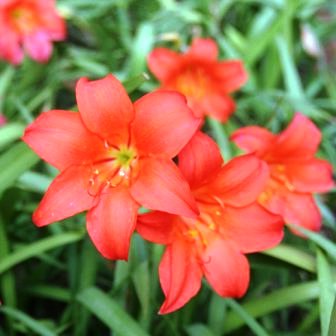
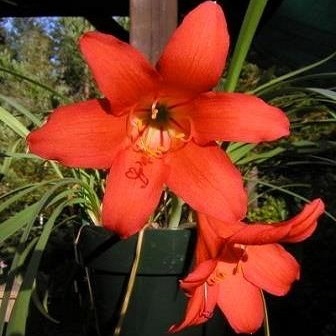
Cyrtanthus sanguineus, commonly known as Fire Lily, Inanda Lily or Kei Lily in English and Keilelie or Vuurlelie in Afrikaans, is a South African indigenous species found in the Eastern Cape and KwaZulu-Natal provinces where it grows in coastal areas and extends into Tropical East Africa. It bears large, 9 cm wide, trumpet shaped flowers that rises 25cm above the strap shaped leaves. It bears brilliant orange to red flowers that droop down from clusters of umbels in summer. The foliage is rather sparse and emerges in spring from winter dormancy. Plant it in full sun to light shade while providing a well-drained soil. The common name, Fire Lily, refers to the ability of these bulbs to tolerate and even flower immediately after wildfires.


