

Dodonaea angustifolia – Giant bush hop, Sand olive – 10 Seed Pack
R48,50
INTERNATIONAL CUSTOMERS: Please read our shipping terms and conditions here before placing your order: Shipping Terms and Conditions
16 in stock
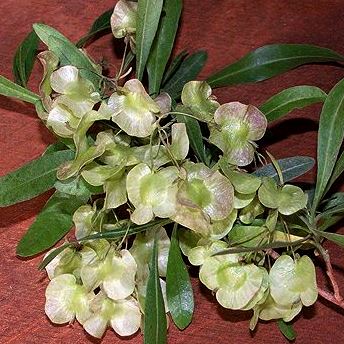
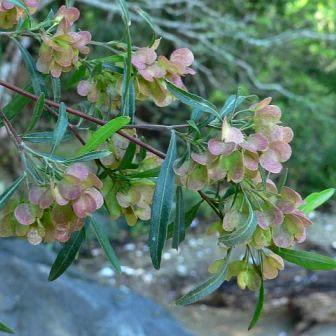
Dodonaea is a tough, sun-loving genus of shrubs and small trees best known for thriving where many other plants struggle – on windswept coasts, rocky hillsides, dry scrub, and disturbed ground. Many species have slim, often sticky or resinous leaves that help reduce water loss, and the plants are frequently either male or female (with flowers on separate individuals), followed by distinctive papery, winged seed capsules that can look almost lantern-like when they mature. Belonging to the soapberry family, Sapindaceae, Dodonaea is a genuinely wide-ranging group with a strong foothold in the Southern Hemisphere. It is especially diverse in Australia, but the genus also occurs across Africa (including parts of southern and eastern Africa), Madagascar, the Mediterranean region, the Middle East, South and Southeast Asia, and many Pacific islands, with some species extending into the Americas. This broad distribution reflects its adaptability – Dodonaea often slots neatly into fire-prone, drought-stressed, or coastal ecosystems, making it an ecological “survivor” genus with plenty of horticultural appeal.
Dodonaea angustifolia
Often treated in modern references as Dodonaea viscosa subsp. angustifolia (also seen as D. viscosa var. angustifolia), this hardy, evergreen shrub is a classic “workhorse” species for hot, exposed landscapes. In South Africa it’s widely appreciated as a tough indigenous screening plant, while internationally it’s valued anywhere gardeners need reliable structure, wind tolerance and low water demand.
Distribution is centred in southern and eastern Africa (including South Africa) and extends into parts of the wider Old World range where the narrow-leaf forms occur. In the garden it typically forms a dense shrub to small tree, with slim, lance-shaped leaves that can feel slightly resinous/sticky in warm weather. Growth is neat and adaptable: use it as an informal hedge, coastal barrier, or a backbone shrub in waterwise designs.
Flowers are small and not showy, usually greenish to yellow-green (sometimes with subtle tones depending on plant and season), but they’re followed by the real display: papery, winged seed capsules that can colour up attractively as they mature. Flowering is most common from spring into summer (often longer in mild, frost-free climates), with seed set following thereafter.


