
Gnidia cyanea – Roggeveld Blue Saffronbush – 5 Seed Pack
R35,00
INTERNATIONAL CUSTOMERS: Please read our shipping terms and conditions here before placing your order: Shipping Terms and Conditions
6 in stock
Gnidia is a fascinating genus in the Thymelaeaceae (the mezereum family), made up of small shrubs and perennial herbs that often look deceptively simple until they flower. The genus is centred in Africa and Madagascar, with especially high diversity in southern Africa, and many species are local endemics adapted to very specific habitats from damp sandstone flats and marshy fynbos, to cold, rocky escarpments and renosterveld slopes. Despite their delicate appearance, Gnidia are tough, climate-smart plants: narrow leaves reduce moisture loss, and the flowers (technically colourful calyx lobes) can be incredibly showy in the veld, ranging from blues and pinks to yellows and creams.
Gnidia cyanea – Roggeveld Blue Saffronbush
If you love true “place plants” with real wild character, Gnidia cyanea is an absolute gem – an elegant, range-restricted South African endemic from the Roggeveld Escarpment west of Sutherland, where it grows on slopes and plateaux in Roggeveld Shale Renosterveld. It forms natural little clumps in open ground, and although it’s locally common in its home range, it remains a special, regional treasure.
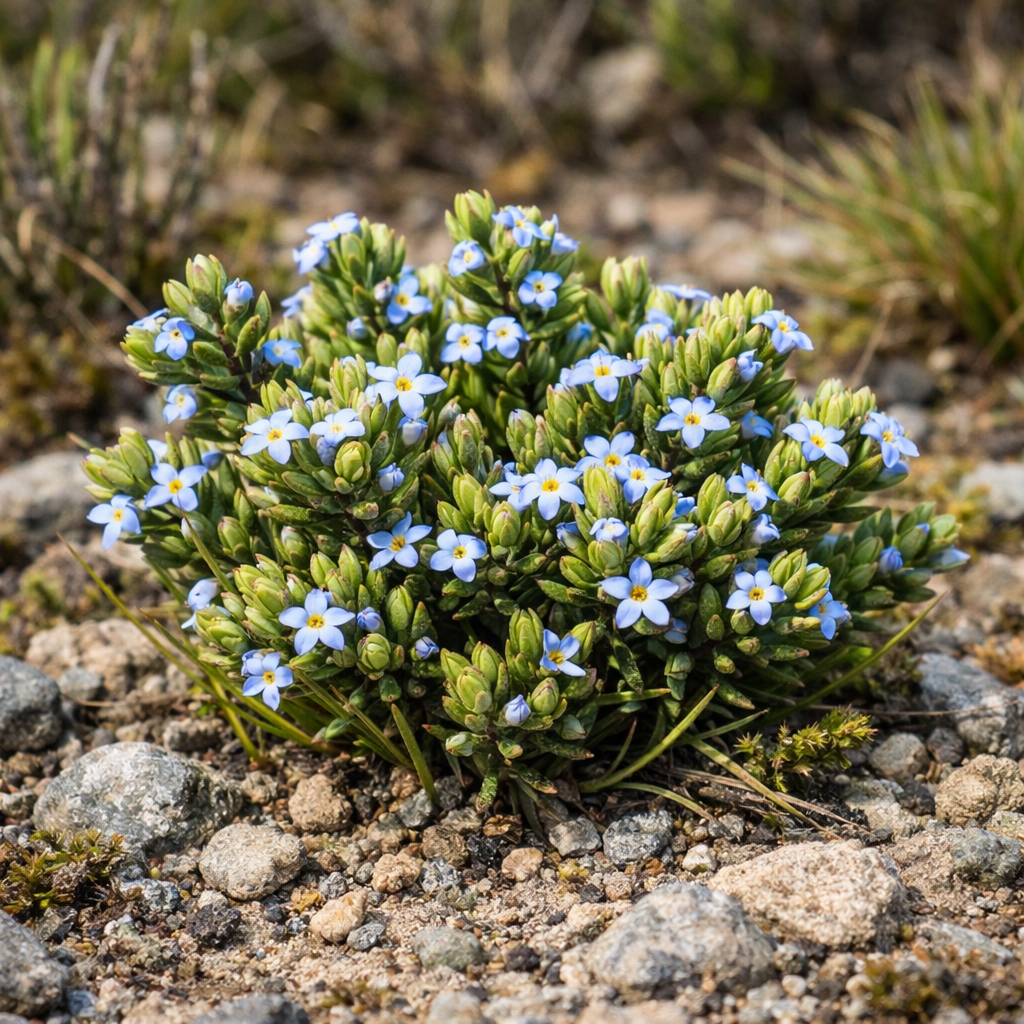
In the wild it presents as a compact shrublet with many short stems, carrying narrow, tightly packed leaves that give the plant a neat, textured look even when not in flower. When blooming, it produces charming small, starry blue flowers held close to the growth tips, creating that soft “blue haze” effect. The colour reads as a clean sky-blue to periwinkle, with pale centres that stand out in strong natural light.
For gardeners and collectors, this is the kind of species that feels truly authentic: wild, refined, and perfectly suited to naturalistic plantings. It’s ideal for rocky beds, dryland borders, and fynbos-style gardens, especially where you want a low, tidy plant that doesn’t overwhelm its neighbours but still delivers a memorable floral moment. Because it comes from a specialised habitat, it’s best treated as a “mineral-soil” species – think bright light, excellent drainage, and restrained feeding to keep the plant compact and long-lived.


